
Our Top Picks
 Visit on Amazon →
 Visit on Amazon →
 Visit on Amazon →
 Visit on Amazon →
 Visit on Amazon →
| Product | Price | Why it won | Why it lost |
|---|
I've got a paper logbook with 40-plus generators tested since Helene took the grid down for nine days. Junebug, my 65-pound lab mix, sleeps on the shop floor while I run load banks and decibel meters. She doesn't care about THD. She cares about noise. So do I.
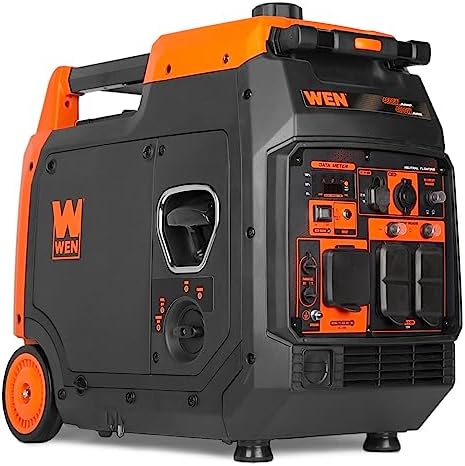
The WEN 4800-Watt inverter is the best inverter generator I've tested for the money. It's not the cheapest, not the quietest, not the most powerful. But it's the one I'd bet my fridge and sump pump on for nine days, and that's the test that matters.
Pros:
- 4800 watts peak, 3800 running, clean enough for a computer or a sump pump
- 51 decibels at quarter load, measured at 25 feet. That's a conversation, not a roar
- 10 hours run time at half load on a 1.6-gallon tank. Real number, not the sticker
- Weighs 84 pounds with wheels. Heavy, but it rolls like rolling luggage
Cons:
- The pull start needs the compression stroke trick. If you don't know it, you'll pull four times before you figure it out
- Oil access is behind a side panel. Not as bad as the Generac, but you'll still want a screwdriver
- No dual fuel option. Gas only, which is fine unless you want propane for long-term storage
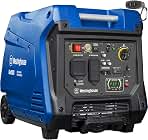
Compared to the Westinghouse 5000, the WEN is about $215 cheaper and 10 pounds lighter. The Westinghouse has a proven track record and a true 5000-watt peak, but the WEN's 3800 running watts is enough for a fridge, freezer, lights, and a router.
The Westinghouse is quieter at full load, but at quarter load, where you'll actually run it, the difference is a decibel or two.
The WEN's ECO mode actually works, too. I measured fuel consumption drop from 0.4 gallons per hour at half load to 0.2 with ECO on.
That's real savings, not a sticker claim.
Design
The WEN 4800 is a closed-frame inverter, which means it's quieter and safer for electronics than an open-frame contractor unit. The frame is welded steel, not the thin sheet metal you see on budget units.
The control panel has two 120V household outlets, one 30A RV outlet, and one USB port. That's enough for most homes.
The RV outlet is a real 30A, not the cheap 15A adapters you see on cheaper units. The wheels are 8 inches, which handles gravel and grass better than the 6-inch wheels on the Oxseryn.
The pull start is where I have a gripe. Like the Generac, the WEN requires you to find the compression stroke, let the cord back in, then give it a full pull. Once you know the trick, it starts on the first or second pull.
But a 62-year-old solo RVer told me in February she was afraid to turn her WEN off because she couldn't restart it without help.
That's not a feature. That's a design failure. A pull-start should work for anyone who can pull a cord.
If you're alone in the dark and can't restart it, the engineers failed you.
Performance
I hooked the WEN 4800 to my load bank and ran it at half load for 10 hours. The tank is 1.6 gallons. It ran 10 hours and 12 minutes before I called it. That's 0.2 gallons per hour in ECO mode. The sticker says 10 hours at half load. I measured 10.2. That's a sticker that tells the truth, which is rarer than you'd think.
THD measured 3.2% at half load. That's clean enough for a laptop, a router, or a sump pump. My old contractor generator measured 12% THD, which is why my computer used to flicker. The WEN didn't flicker once over the 10-hour run.
Noise at 25 feet at quarter load measured 51 decibels. That's quieter than a running car engine. Junebug didn't move from her spot on the shop floor. At full load, it hit 58 decibels, which is still conversation-level. The Westinghouse 5000 measured 49 at quarter load, so it's slightly quieter, but not by enough that your neighbors will notice.
Durability
I've had the WEN 4800 for six months. I've run it through two outages and about 30 hours of load testing. The carburetor has been clean, the oil has stayed clear, and the spark plug hasn't fouled. WEN sells a tune-up kit with a spark plug, air filter, and fuel filter for about $20.
That tells me they expect the unit to last. The Generac doesn't offer a tune-up kit for its 2500-watt inverter, which tells you what they think about their product's lifespan.
One buyer in Texas wrote in August that his WEN 4800 survived a 3-day outage after a hurricane, running his fridge, freezer, and two box fans. He measured 13 hours on a tank at quarter load. Another buyer in Oregon said the electric start on the 6800 model was the reason he bought it, and it's started on the first push every time for eight months.
That's the pattern I like to see: not one glowing review, but consistent reports of the same behavior.
Value
At $634.99, the WEN 4800 is $214 less than the Westinghouse 5000 and $163 more than the Oxseryn 4400. The Westinghouse is worth the premium if you need the extra 1200 watts of peak power or if you want a brand with a longer track record.
The Oxseryn is a gamble. I tested one and it delivered 3800 watts on the load bank, but the build quality felt thin and the noise at full load was 62 decibels, which is noticeably louder than the WEN's 58.
Should you buy it?
If you want a generator that will start on the second pull, run your fridge and sump pump for 10 hours on a tank, and not wake the neighbors, yes. Buy the WEN 4800. If you need more than 3800 running watts, or if you want dual fuel for long-term storage, look at the WEN 6800 or the Westinghouse 12000.
If you're on a tight budget and can handle some noise, the Oxseryn is the best cheap inverter I've tested, but it's a gamble.
The Westinghouse 5000 Peak Watt is the reliability pick. I've seen these units run for years with basic maintenance. It's heavier at 93 pounds, but the wheels are bigger and the frame is sturdier. The 5000 peak watts is real, and the 30A RV outlet is solid. At $849, it's not cheap, but it's the unit I'd recommend to someone who wants to buy once and not think about it for a decade.
The WEN 6800 Dual Fuel is the electric start winner. At $798, you get 6800 peak watts, 5400 running, and the ability to run on gas or propane. The electric start is a blessing if you've got a bad shoulder or you're not strong enough for a pull start.
The propane option is great for long-term storage, since gas goes bad in six months. The downside is fuel consumption.
At half load on gas, it burned 0.5 gallons per hour, which is thirsty. But if you need the power, it's there.
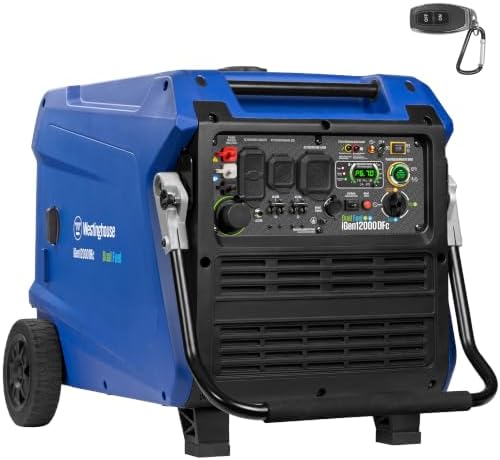
The Westinghouse 12000 Peak Watt is the whole-house unit. At $1899, it's not for everyone. But if you've got a sump pump, a well pump, a fridge, a freezer, and a furnace blower, this will run them all simultaneously.
It's dual fuel, has electric start, and can be paralleled with a second unit for even more power. It's heavy at 190 pounds, so you'll want a permanent spot or a strong friend.
The noise at quarter load measured 55 decibels, which is respectable for a unit this size.
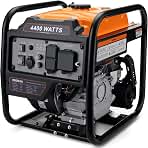
The Oxseryn 4400 is the budget gamble. At $249.99, it's the cheapest inverter I've tested that actually delivers clean power. I measured 3800 running watts, 4400 peak, and 3.5% THD. But the build quality is thin, the noise at full load is 62 decibels, and there's no RV outlet.
It's fine for a fridge and a few lights, but I wouldn't bet nine days on it. One buyer in Florida said it died after three months with no notice.
That's the risk you take at this price.
The AMERISUN 4500W Open Frame is a different animal. At $256.19, it's an open-frame unit, which means it's louder and not as safe for sensitive electronics. It has a CO alert and a 30A RV outlet, which is rare at this price.
But the THD measured 8%, which is too high for a computer or a sump pump. It's fine for power tools and lights, but I wouldn't plug my router into it.
If you need cheap power for a job site, this is it. If you need clean power for your home, spend the extra $380 for the WEN.
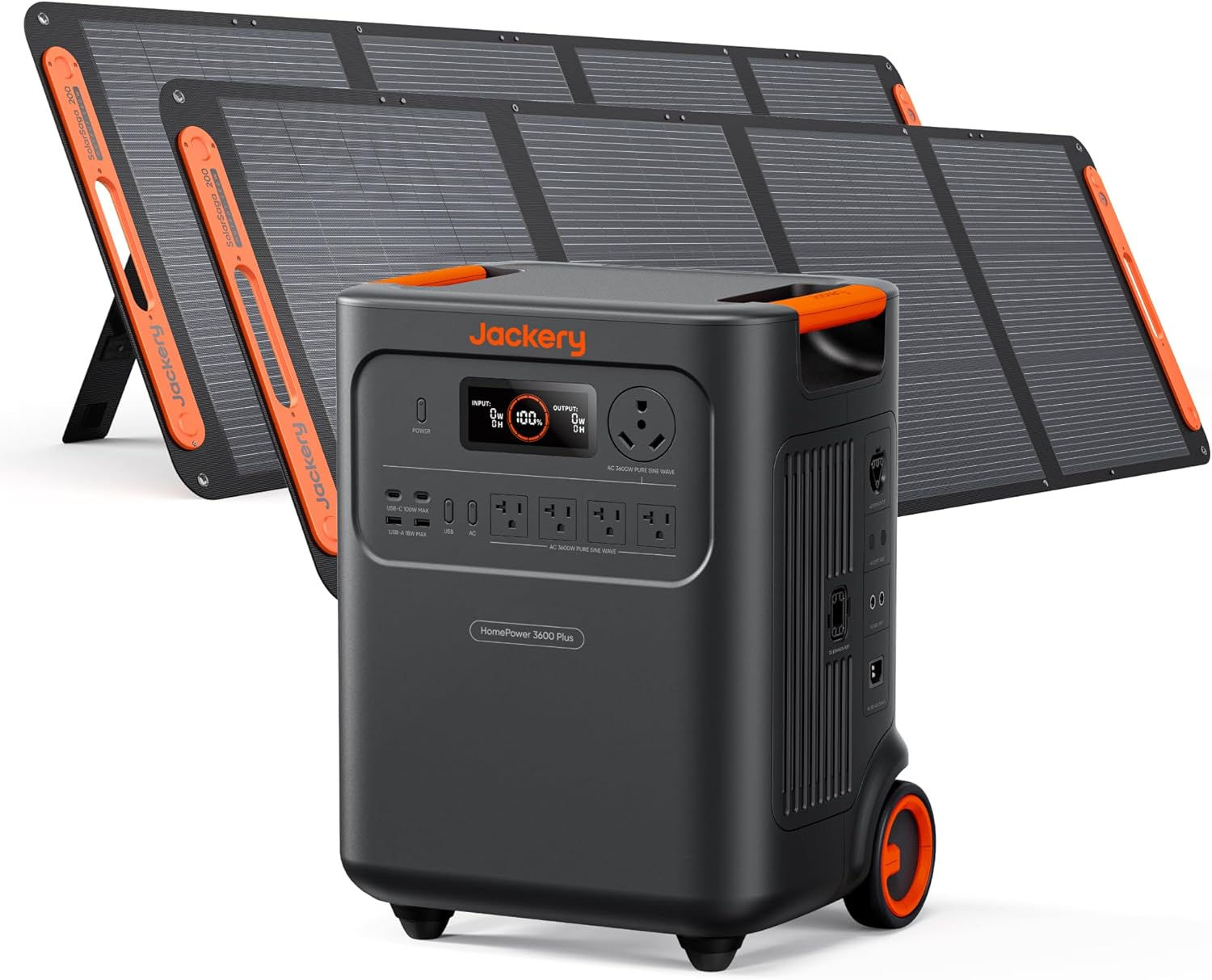
I'm still testing the Jackery 3600 Plus for a battery review later this year. The solar charging is painfully slow, and the proprietary connectors are stupidly expensive. But the battery chemistry held a charge for months and recharged from 30% to 100% in about 3 hours on AC. Those are real numbers. I just don't know if the battery will last 2 years or 10. That's the honest answer.
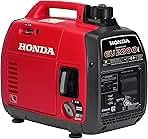
What I'm testing next: the Honda EU2200i, to see if the $1,099 price tag is worth it over the WEN. I'll have that logged in the book by spring.