Related: How Loud Is a Generator at 25 Feet? The dB Numbers That Matter
I ran a small-engine shop in Asheville for 22 years. Then Helene took the grid down for nine days, and I watched a polite street argue over a 50-foot extension cord while a 30-year-old contractor generator rattled windows at 2 a.m. When the lights came back, I bought a load bank and a decibel meter and went back to work the way I used to rebuild carbs: measure everything, trust the sticker for nothing. If you are shopping for a portable inverter generator for home backup, the number that matters is almost never the one in the biggest font on the box.
Four units are worth talking about right now, and they cover four different jobs: quiet small loads, budget backup, RV and job site power, and whole-home transfer switch duty. I picked them on the specs that decide whether your fridge actually turns on: running watts, surge behavior, fuel type, weight, and whether the thing has a fuel shut off so the carb is not a varnish experiment by spring. Here is what each one is honestly for.
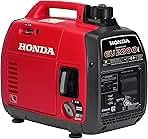
Best Overall: Honda EU2200i 2200 Watt Inverter Generator
The EU2200i is still the benchmark after all these years, and I say that as a man who resents paying for a name. Quiet, starts on the first pull, sips fuel, and you pay for all of it. The premium is real, but it is a premium, not a miracle.
At 2,200 watts it is not a whole-house machine. It is the machine for the load that keeps a house livable: fridge, freezer, internet, a few LED lights, phone chargers, a laptop, and a box fan. Inverter output is the whole point. Total harmonic distortion under 5% is what keeps electronics from whining and what separates an inverter from a cheaper conventional unit.
Where it earns its keep is at 2 a.m. in the rain. A pull cord that catches on the second pull when your hands are cold is worth more than 500 extra watts on a spec sheet. Feed it ethanol-free fuel or a stabilizer, run the carb dry before storage, and it will be there next storm.
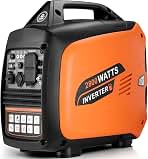
Best Budget Backup: Oxseryn 2800-Watts Portable Inverter Generator
This one sits in the sweet spot a lot of shoppers miss: more watts than the 2,000-watt class, in a 39-pound package with a 1.1-gallon tank and a fuel shut off valve, so you can run the carb dry without tools. For a fridge, a sump pump cycling on and off, a router, and lights, 2,800 watts of inverter power is real breathing room. The weight matters too. Anything you can lift into a truck bed by yourself is a generator you will actually deploy.
The name says super quiet. I do not buy super quiet. I buy dB(A) at 25 feet at quarter load, and I want that number before money changes hands. Ask the seller, check the manual, and if nobody can produce a figure, assume it is louder than you hope.
The fuel shut off is the feature I would pay extra for on any generator that sits for months between storms, and EPA compliance matters to anyone who reads the fine print before a purchase.
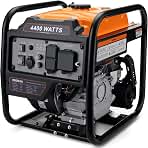
Best Value for RV and Job Sites: Oxseryn Power Equipment 4400 Watts Inverter Generator
Open frame, 4,400 watts, and ECO mode. That combination is what you want when the load is a camper air conditioner, a mitre saw, or a tailgate full of crock pots, and nobody is sleeping 25 feet away.
ECO mode drops engine RPM to match the load, which saves fuel and noise when you are only running a laptop and a coffee maker. Here is the catch. On some units the throttle cannot react fast enough for a compressor surge, so the fridge or the AC stalls the engine instead of starting it. Test that with your own appliance before you rely on it during an outage.
RV ready means the outlet setup is already arranged for a camper pedestal, which saves you an adapter and a headache at the campground. It is not quiet enough for a crowded loop where tents are packed together, and it is not supposed to be. It is affordable watts that behave like clean watts.
Best Whole-Home Backup: Westinghouse 12500 Watt Dual Fuel Portable Generator
Twelve thousand five hundred watts, gas or propane, remote electric start, and transfer switch ready. This is not a camping generator. This is the unit you wire into a transfer switch so your panel does not care that the grid is gone.
Dual fuel is the underrated part. Gasoline gives you more watts per tank. Propane never goes bad, and it does not care if the station is closed or the line is a mile long. In a real outage, the fuel you can actually get beats the fuel that performs better on paper.
Remote electric start matters more than people admit. At this size, a pull cord is a two-person job and a chiropractor appointment. Press the button from the porch.
Two rules with a unit this size. It runs outside, well away from windows and doors, and whatever you buy for house backup should carry a working carbon monoxide shutoff. CO sensing is non-negotiable on anything near a house. Then plan fuel around the real number, not the box number. At half load, cut the advertised run time by a third. At full load, cut it in half.
How I test a generator
The rig is a load bank: heaters and motors that draw real watts, so I can see what a unit delivers at the wall instead of what the sticker promises. The appliance lineup is a fridge, a sump pump, a space heater, and a 5,000 BTU window AC, because those four cover the loads that decide whether an outage is survivable.
Noise gets measured at 25 feet at quarter load with a decibel meter, because that is roughly where your neighbor's bedroom window sits. One foot with no load is a marketing measurement, not a useful one.
Run time gets a stopwatch and my own fuel jug. Fuel gauges lie, usually reading full until the tank is a third empty, and the run time printed on the box assumes a load you will never actually run.
Starting gets the cold, wet, second-pull test. A generator that needs a YouTube tutorial to start will fail at 2 a.m. in a storm, and pull cords do not buffer.
Inverter output gets checked for THD under 5%. Clean power or it does not get recommended for electronics, no matter how good the price looks.
What the specs actually mean
Surge watts versus running watts. A fridge compressor needs two to three times its running watts to start. That spike is what stalls a generator, not the steady load. A 2,200-watt inverter runs a fridge fine once it is going, but the compressor start is the moment of truth. Look for surge headroom, or a unit that rides through a compressor start without tripping.
Run time math. The box number is measured at 25% load with a tailwind. At half load, cut it by a third. At full load, cut it in half. Then multiply by tank size and decide how many gas cans you are willing to store and rotate.
THD. Under 5% is the line. Inverter generators deliver it. Cheap conventional units do not, and your laptop power brick will let you know about it.
Fuel. Ethanol left in a carb is a time bomb. Ethanol-free fuel or a stabilizer is cheaper than a carburetor rebuild, and a fuel shut off valve is the feature that makes storage painless.
Noise. dB(A) at 25 feet, at a load people actually run, or it does not count.
Generator reference table
Here is the short version, using the watt ratings the manufacturers put in the model names and nothing I cannot verify. Treat the price column as a link, not a promise, because prices move.
| Generator | Rated watts | Fuel | Best for | Price |
|---|---|---|---|---|
 Visit on Amazon → Visit on Amazon →Honda EU2200i |
2,200 | Gasoline | Quiet backup for a fridge, internet, and lights | Check current Amazon price |
 Visit on Amazon → Visit on Amazon →Oxseryn 2800-Watts |
2,800 | Gasoline | Budget home backup, camping, one-person lifting | Check current Amazon price |
 Visit on Amazon → Visit on Amazon →Oxseryn Power Equipment 4400 Watts |
4,400 | Gasoline | RV pedestals, tailgates, job sites | Check current Amazon price |
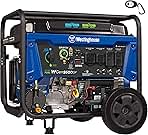 Visit on Amazon → Visit on Amazon →Westinghouse 12500 Watt Dual Fuel |
12,500 | Gasoline or propane | Whole-home backup on a transfer switch | Check current Amazon price |
Should you buy the Honda EU2200i?
Yes, if quiet matters and 2,200 watts covers your loads. It is the benchmark after all these years: it starts on the first pull, it puts out clean inverter power, and it sips fuel. You pay a premium for all of that, and it is a premium, not a miracle. For a fridge, a router, some lights, and phone chargers, it is the unit everything else gets compared to. If you need to run a well pump or a central AC, this is not your machine, and no accessory will make it one.
Should you buy the Oxseryn 2800-Watts?
Yes, if you want more watts than the Honda in a 39-pound package with a 1.1-gallon tank and a fuel shut off valve. That shut off is the difference between a generator that starts next spring and a carburetor rebuild. The one thing I would nail down before buying is a decibel number at 25 feet, because super quiet is a claim, not a measurement. If the seller can give you a real figure, this is the value pick for a first-time backup buyer.
Should you buy the Oxseryn Power Equipment 4400 Watts?
Yes, for RV pedestals, tailgates, and job sites where you need 4,400 watts and nobody is sleeping 25 feet away. Open frame means louder and cheaper per watt, which is exactly the trade some people want. ECO mode saves fuel and noise at light load, but verify it against your own fridge or AC surge before an outage verifies it for you. This is the middle child of the group, and for a lot of camper owners the middle child is the right answer.
Should you buy the Westinghouse 12500 Watt Dual Fuel?
Yes, if you are backing up a whole house through a transfer switch and you want propane as an option when gasoline lines stretch a mile. Remote electric start saves your back at this weight, and dual fuel means you can run what you can actually get. It is loud and thirsty on gasoline, it needs a CO shutoff like every house-backup unit, and it is not the generator you take camping. As a permanent storm plan, it is the serious answer in this group.