Buying a generator in the week after a storm is the worst possible time to learn what the numbers on the box mean. Peak watts get the big type, running watts get the fine print, and your refrigerator only cares about the two seconds when its compressor kicks on and demands several times its normal draw. This guide sorts through six portable inverter generators that cover the realistic range for home backup and camping, from a 1,200-watt unit light enough to carry in one hand to a 6,500-watt dual fuel machine built for house circuits. It also covers the one conventional unit in the group, because whole-house backup and quiet campsite power are genuinely different jobs with different answers.
Related: How to Size a Generator for a Fridge, a Sump Pump, and a Few Lights
Quick answer
The WEN 3600-Watt Portable Inverter Generator, RV-Ready, Quiet and Lightweight with Fuel Shut Off (56360i) is the strongest fit for most households that want a single unit for camping and outages, because its 3,600-watt inverter output, RV-ready outlet, and fuel shut off cover the widest range of ordinary jobs. Choose the Westinghouse 6500 Watt Dual Fuel Home Backup Portable Generator instead when you plan to feed house circuits through a transfer switch and want the option of running on propane as well as gasoline.
Portable generator options worth comparing
The six units below are listed with the top pick first, then the rest of the field. Note that the Westinghouse is a conventional dual fuel generator rather than an inverter, and it earns its place by covering the whole-house end of the job where clean sine wave output is not the deciding factor. Everything else here is an inverter unit, which is what you want if people sleep within earshot of it.
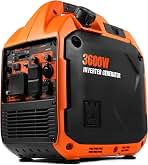
WEN 3600-Watt Portable Inverter Generator, RV-Ready, Quiet and Lightweight with Fuel Shut Off (56360i)
A 3,600-watt inverter generator with an RV-ready outlet and a fuel shut off, so you can run the carburetor dry before the unit sits for months. Quiet and lightweight are the manufacturer's own descriptors, and 3,600 watts gives this one more headroom than the small camping units for backup duty at home.
Visit on Amazon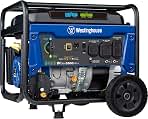
Westinghouse 6500 Watt Dual Fuel Home Backup Portable Generator, Transfer Switch Ready 30A Outlet, RV Ready 30A Outlet, CO Sensor
6,500 watts with dual fuel capability, a transfer switch ready 30A outlet, an RV ready 30A outlet, and a CO sensor. This is the whole-house end of the list: a conventional generator rather than an inverter, sized for feeding household circuits through a transfer switch.
Visit on Amazon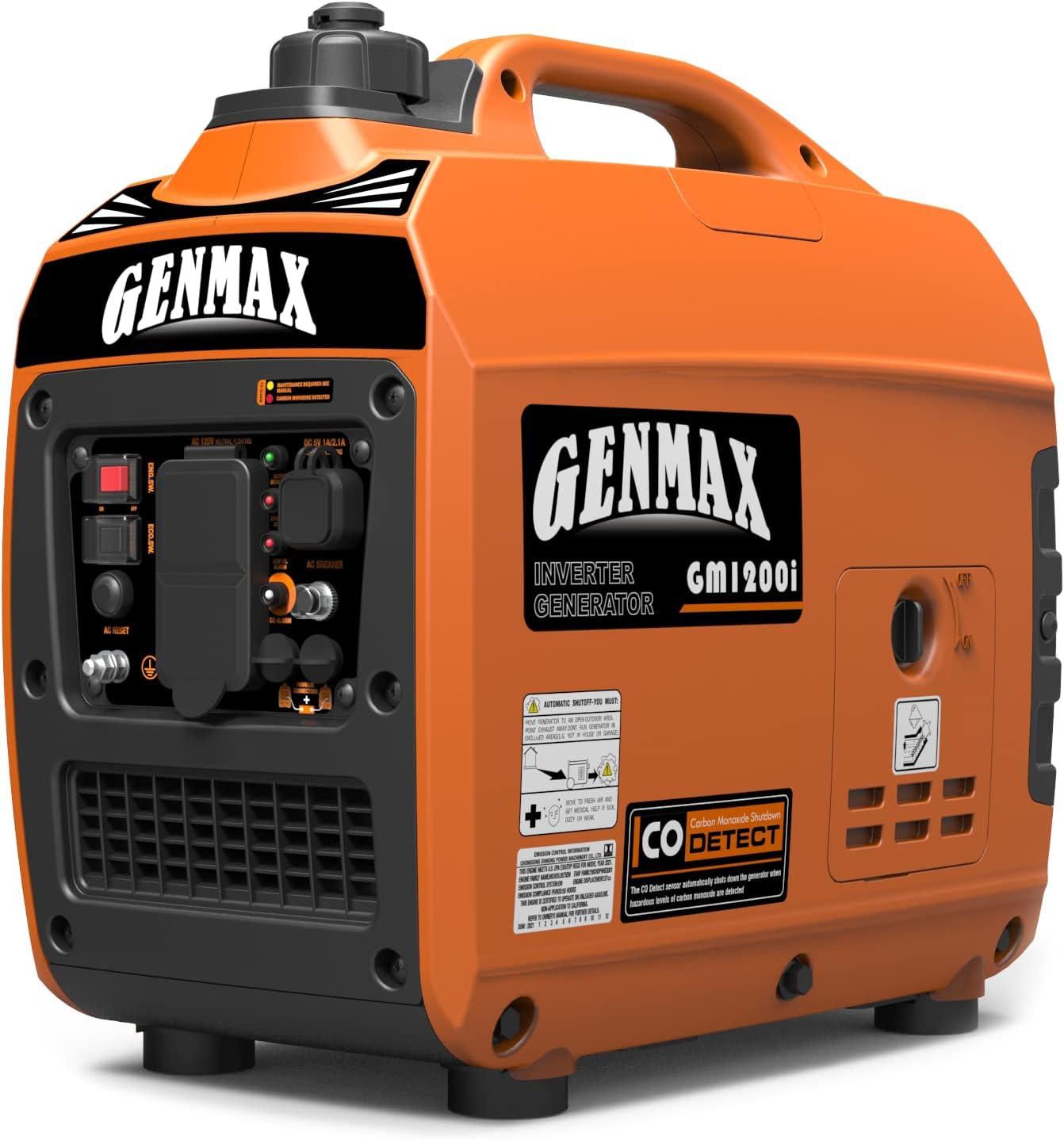
GENMAX Portable Generator,1200W Ultra-Quiet Gas Engine, EPA Compliant, Eco-Mode Feature, Ultra Lightweight for Backup Home Use & Camping (GM1200i)
A 1,200-watt gas unit described as ultra-quiet and ultra lightweight, with an eco-mode feature and EPA compliance. This is the smallest option in the group, aimed at backup basics and camping rather than running household circuits.
Visit on Amazon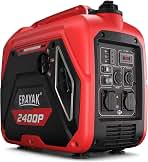
ERAYAK 2400W Portable Inverter Generator for Home Use, Super Quiet Small Generator for Camping Outdoor Emergency Power Backup, Gas Powered Engine, EPA, ECO Mode
2,400 watts in a small gas powered inverter package with eco mode and EPA compliance, positioned between the 1,200-watt class and the 3,000-watt units for readers who need a little more than the smallest models offer.
Visit on Amazon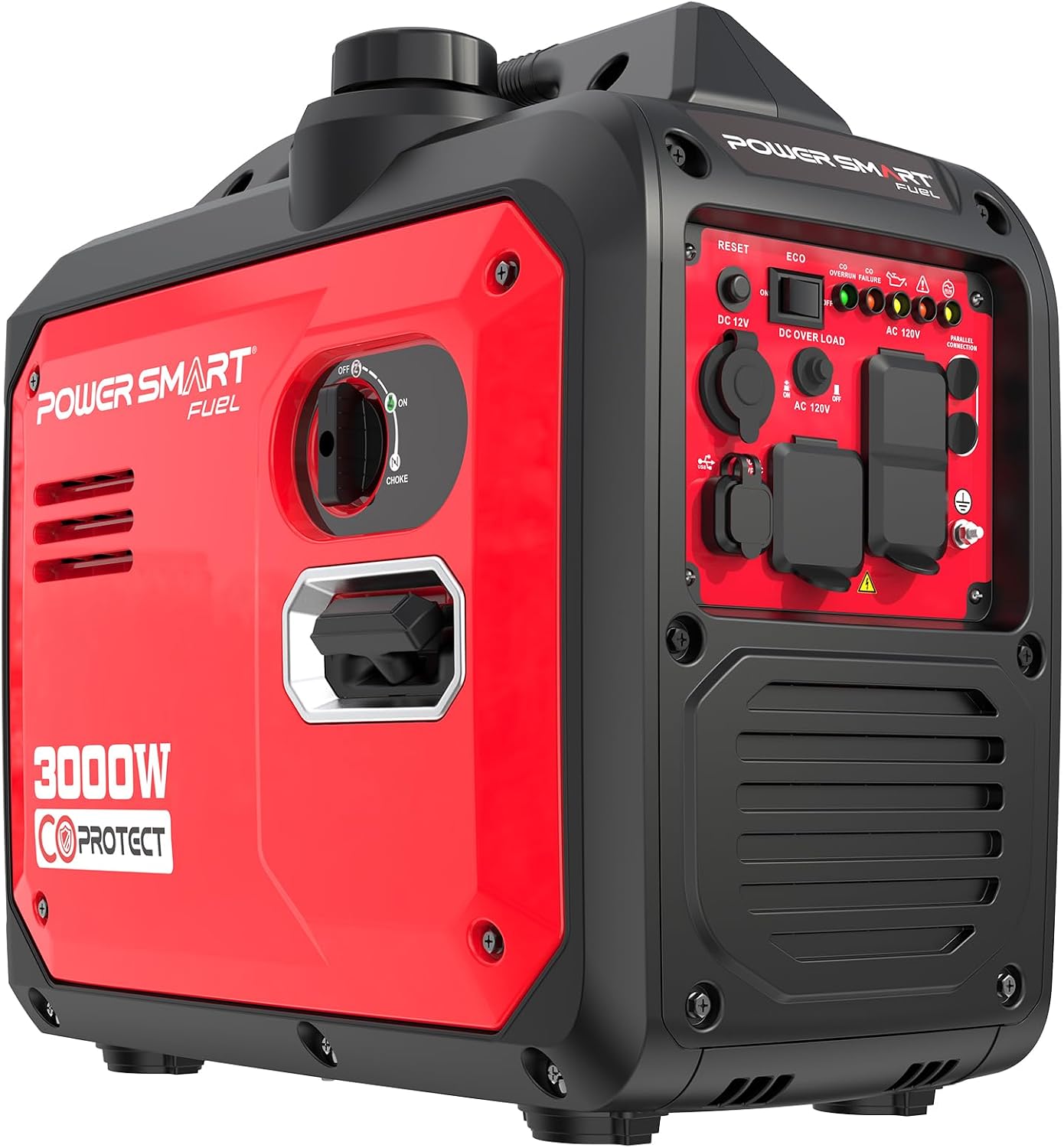
PowerSmart 3000 Watt Portable Inverter Generator for Camping or Home Use
A 3,000-watt inverter generator listed for camping or home use, which places it in the middle of this group in both output and intended duty.
Visit on Amazon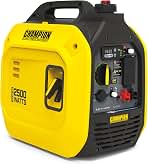
Champion 2500-Watt Ultralight Portable Inverter Generator
A 2,500-watt inverter generator in an ultralight package, an easy step up from the smallest units here without the bulk of a 3,600-watt machine.
Visit on AmazonPrices and availability may change. Check the retailer for current details.
How these products were compared
This guide compares rated output, fuel type and fueling options, outlet configuration, portability as published by the manufacturer, and safety features such as CO sensors and fuel shut offs. Product names, images, and retailer links are matched by model so that every card points to the product shown.
One thing worth stating plainly: the differences described here come from manufacturer-published specifications and the product listings themselves, not from bench measurements. Treat every watt figure as a starting point and confirm the details on the listing before you buy. Price is deliberately kept out of the comparison, because generator pricing swings hard with storm season. Use the link on any card to confirm the current price and availability.
How to choose the right portable inverter generator
Start with the load, not the label. Add up the running watts of what you actually need during an outage: a refrigerator, a few lights, a router, a phone charger, maybe a sump pump or a furnace blower. Then think about surge, which is the startup spike a motor needs. That spike is typically two to three times the running watts for a second or two, and it is the number that decides whether your refrigerator actually turns on when the compressor engages. A generator that carries your running load but chokes on the surge is a generator that trips the moment the fridge cycles.
From there, weigh fuel and form factor. Gasoline is easy to find and easy to burn, and it goes stale if you leave it in a carburetor for months. Dual fuel adds the option of propane, which stores far longer and is worth having if the unit sits for a season at a time. Eco mode drops engine speed to match the load, which saves fuel and noise, but on some units it cannot react fast enough to catch a compressor surge, so test that behavior with your own appliances rather than assuming it. Outlet layout matters as much as watts: an RV-ready outlet is the one you want for a travel trailer, and a transfer switch ready outlet is what makes the difference between running extension cords through a window and powering household circuits properly. Finally, look for a CO sensor on anything that will run near a house, and check the published weight before you commit, because a generator you cannot lift is a generator you will not use.
If you are working out whether a single unit can carry a fridge and a sump pump at the same time, our walkthrough on sizing a generator for a fridge, a sump pump, and a few lights breaks the arithmetic down step by step.
WEN 3600-Watt Portable Inverter Generator
The WEN 3600-Watt Portable Inverter Generator, RV-Ready, Quiet and Lightweight with Fuel Shut Off (56360i) sits in the sweet spot for a household that wants one machine to do two jobs. At 3,600 watts it has meaningfully more room than the 1,200 and 2,400-watt units, which makes it the more comfortable choice for backup duty while still being an inverter generator that will not rattle the neighbors at a campground. The RV-ready outlet means you can plug a trailer in directly, and the fuel shut off lets you run the carburetor dry before storage, which is the single easiest habit for avoiding a springtime no-start and a carburetor rebuild.
The trade-offs are honest ones. It is gasoline only, so it does not give you the propane option that the dual fuel Westinghouse does, and it will not carry a whole house through a transfer switch. It is also heavier and larger than the 1,200-watt class, which matters if your main use is tossing it in the back of a truck for a weekend. If those limitations do not apply to you, this is the unit that covers the most ground.
Alternatives to consider
The Westinghouse 6500 Watt Dual Fuel Home Backup Portable Generator is better suited to whole-house planning, where a transfer switch, a 30A outlet, and the choice between gasoline and propane matter more than inverter output. The GENMAX Portable Generator (GM1200i) is a stronger fit when portability and quiet operation come first and your load is genuinely small, such as charging devices, running a few lights, and keeping a laptop alive during a short outage.
The ERAYAK 2400W Portable Inverter Generator, the PowerSmart 3000 Watt Portable Inverter Generator, and the Champion 2500-Watt Ultralight Portable Inverter Generator cover the middle of the range. The ERAYAK and the Champion sit close together in output with the Champion pitched as the lighter of the two, while the PowerSmart steps up to 3,000 watts for buyers who want more headroom without jumping to the 3,600-watt class.
Day-to-day use and maintenance
Most generator problems are fuel problems. Ethanol blends left sitting in a carburetor turn to varnish, and that is the origin of a large share of springtime service calls. Use ethanol-free fuel if you can get it, add stabilizer if you cannot, and run the carburetor dry with the fuel shut off before the unit goes into storage. Change the oil on schedule, check the air filter, and start the generator under load once a month or so rather than letting it sit untouched until you need it. An engine that has not run since last winter has a way of choosing the worst possible moment to prove it.
Run time is another place where the box and reality part ways. Published run times are usually measured at a light load, often around a quarter of capacity. At half load, expect noticeably fewer hours, and at full load, fewer still. Plan your fuel around the realistic number rather than the printed one, and keep a spare can plus stabilizer on hand.
Safety is not optional here. Carbon monoxide kills people every storm season, and it happens when a generator runs in a garage, a carport, or too close to a window or intake. Run the unit outdoors, well away from openings, and let the CO sensor do its job if the model has one. Use properly rated extension cords, keep the load within the running watts rather than the peak watts, and never backfeed a house through a dryer outlet.
Buying checklist
- Measure the running watts and the surge watts of everything you plan to run, starting with the refrigerator or pump.
- Choose the output class based on your normal outage load rather than a worst-case edge you might hit once.
- Confirm that the exact model includes the outlets you need, such as RV-ready or transfer switch ready.
- Check the published weight and dimensions against how you will actually move and store the unit.
- Read the maintenance and storage instructions, especially anything about fuel and the carburetor.
- Verify the current retailer price, availability, and return terms through the product link.
Final recommendation
Choose the WEN 3600-Watt Portable Inverter Generator (56360i) when you want one inverter unit that handles both home backup and camping, and the RV-ready outlet and fuel shut off are features you will actually use. Choose the Westinghouse 6500 Watt Dual Fuel Home Backup Portable Generator when whole-house backup through a transfer switch is the goal and dual fuel flexibility is worth the size. Choose the Champion 2500-Watt Ultralight Portable Inverter Generator or the GENMAX (GM1200i) when portability is the priority and your load is small enough that a lighter unit makes more sense than a bigger one.