I ran a small-engine repair shop in Asheville for 22 years, and when Helene took the grid down for nine days I was one of the lucky ones. Lucky because I already owned a generator and a carburetor screwdriver, which is not a combination most of my neighbors had. I watched a normally polite street turn on each other over a 50-foot extension cord, and a guy in a pickup selling "priority" hookups out of the bed. When the lights came back I bought a load bank, a decibel meter, and a paper logbook, and I started measuring generators instead of reading stickers. This portable inverter generator comparison is what came out of that logbook. Four machines, four honest answers, and one question sitting underneath all of them: what do you actually need to keep running when the power is gone.
Related: How to Size a Generator for a Fridge and a Sump Pump
The short version: the 2,500-watt inverter here is the best all-around pick for most households, the 1,600-watt unit is the camping pick, and the battery-and-solar station is the only one on this list that runs with no fuel at all. Everything below is the long version, including which parts of the spec sheet matter and which parts are there to sell you.
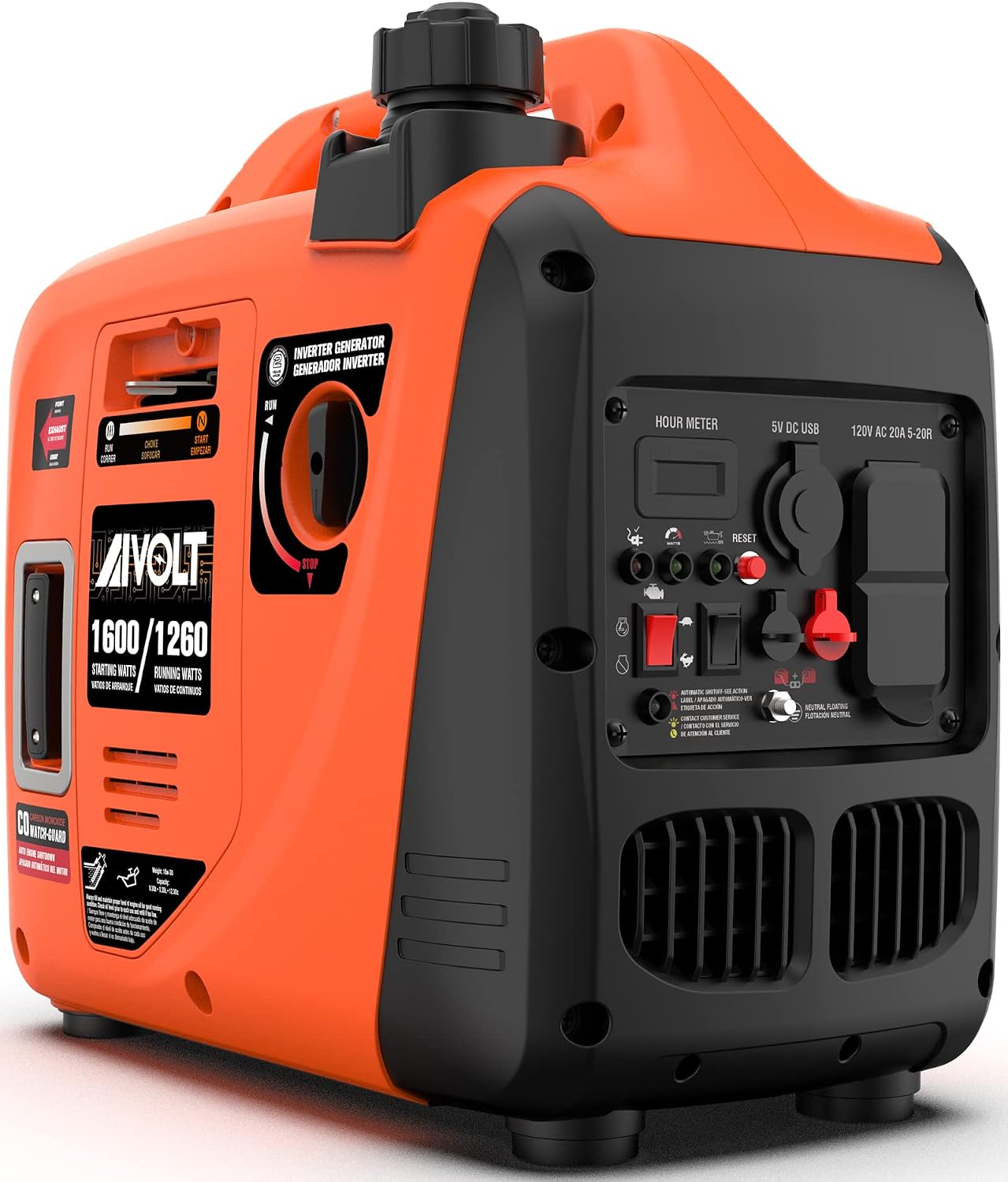
AIVOLT 1600W Super Quiet Inverter Generator 28lbs Portable for CampingVisit on Amazon
The lightest thing here by a wide margin, and the only one a tired person carries one-handed. Ideal for tent camping, tailgates, and a small load on a long cord.
1,600 watts of starting headroom will not carry a well pump, a furnace blower, or a window air conditioner. Camping first, house second.
2500W Portable Generator Super Quiet Inverter Generator Ultra Lightweight for Home Backup Outdoor Camping, CO Sensor Protect, EPA, ECO ModeVisit on Amazon
2,500 watts with a carbon monoxide shutoff and an eco throttle. This is the middle ground that covers a fridge, a few lights, a router, and phone charging without drama.
Support and parts are the open question. If something fails in year three, you want a phone number that answers.
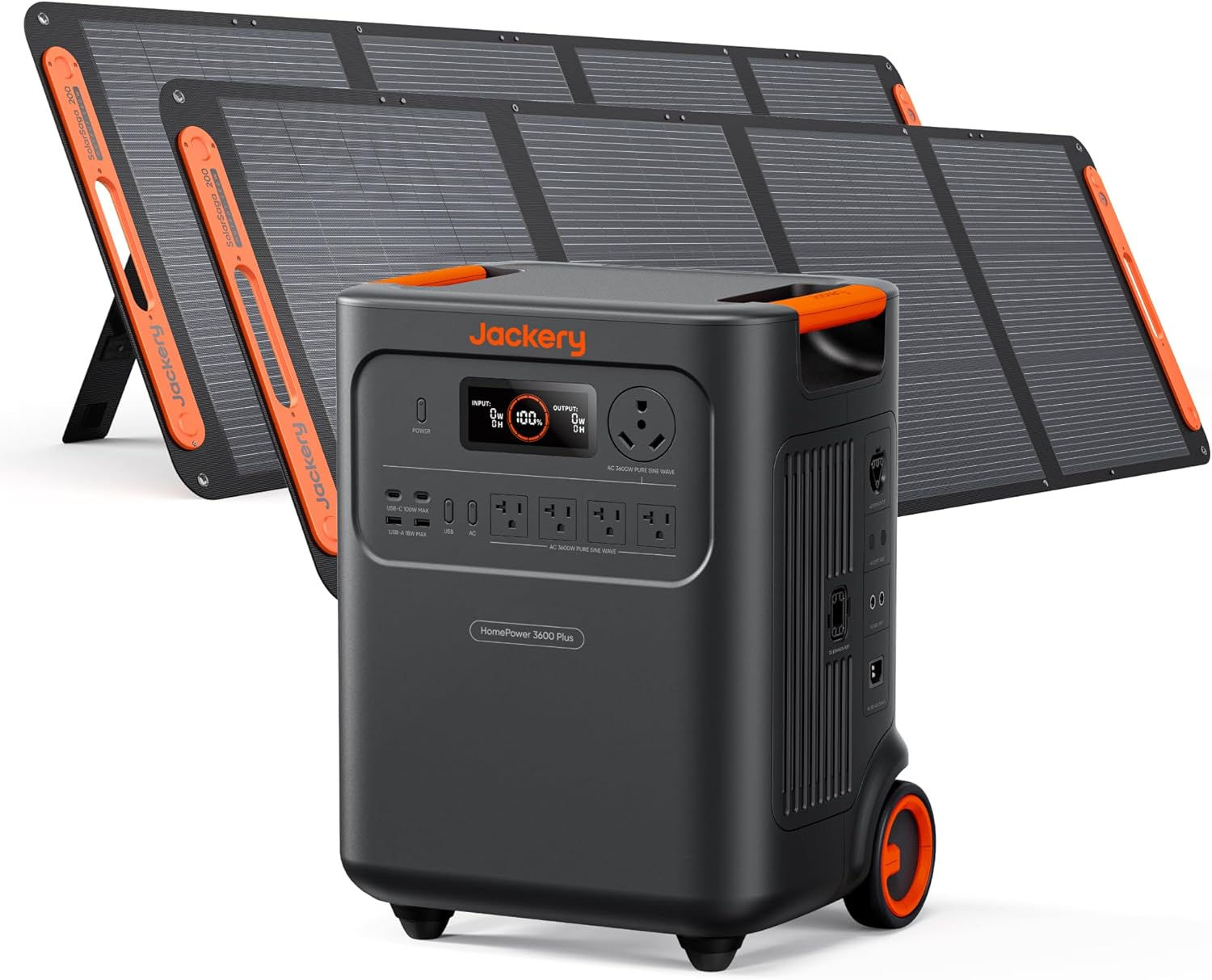
Jackery HomePower 3600 Plus Portable Power Station with 2X 200W Solar Panels, 3600W AC Output, 3584Wh LFP Solar Generator, Expandable up to 21kWh, Essential Home Backup for Home Use, Emergencies, RVVisit on Amazon
No fuel, no exhaust, no carbon monoxide, nothing to pull. 3,600 watts of AC output and 3,584Wh of LFP storage, expandable to 21kWh, with two 200W panels in the box.
It costs more than the other three combined, and solar recharge is at the mercy of the weather. A rainy week is a slow week.
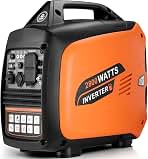
Oxseryn 2800-Watts Portable Inverter Generator, Gas Generators for Home Use, Camping, Super Quiet Emergency Home Backup, with Fuel Shut Off, 1.1Gal Fuel Tank, 39Lbs, EPA CompliantVisit on Amazon
The most watts of the three gas units, with a fuel shutoff valve so you can run the carb dry before storage. That valve is a genuine maintenance feature, not a marketing line.
39 pounds is past the point where most people want to carry it up a hill, and the listing does not mention a carbon monoxide shutoff.
Prices and availability were captured from Amazon Creators API and may change.
How I judge a generator
Every unit that comes through my shop goes on a load bank before it goes anywhere near a house. That means resistive heaters and real motors that pull honest watts, a decibel meter at 25 feet, and a stopwatch sitting next to a measured fuel jug. Three rules come out of that work, and they apply to all four machines above.
First, peak watts in big print and running watts in the fine print is the oldest trick in the category. A unit that advertises a number 20 percent higher than its continuous rating is telling you which number to ignore. Second, I do not repeat a run time claim without my own timer, my own fuel, and my own math. Third, an inverter gets no recommendation from me without knowing its total harmonic distortion is under 5 percent, because that is the number that decides whether your laptop power brick hums and whether your furnace control board survives the week.
What I cannot do from a spec sheet is tell you how any specific unit sounds or how long it runs on a tank. That requires the bench, and this article sticks to what the listings actually say.
What 1,600 watts really covers
The AIVOLT is the smallest machine here, and it is honest about what it is: a 28-pound camping generator. At that weight it goes in the truck bed or the trunk without a second thought, and it handles the loads that campers actually have. Phone chargers, a laptop, LED lanterns, a small fan, a CPAP machine, a television, and a coffee maker if you time it right.
The interesting question is the fridge. A modern refrigerator typically needs two to three times its running watts for a second or two when the compressor kicks on, so a 1,600-watt inverter can often start one, provided almost nothing else is drawing at that moment. That is a real capability, and it is also a fragile one. Add a freezer on the same cord and you are asking a camping generator to do a household job.
If your plan is a weekend at a campsite or a tailgate, this is the right tool. If your plan is nine days of outages, it is the wrong one, and no amount of eco mode changes that.
The middle of the market: 2,500 and 2,800 watts
The 2,500-watt unit and the Oxseryn 2800-Watts are aimed at the same buyer, and the differences are more about features than raw numbers.
The 2,500W Portable Generator brings a carbon monoxide shutoff, which is not optional equipment in my book. Carbon monoxide is the thing that actually kills people during outages, and a sensor that kills the engine before the air gets dangerous is worth more than a hundred extra watts. It also lists an eco throttle, which drops engine speed to match the load. That saves fuel and it saves your relationship with the neighbors, though on some units eco mode reacts too slowly for a fridge surge. Add EPA compliance and you have a machine that covers a fridge, a router, a few lamps, and a phone charger at the same time.
The Oxseryn brings more watts and a fuel shutoff valve, which is the feature I care about most for long-term ownership. Running the carburetor dry before the unit sits for six months is the difference between a generator that starts next October and a two-hundred-dollar service visit. The 1.1-gallon tank is small, which means more refueling but also less stale fuel sitting in the system. At 39 pounds it is a two-hand carry, and there is no carbon monoxide sensor mentioned in the listing, so it belongs outdoors and well away from windows.
Between the two, the 2,500-watt unit wins on safety features and the Oxseryn wins on raw capacity and storage discipline. If you have a well pump or a sump pump that has to run, the extra watts matter. If you have a house full of people and a window that opens, the sensor matters more.
The battery route: when no fuel is the feature
The Jackery HomePower 3600 Plus is not a generator in the fuel sense, and comparing it on watts alone misses the point. It stores 3,584Wh in an LFP battery, puts out 3,600 watts of AC, expands to 21kWh if you add batteries, and ships with two 200W solar panels.
Here is why that matters. During Helene, the two loudest problems on my street were fuel and noise. Fuel ran out on day four, and the stations that had power had lines that stretched around the block. A battery station has neither problem. It is silent, it can sit in a hallway, it produces no exhaust and no carbon monoxide, and it recharges from the sun or from a wall outlet when the grid is up. For a household with a medical device, an infant, or a neighbor who cannot lift a pull cord, that combination is worth real money.
The trade-off is equally clear. It is the most expensive item on this list by a wide margin, and solar charging depends entirely on weather. Two hundred watts of panel in full sun is a respectable trickle, but a week of rain turns a solar plan into a rationing plan. If you buy this, buy it with a plan for cloudy days, whether that is a small gas unit as backup or a wall outlet before the storm arrives.
Surge watts, THD, and the fine print
Two numbers decide whether a generator works with your appliances, and neither one is printed large on the box.
Surge watts are the startup spike a motor needs. A fridge compressor, a well pump, a furnace blower, and an air conditioner all draw two to three times their running watts for a moment when they kick on. If the surge exceeds what the unit can deliver, the motor stalls, and a stalled compressor is an expensive repair. This is why a 2,500-watt inverter can run a fridge that a 1,600-watt unit cannot reliably start alongside anything else.
THD is total harmonic distortion, and under 5 percent is the bar. Inverter generators deliver clean power by design, which is the entire reason they cost more than a conventional open-frame unit. Clean power keeps laptops, televisions, and modern control boards happy. If you only need power at a job site for a circular saw, a conventional generator is cheaper per watt. If you need power where people sleep and where electronics live, inverter output is the whole point.
Noise, fuel, and the neighbor problem
Noise is a neighbor problem until it becomes your problem, and the box never tells you the truth. "Whisper quiet" with no decibel number is marketing. The honest measurement is taken at 25 feet at a quarter load, which is how a generator actually runs overnight, and it is the number I want before I recommend anything.
Fuel works the same way. A run time printed on the box is measured at 25 percent load. At half load, cut that figure by a third. At full load, cut it in half. During a nine-day outage you will be running at half load or better for most of it, so plan your fuel around the real number, not the sticker. Store ethanol-free fuel or treat what you keep, because E10 left in a carburetor over a winter turns into varnish and a service call.
What I would buy
For a house that needs to keep a fridge cold, charge phones, and run a few lights through a multi-day outage, the 2,500-watt inverter is the pick. It has the carbon monoxide shutoff, the eco throttle, and enough headroom to start a compressor without holding your breath.
For camping, tailgating, and occasional small loads, the AIVOLT at 28 pounds is the one that actually gets used, because the generator you can carry is the generator you will bring.
For a well pump, a sump pump, or a house where the extra watts decide whether the water runs, the Oxseryn gives you the most capacity of the gas units plus a fuel shutoff that will pay for itself the first time you store it properly.
For a medical need, a quiet hallway, or a household that cannot manage fuel and pull cords, the Jackery HomePower 3600 Plus is a different category of answer, and it is priced like one.
Before you click buy
Four things to settle before any of these lands on your porch. Add up the running watts of everything you need at once, then add the largest motor's surge on top of that. Decide where the unit will sit, because exhaust needs distance from windows and doors. Decide how you will store fuel, or decide you will not store it at all. And read the owner's manual cover to cover before the storm, not during it, because a generator that needs a tutorial to start will fail at 2 a.m. in the rain.
That is the whole test. The watt meter does not care what the box says, and neither should you.