Related: Sizing a Generator for a Whole House: A Load-by-Load Walkthrough
Portable inverter generators are sold on numbers that mean almost nothing during an outage: peak watts in big type, running watts in the fine print, and a quiet claim with no decibel figure anywhere on the box. I have been through enough ice storms and hurricane leftovers in western North Carolina to stop trusting the sticker. When Helene took our grid down for nine days, I watched a normally polite street turn on itself over a 50-foot extension cord. That week is why I bought a load bank, a decibel meter, and a paper logbook, and why I measure portable inverter generators the way I used to rebuild carburetors: take it apart, measure everything, and believe the meter over the marketing.
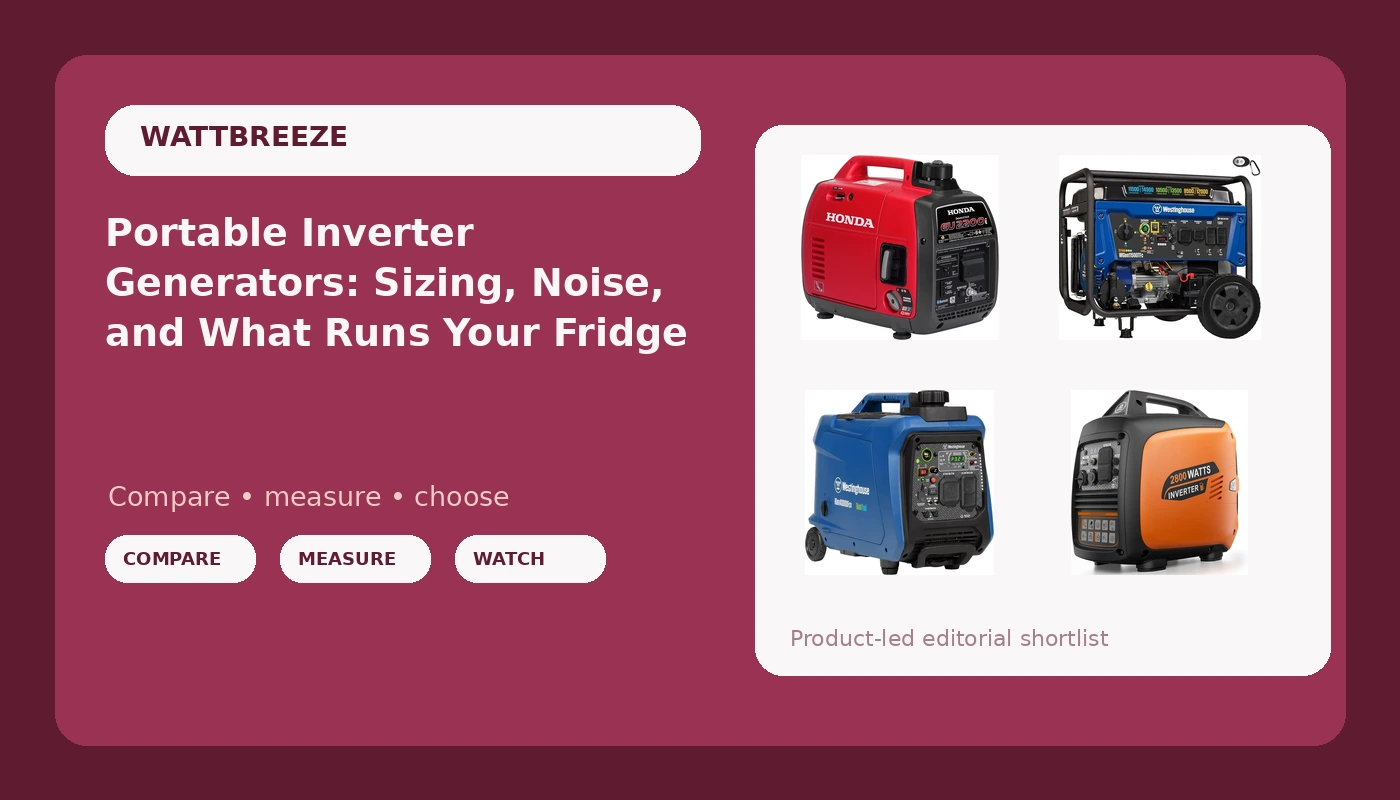
The four units below cover the real range of what people actually buy. The Honda EU2200i is the benchmark for quiet, small-load power. The Westinghouse 4000 peak watt dual fuel inverter is the one I would put in most garages. The 2,800-watt quiet inverter is the budget entry for camping and light backup. And the Westinghouse 14,500 peak watt tri-fuel is a different animal entirely, built for a transfer switch and a whole house.
Here is how they compare, and how to decide which one your fridge, your sump pump, and your neighbors can live with.
Honda EU2200i: The Quiet Benchmark
Honda has been building this reputation for decades, and the EU2200i is the small inverter every other small inverter gets measured against. It starts on the first pull, cold, in the rain. That sounds like a small thing until you are the one yanking a cord at 2 a.m. while water creeps toward the furnace.
In the 2,200-watt class you are buying clean, stable power for laptops, phones, a router, a modem, and a television, plus enough surge to start a modern refrigerator if you manage the loads like an adult. That means the fridge first, then the freezer, then the chargers, and not all at once. Inverter output is the reason your electronics do not whine, and it is the reason your neighbor does not come knocking.
What you are paying for here is refinement: quiet operation, easy starting, and fuel economy that stretches a small tank a long way at light load. The premium is real. It is a premium, not a miracle. If your plan involves a space heater, a microwave, and a coffee maker at the same time, this is the wrong class of machine and no amount of brand loyalty will fix it.
Where it fits: tailgating, tent and RV camping, charging tools, small emergency loads, and anyone with neighbors within earshot who would like to keep them.
Westinghouse 4000 Peak Watt Dual Fuel Inverter: The Sweet Spot
This is the one I point most people toward, and the feature list is why. It carries a CO sensor that shuts the unit down when carbon monoxide builds up, a wheel and handle kit so you are rolling it instead of lifting it, dual fuel operation on gasoline or propane, RV-ready outlets, and parallel capability if you later want to team it with a second unit for more capacity.
The 4,000 peak watt rating tells the surge story. The running watts are the number that decides what you can leave plugged in for hours on end, and that is the number I want you to find before you buy, not after. Run it on propane and you give up some output, but you gain a fuel that stores indefinitely and does not varnish a carburetor while it sits in the garage. For storm prep, that trade is usually worth it.
The CO sensor matters more than any spec on this page. Every year people die running generators in garages and against the house, and a shutoff is not a gimmick. On any unit that runs anywhere near a house, I treat it as non-negotiable.
Where it fits: home backup for a fridge, freezer, sump pump, furnace blower, and lights, plus RV travel and job sites where people are nearby. Parallel capability means it can grow with you instead of being replaced.
2800W Portable Inverter Generator: The Budget Entry
This is the price of admission for a quiet inverter. It is a gasoline-only, EPA-compliant unit aimed at camping, RVs, home backup, and outdoor use, and it lands in the class where most first-time buyers start.
For tailgating, a small travel trailer, charging tools at a job site, or running lights and chargers through a short outage, this is a lot of generator for the money. For a nine-day outage carrying a fridge, a freezer, and a sump pump, it is a stretch. This is also the class where people most often learn the hard way that surge watts are not running watts, and that the startup spike on a compressor motor is what decides whether the fridge actually turns on.
The honest advice, and I say this as the guy who still owns a $350 budget unit and tells people to think twice about it: if a generator is your only backup for a real outage, spend more. If it is for weekends, hunting camp, and occasional use, this is where the value lives. Just run ethanol-free fuel, or treat the gas and drain the carburetor, because a carburetor rebuild costs more than the fuel you saved.
Westinghouse 14500 Peak Watt Tri-Fuel: Whole-Home Backup
This is not an inverter, and I am not going to pretend it is. It is a conventional portable built for a transfer switch: 14,500 peak watts, remote electric start, and tri-fuel operation on gasoline, propane, or natural gas. That last one is the whole reason to look here. A natural gas line does not run dry the way a fuel jug does at hour nine of an outage.
The trade-offs are real. Conventional units are louder, thirstier, and cheaper per watt, and the power quality is not the same as an inverter, so I would not run a laptop or a modern TV on one without thinking about it. If you only need power where nobody sleeps, a conventional generator is the better buy per dollar. If you need power where people sleep, get an inverter.
Where it fits: whole-home backup behind a transfer switch, well pumps, central air, and households that want the remote start and the fuel flexibility more than they want a quiet machine.
How I Test
Everything gets the same treatment. I wire the unit to a load bank of heaters and motors so I can dial in a real load instead of guessing from a sticker, then I measure noise with a decibel meter at 25 feet at quarter load, because that is where the unit actually sits in a driveway and where the neighbors actually hear it. Box noise ratings are taken at one foot with no load, which tells you nothing about your life.
Then I start it cold, in the rain, and count the pulls. I time a full tank with my own jug and my own stopwatch, because run time printed on a box is measured at 25 percent load. At half load, cut it by a third. At full load, cut it in half. Plan your fuel around the real number and you will not be the person siphoning a lawn mower at midnight.
What the Specs Actually Mean
Surge watts versus running watts. Surge is the startup spike a motor needs, usually two to three times its running draw. Running watts is the continuous load the unit can carry hour after hour. The surge number decides whether your fridge turns on. The running number decides whether it stays on.
THD, or total harmonic distortion. Under 5 percent means laptops, televisions, and phone chargers are happy. Inverter generators deliver that. Cheap conventional units do not, and sensitive electronics can buzz, run hot, or fail.
Eco mode. The throttle drops engine speed to match the load, which saves fuel and noise. On some units it cannot react fast enough for a refrigerator's surge, so if the fridge trips the unit into overload, turn eco mode off before you blame the generator.
CO sensor. Carbon monoxide shutoff, and it is required on new units for a reason. Non-negotiable near a house.
Ethanol-free fuel and stabilizer. E10 left in a carburetor turns to varnish. Stabilizer is cheaper than a carburetor rebuild, and draining the bowl before storage is cheaper still.
The Comparison Table
| Generator | Listed peak power | Fuel | Standout features | Best for |
|---|---|---|---|---|
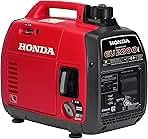 Visit on Amazon → Visit on Amazon →Honda EU2200i 2200 Watt Inverter Generator (EU2200ITAN) |
2,200 watts | Gasoline | Quiet operation, first-pull starting, light fuel use | Small loads, camping, tailgating |
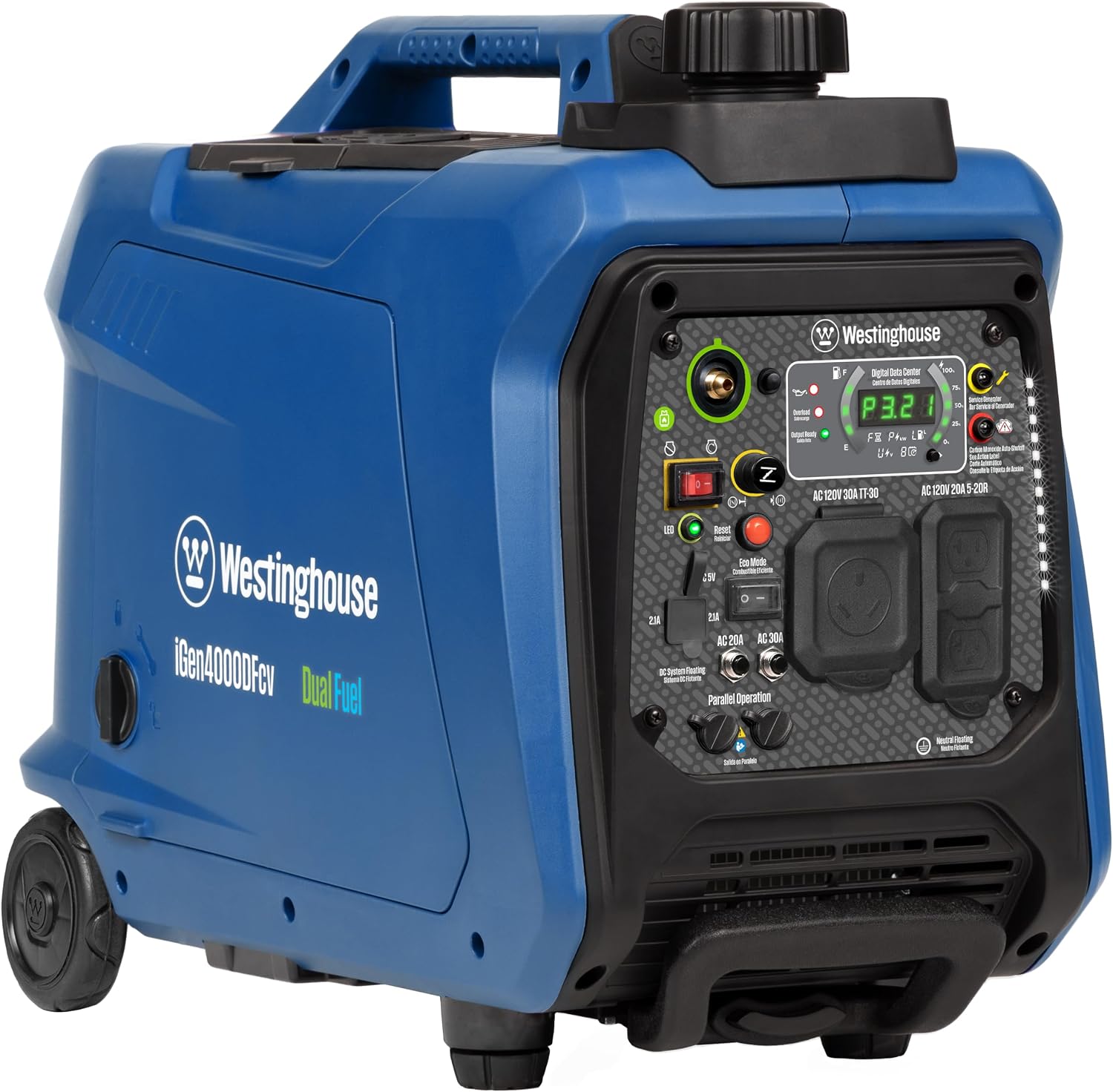 Visit on Amazon → Visit on Amazon →Westinghouse 4000 Peak Watt Dual Fuel Inverter |
4,000 watts | Gasoline or propane | CO sensor, RV ready, parallel capable, wheel and handle kit | Most home backup and RV setups |
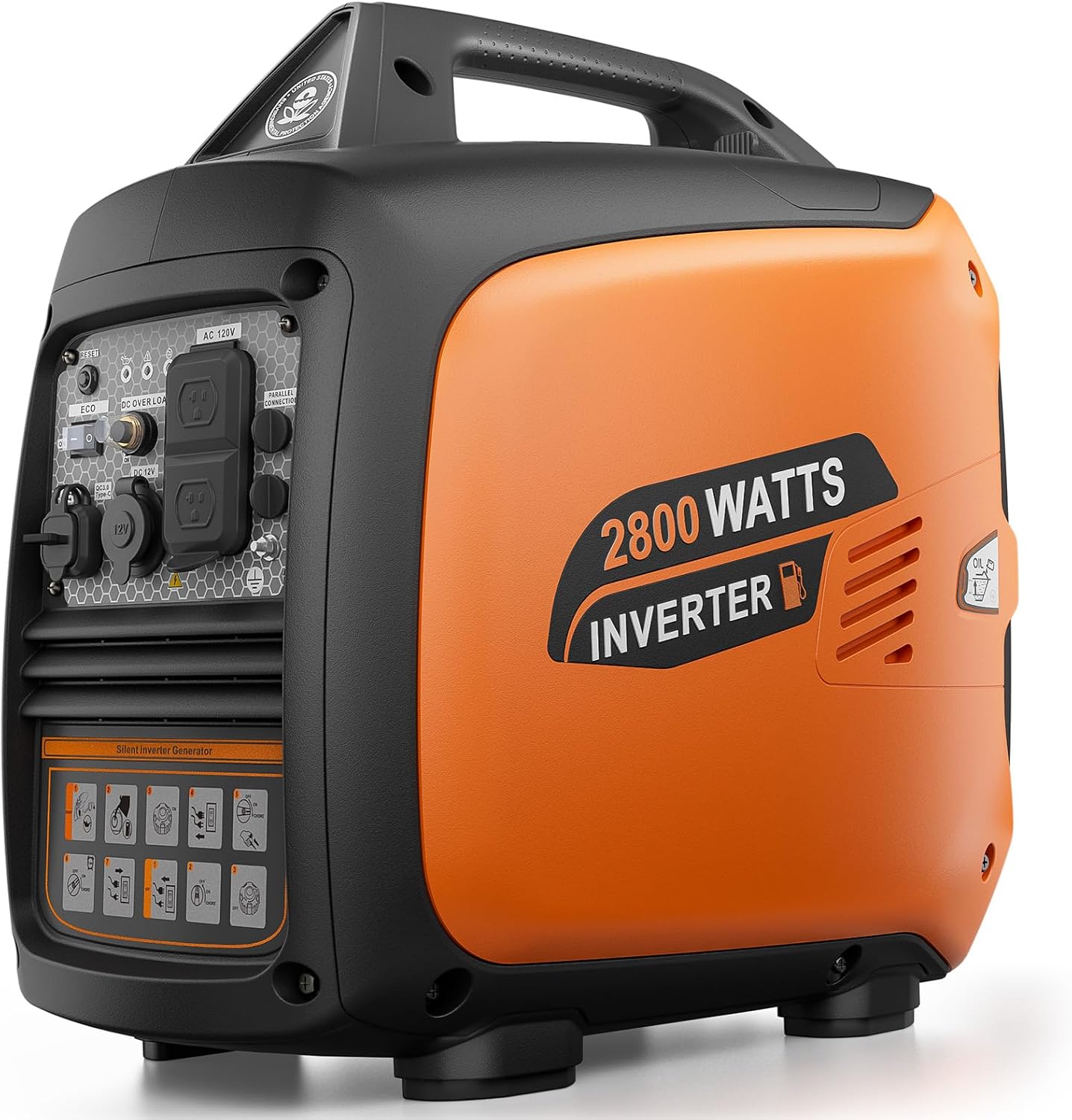 Visit on Amazon → Visit on Amazon →2800W Portable Inverter Generator |
2,800 watts | Gasoline | Quiet operation, portable, EPA compliant | Camping, tailgating, light backup |
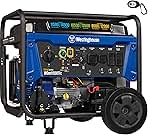 Visit on Amazon → Visit on Amazon →Westinghouse 14500 Peak Watt Tri-Fuel |
14,500 watts | Gasoline, propane, or natural gas | Remote electric start, transfer switch ready | Whole-home backup |
Peak numbers are what the manufacturer lists, and they are the ceiling, not the plan. Match the running watts to your real load, add up the surge for anything with a motor, and leave yourself headroom for the furnace blower that kicks on when you are not looking.
Should You Buy the Honda EU2200i?
Yes, if quiet matters and your loads are small. It is the unit I hand to people who want it to start on the first pull and then be forgotten about. You pay a premium for that, and you get refinement, fuel economy, and clean power in return. It will not run your whole house, and it was never meant to.
Should You Buy the Westinghouse 4000 Peak Watt Dual Fuel Inverter?
For most households, yes. The CO sensor, the dual fuel flexibility, the parallel capability, and the wheel kit make it the most sensible single purchase on this page. It covers a fridge, a freezer, a sump pump, and the lights, and it can grow with a second unit later. Check current Amazon price, but size your load first.
Should You Buy the Budget Unit or the Tri-Fuel?
Buy the 2,800-watt quiet inverter if this is for weekends, camping, and light backup, and you understand its ceiling. Buy the tri-fuel Westinghouse if you are wiring a transfer switch and want a whole house back online, and you accept the noise and the fuel burn that come with it. Those are two different jobs, and the wrong one of the two will make you miserable at 2 a.m.