Related: Quiet Inverter Generators for Tailgating and Camping
I ran a small-engine repair shop in Asheville for 22 years, and I thought I had seen every way a storm can ruin a week. Then Helene took the grid down for nine days. I watched a polite street turn on each other over a 50-foot extension cord, a guy in a pickup selling priority hookups out of the truck bed, and a 30-year-old contractor generator rattling windows at 2 a.m. When the lights came back I bought a load bank, a decibel meter, and a paper logbook, and I started testing portable inverter generators and the conventional units they compete with the way I used to rebuild carburetors: measure everything, trust the sticker for nothing.
Over 40 generators have gone on the load bank since then, every run logged by hand. This guide is the short version of what that logbook says about four very different ways to keep a fridge, a sump pump, and a phone charger alive when the grid is not. Two of these are true inverter generators, one is a big conventional dual fuel unit, and one is a battery with a solar panel. They are not interchangeable, and the right one depends on whether you need quiet power for a weekend or a whole house for nine days.
Best for Whole-Home Backup: DuroStar DS13000MX
This is the sledgehammer of the group. A 13,000-watt, 500cc dual fuel unit with remote electric start, built to sit outside a house, tie into a transfer switch, and carry the whole panel. It runs on gasoline or propane, and propane is the part I care about most. Propane does not varnish a carburetor, it does not go stale in a can, and it does not turn into a $200 service call after eight months in the shed. Most dual fuel units give up some output on propane, so read the label and plan your loads around the lower number, not the big one in the ad.
Understand what you are buying. This is not an inverter. It is a conventional generator, which means it is loud, it is thirsty, and it does not care about your neighbors. During Helene the units that made people hate each other were exactly this size. If you buy one, run it in blocks: a few hours in the morning to bring the fridge and the well pump back, a few hours at night for the house, then shut it down. That is how the retired lineman next door ran his whole house on a much smaller unit for nine days without a single complaint.
Transfer switch ready matters. If you are not wiring this into a panel, you are running extension cords through a window, and that is the moment a street starts arguing. Whatever you buy in this class, run it at least 20 feet from the house, doors and windows closed, and never in a garage.
Best Quiet Inverter for Camping and RV: ERAYAK 4500W
This is the one I would hand to most people who ask me the question in the driveway. It is an inverter, so the power is clean enough that laptops, TVs, and phone chargers will not whine, and the total harmonic distortion stays in the range that electronics tolerate. It is in the 4,500-watt class, which is enough to start a fridge and keep it running, run a sump pump, and still have room for lights and a router if you stagger the big loads.
ECO mode is the feature people underrate and misread. At light loads the engine drops to a lower RPM, which saves fuel and drops the noise. The catch is reaction time. On some units ECO mode cannot spool up fast enough for a compressor surge, and the fridge trips the overload. Test it at your house with your fridge before the storm, not during it. If it stumbles, turn ECO off for the fridge and leave it on for everything else.
The name says super quiet. Every box says that. The only number I trust is a decibel reading at 25 feet at quarter load, which is where a generator actually sits while people are trying to sleep. Put a meter on it, or at least stand 25 feet away and decide for yourself. EPA compliant matters for a gas engine you will run for years.
Best Battery and Solar Option: Jackery Solar Generator 1000 v2
This is the unit that makes no noise, burns no fuel, and produces no carbon monoxide, which means it can live in the closet of an apartment and run a CPAP, a router, phones, lights, and a laptop through the night. The 200W solar panel is what turns it from a battery into a system, and the 1,500W AC output is enough for a lot of household items one at a time.
Here is the honest math, because this is where people get disappointed. A 1,070Wh battery is not a nine-day refrigerator plan. A fridge compressor cycling on and off will chew through that capacity faster than you expect, and then you are waiting on the sun. Think of it as the essentials box plus a rechargeable reserve, or as the quiet partner to a fuel generator: run the generator for a couple of hours to power the house and recharge the battery, then shut the generator off and run the small stuff on the Jackery all night. That combination is quieter, cheaper on fuel, and easier on the neighbors than running a gas engine until 2 a.m.
It is also the right answer for tailgating, tent camping, and anyone in an apartment or condo where a gas engine is not an option at all. No oil changes, no carburetor, no ethanol fuel going bad in a float bowl.
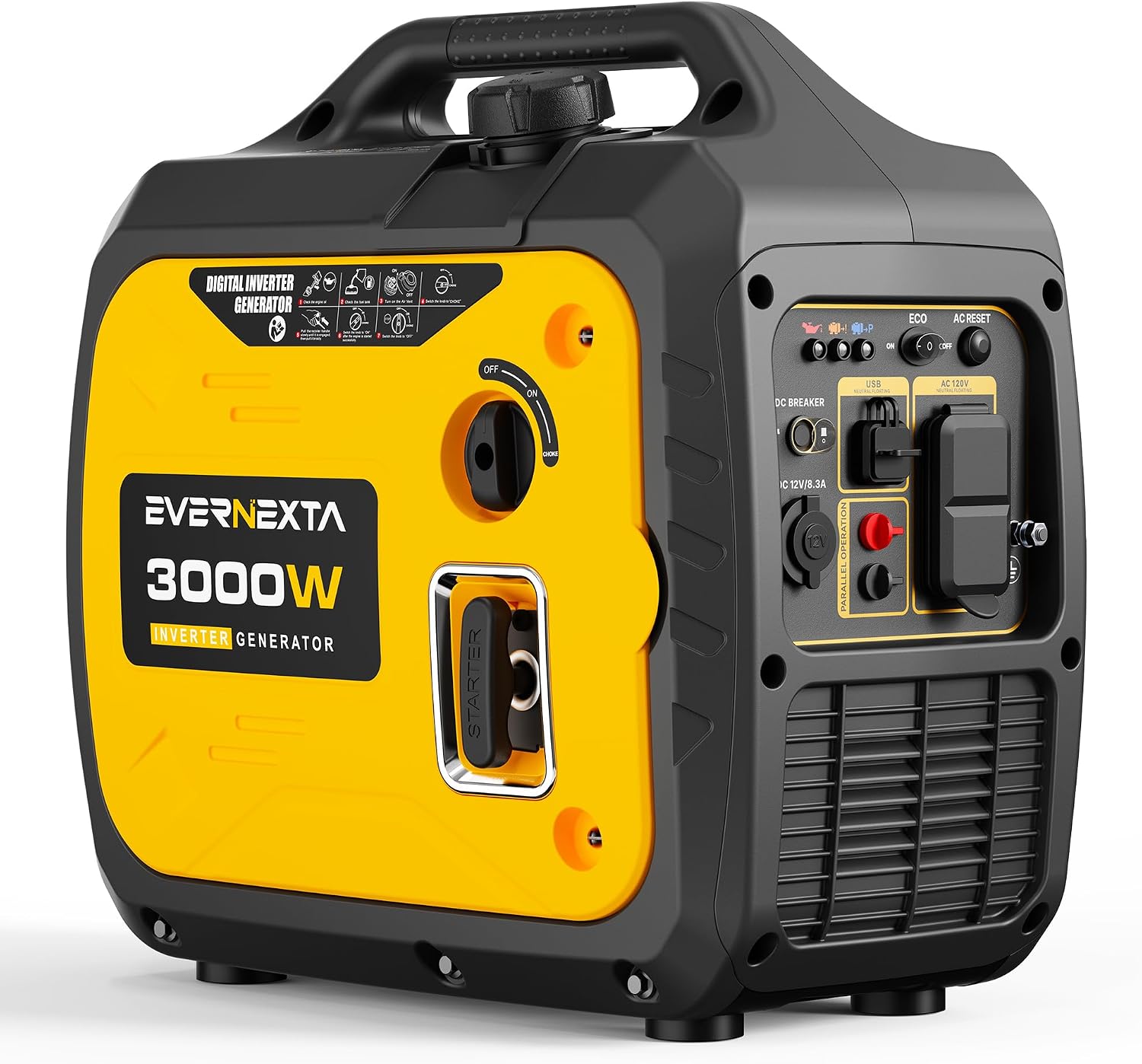
Best Budget Inverter: 3000W Inverter Generator
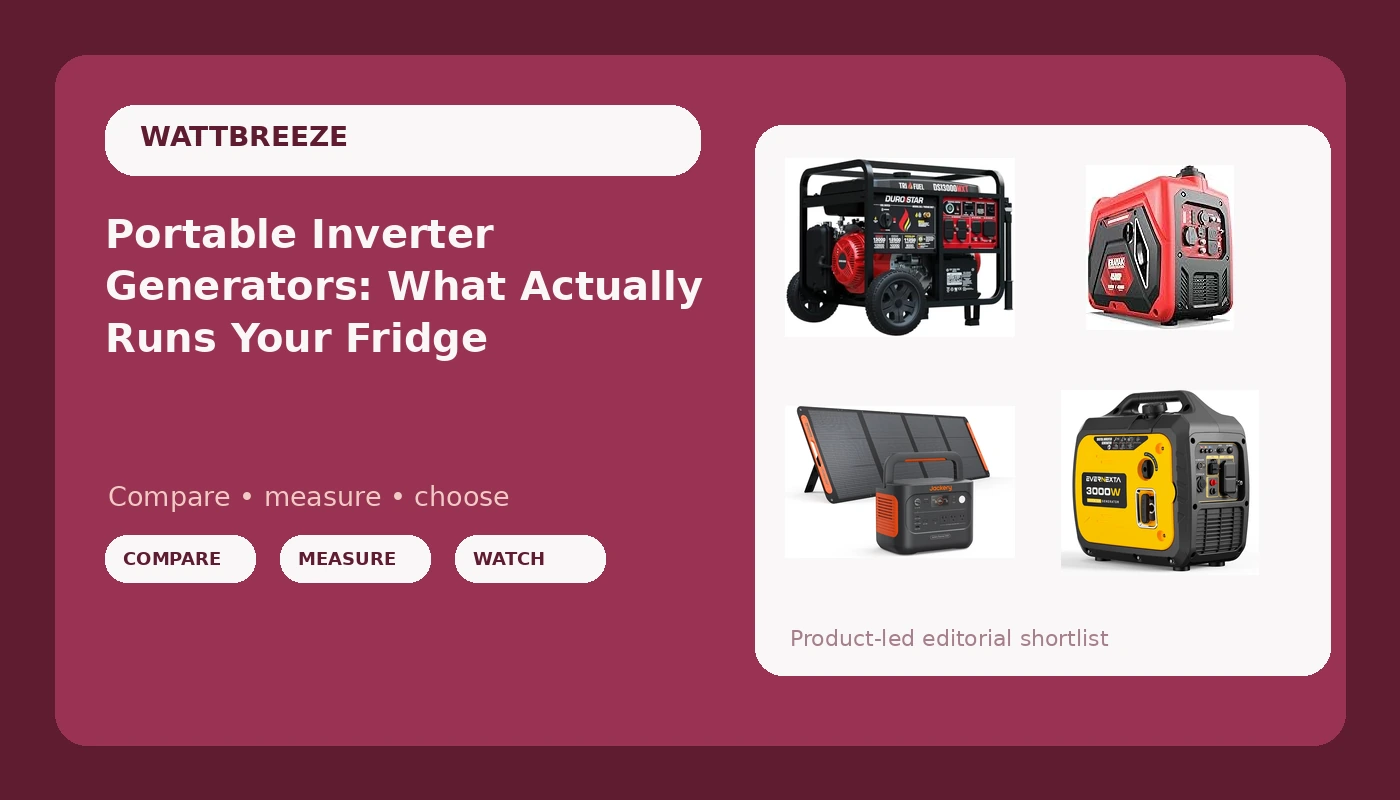
This is the budget door into inverter power. A 3,000-watt class portable inverter with RV in the description, which tells you who it is aimed at: campgrounds with noise rules, tailgates, and weekend backup for a fridge, a few lights, and a phone charger. It is small and light enough that one person can move it, which is more than I can say for a lot of the big units I have dragged around.
The tradeoffs show up in the details. Check whether it has a CO sensor, because carbon monoxide shutoff is non-negotiable on any generator that runs near a house. Check whether it ships with oil, because some of these arrive dry with a sticker that says see manual, and the first start is the one that matters. Check the fuel gauge, because the cheap ones lie and read full until the tank is a third empty. And check the wheels and handle if you plan to move it, because wobbling wheels and a handle that digs into your palm at 80 pounds will make you hate a machine that otherwise works fine.
Wen's 2,000-watt class units are the best cheap inverter generators for occasional use, and this sits in that same conversation. If it is your only backup for a real outage, spend more. If it is for a weekend at the lake, it earns its spot.
How I test a generator
The load bank comes out first. Heaters and motors that draw real watts, so I can measure what a unit actually delivers at the wall instead of trusting a sticker. Spec watts are measured at sea level with a gentle breeze. Real watts are what a fridge surge demands at 6 a.m. on the third day of an outage.
The decibel meter comes out second, and it reads at 25 feet at quarter load. Not one foot. Not no load. The box number is measured in a way that flatters the machine, and noise is a neighbor problem until it is your problem.
The stopwatch and the fuel jug come out third. Run time on the box is measured at 25 percent load. At half load, cut it by a third. At full load, cut it in half. Plan fuel around the real number, not the brochure number, because the last thing you want to do during an ice storm is drive around looking for a gas station with power.
Then the cold start test. Cold engine, rain, second pull. A generator that needs a YouTube tutorial to start will fail at 2 a.m. in a storm. Pull cords do not buffer, and neither do phone apps.
The portable inverter generator reference table
Four machines, four jobs. Every link below goes to the exact unit it sits next to.
| Generator | Type | Fuel or power | Best for | Link |
|---|---|---|---|---|
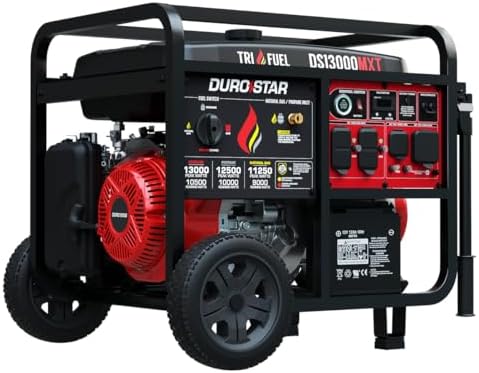 Visit on Amazon → Visit on Amazon →DuroStar DS13000MX |
Conventional, dual fuel | Gas or propane | Whole home backup with a transfer switch | Check current Amazon price |
 Visit on Amazon → Visit on Amazon →ERAYAK 4500W |
Inverter, gas | Gasoline | Fridge, sump pump, RV, camping | Check current Amazon price |
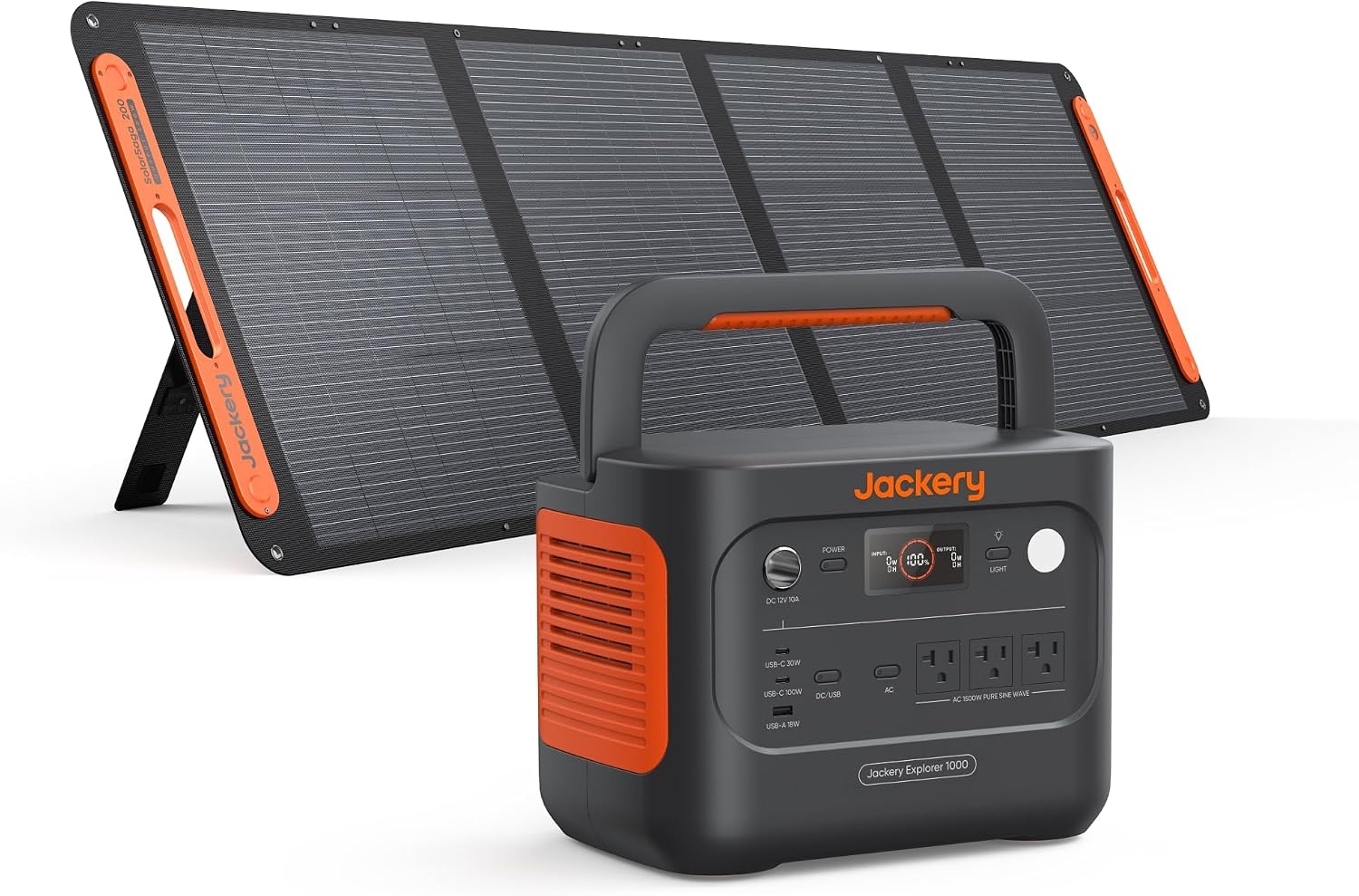 Visit on Amazon → Visit on Amazon →Jackery Solar Generator 1000 v2 |
Battery plus solar panel | Sun and wall outlet | Apartments, CPAP, phones, quiet nights | Check current Amazon price |
 Visit on Amazon → Visit on Amazon →3000W Inverter Generator |
Inverter, gas | Gasoline | Budget RV and tailgate power | Check current Amazon price |
What the numbers actually mean when you are shopping
Surge watts are the startup spike a motor needs, usually two to three times running watts. That is the number that decides whether your fridge actually turns on. Running watts are the continuous load a generator can carry hour after hour, and that is the number that matters on day four of an outage. Any listing that puts peak watts in big print and running watts in the fine print is telling you something about itself.
Total harmonic distortion is the quiet spec that decides whether your electronics are happy. Under 5 percent is the target, and inverter generators deliver it while cheap conventional units do not. If you are plugging in a laptop, a modern TV, or a furnace control board, that matters.
Fuel is the other half of the story. Ethanol fuel left in a carburetor is a time bomb, and stabilizer is cheaper than a carburetor rebuild. I only let ethanol free fuel sit in a machine for more than a month, and I drain the bowl before anything goes into long storage. The generator that forgot to get winterized last spring is the one sitting in my own shed, so I am not lecturing from a clean bench.
And a CO sensor is not a feature to comparison shop. It is a requirement.
Should you buy the DuroStar DS13000MX?
Yes, if you have a transfer switch, a propane supply, and a place to run it far from the house. It is built for the job that the other three cannot do, which is carrying a whole panel and keeping a well pump and a furnace alive. Just go in knowing it is loud and thirsty, and that running it in blocks is the difference between being the helpful neighbor and being the guy everyone talks about at the mailbox.
Should you buy the ERAYAK 4500W?
This is the one I would buy first for a normal house with normal loads. It is an inverter, so the power is clean, and the 4,500-watt class covers a fridge, a sump pump, and the small stuff if you stagger the big draws. Test ECO mode against your own fridge before storm season, verify the noise at 25 feet, and keep ethanol free fuel in it.
Should you buy the Jackery Solar Generator 1000 v2?
Yes, if your plan is essentials and silence, or if a gas engine is not allowed where you live. It is also the smart partner for a fuel generator, because it lets you shut the noisy machine off at night. Just do not buy a 1,070Wh battery expecting it to run a refrigerator for nine days. That is not what it is, and the people who get angry at it are the people who skipped the math.
Should you buy the 3000W inverter generator?
Buy it if you want quiet inverter power for RV trips and tailgates at the lowest entry point here, and you are willing to check the small stuff: CO sensor, oil in the box, an honest fuel gauge, wheels that roll straight. If this is your only line of defense for a real outage, save longer and step up. A generator that quits at 2 a.m. is worse than no generator at all, because at least with no generator you are already dressed.