Related: Best Portable Generator Accessories for Storm Season
After Hurricane Helene took the grid down for nine days in Asheville, I watched a polite street turn on each other over a 50-foot extension cord. A guy in a pickup was selling priority hookups out of the bed. A 30-year-old contractor unit rattled windows at 2 a.m. When the lights came back on, I bought a load bank, a decibel meter, and a paper logbook, and I started doing to generators what I used to do to carburetors in my shop: take it apart, measure everything, and never trust the sticker.
That is the lens I bring to portable inverter generators. I ran a small-engine repair shop for 22 years, and the honest truth is that most generator arguments are not about engines. They are about math. The box says one number, your fridge demands another, and the gap between them is where the 2 a.m. disappointment lives.
This guide covers four pieces of equipment that do four different jobs: a dual fuel whole-home unit, a mid-size open frame inverter, a small quiet inverter, and the carburetor that keeps a tired Predator 3500 alive. Different machines, same rules. Know your surge, know your noise, know your fuel.
Best for Whole-Home Backup: Westinghouse 6500 Watt Dual Fuel
This is the one that gets wired in. The Westinghouse 6500 Watt Dual Fuel Home Backup Portable Generator is transfer switch ready, which is the phrase that matters if you are tired of running cords through a window and taping the gap with shop towels. It also carries a 30A outlet for RV hookups and a CO sensor, which shuts the unit down when carbon monoxide builds up. That last feature is not a gimmick. It is the reason I will not recommend a generator without one to anybody who plans to run it near a house.
Dual fuel is the real story here. Gasoline refills faster and typically gives you more output. Propane stores almost forever and does not turn into varnish inside a carburetor, which matters when the tank has been sitting in your garage since the last storm that never came. After a real outage, propane is often the only fuel still on the shelf.
Two honest caveats. This is a conventional portable generator, not an inverter, so it is built for heavy loads and job site work rather than quiet overnight duty next to a bedroom window. If your neighbors sleep twenty feet away, that is a conversation you should have with yourself before you buy. And the 6,500-watt class is heavy. Check the listing for a wheel kit and a lift handle, because you are not carrying this alone.
If your plan is a transfer switch, a well pump, a fridge, and a furnace blower, this is the class of machine you want. If your plan is a tent and a phone charger, keep reading.
Best Open Frame Inverter: Oxseryn 4400 Watts
The Oxseryn Power Equipment 4400 Watts Inverter Generator is the middle of the road, and the middle is where most people actually live. It is an inverter, so the power coming out of it is clean enough for laptops, TVs, and modern furnace boards. It is RV ready, it has ECO mode, and it is an open frame design, which in plain English means you can actually get your hands on the oil drain plug and the air filter without disassembling half the machine.
That last point deserves more attention than it usually gets. Sealed suitcase inverters are lovely and quiet, but when they need service, they need a bench and patience. An open frame unit trades some of that sound shielding for access. If you are the kind of person who changes their own oil and checks the spark plug in October before the ice storms, that trade is worth it.
ECO mode is a feature I have mixed feelings about, and you should too. It drops engine RPM to match the load, which saves fuel and cuts noise. On some units it also cannot react fast enough when a fridge compressor kicks on. Test that yourself before an outage does it for you: plug in the fridge, let it cycle a few times with ECO on, and listen for the engine stumbling. If it stumbles, turn ECO off for the fridge and leave it on for everything else.
The 4,400-watt class covers a fridge, a few lights, a router, and a phone charger bank without much drama. Add a space heater and you are having a different conversation. Check the surge rating on the listing before you count on a well pump.
Best Small Quiet Inverter: ERAYAK 2400W
The ERAYAK 2400W Portable Inverter Generator is the one I would hand to a camper, a tailgater, or somebody in an apartment who needs to keep a fridge and a CPAP machine alive. It is small, it is quiet by design, it has ECO mode, and it is EPA rated. For dry camping and weekend trips, this is the size that makes sense, because you can move it by yourself and it does not announce itself to the entire campground.
Be honest about the load, though. A 2,400-watt inverter is a one-or-two-appliance machine. It will run a fridge. It will run a small microwave. It will run lights, a laptop, and a fan all day. It will not run a space heater and a microwave at the same time, and if you try, you will hear the overload trip and then you will be standing in the dark wondering what happened.
Here is the number people ignore: surge watts. A fridge compressor needs a startup spike that is often two to three times its running watts. That spike lasts a fraction of a second, and it is the reason a generator that "should" run your fridge sometimes does not. Check the surge rating before you buy, and if you are close to the limit, size up.
Noise is the other thing. "Super quiet" on a box is a marketing phrase until somebody puts a meter on it. My rule is simple: a dB reading at 25 feet or it does not count. Quarter load, 25 feet, that is where people actually live with these things. Anything else is a number chosen to look good in a comparison chart.
The Part That Keeps a Predator 3500 Alive: Huayi Carburetor
I spent 22 years rebuilding carburetors, so I will say this plainly: a carburetor is not magic, it is math and patience. The Huayi Carburetor for the Predator 3500 Watts Inverter Generator is a direct replacement part, and for a lot of owners it is the difference between a machine that starts on the second pull and a machine that becomes a $400 lawn ornament.
The failure mode is always the same. Ethanol fuel sits in the bowl for four months, the light fractions evaporate, and what is left turns into varnish that plugs the pilot jet. The generator then only runs with the choke half out, or it dies the moment you put a load on it. People blame the spark plug. It is almost never the spark plug.
Two things before you order. First, verify your exact model number, because the Predator 3500 name covers more than one generation and the fitment is not universal. Second, when the new carburetor goes on, run ethanol-free fuel or drain the bowl after every use. Stabilizer is cheaper than a carburetor, and a carburetor is cheaper than a new generator, but neither one is as cheap as doing nothing at all.
Reference table
| Model | Labeled output | Fuel | Power type | Best for |
|---|---|---|---|---|
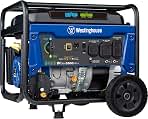 Visit on Amazon → Visit on Amazon →Westinghouse 6500 Watt Dual Fuel |
6,500 watts as labeled | Gasoline or propane | Conventional | Transfer switch whole-home backup |
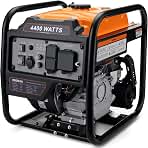 Visit on Amazon → Visit on Amazon →Oxseryn 4400 Watts Inverter |
4,400 watts as labeled | Gasoline | Inverter, open frame | RV and mid-size home backup |
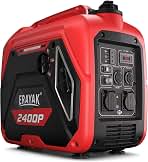 Visit on Amazon → Visit on Amazon →ERAYAK 2400W Portable Inverter |
2,400 watts as labeled | Gasoline | Inverter, quiet | Camping, tailgating, small loads |
 Visit on Amazon → Visit on Amazon →Huayi Carburetor |
Replacement part, not a generator | n/a | n/a | Repairing a Predator 3500 |
What 2,400 watts actually runs
A fridge, a couple of LED lamps, a router, and a phone charger. That is a real overnight load, and a small inverter handles it while sipping fuel. What it does not run is a space heater, a microwave, and a coffee maker at the same time. If your outage plan involves hot food and a warm room, you need the 4,400-watt class or bigger.
Why dual fuel matters after a storm
Gasoline goes bad in storage and disappears from stations during a regional outage. Propane sits in a tank for years and is usually still available. The trade-off is output and convenience. You get more watts from gasoline and faster refills. You get reliability from propane. A dual fuel unit lets you decide which one matters on the day the grid goes down, which is a decision you cannot make after the fact.
How I read the numbers
Spec watts are measured at sea level with a gentle breeze. Real watts are what a fridge surge demands at 40 degrees with a cold engine. Start with running watts: that is the continuous load a generator carries hour after hour, and it is the number that matters during a nine-day outage. Then look at surge watts, the startup spike a motor needs. If the surge number is not published, that tells you something.
Run time is the other trap. The box number is measured at 25 percent load. At half load, cut it by a third. At full load, cut it in half. Plan fuel around the real number, not the marketing one. I keep a paper logbook and a stopwatch for exactly this reason, and I have never once found a spec sheet that was pessimistic.
Then there is THD, total harmonic distortion. Under 5 percent means laptops, TVs, and phone chargers are happy. Inverter generators deliver that. Cheap conventional units do not, which is why I do not recommend a conventional generator for anything with a circuit board in it.
And the non-negotiables. A CO sensor on anything that runs near a house. A pull cord that starts on the second pull, cold, in the rain, because a generator that needs a YouTube tutorial will fail at 2 a.m. in a storm. Ethanol-free fuel or a drained bowl if the machine is going to sit. None of that is glamorous. All of it is the difference between a tool and a paperweight.
Should you buy the Westinghouse 6500 Watt Dual Fuel?
Yes, if you are wiring a transfer switch and want the propane option. It is transfer switch ready, it has the 30A outlets, and the CO sensor is the feature I will not compromise on. Understand what it is: a conventional generator built for heavy loads, not a whisper-quiet inverter for sleeping next to. Buy the wheel kit at the same time. You will thank yourself in the rain.
Should you buy the Oxseryn 4400 Watts Inverter?
Yes, for the person who wants one machine for the RV and the house. Inverter power, ECO mode, RV ready, and an open frame that you can actually service. Check the surge rating before you plan on a well pump, and do the fridge test with ECO mode on before an outage does it for you. It is the sensible middle, and sensible is underrated.
Should you buy the ERAYAK 2400W Portable Inverter?
Yes, for camping, tailgating, and small-load backup. It is quiet, it is light enough to move alone, and it has ECO mode for fuel economy. Just respect the ceiling. This is a fridge-and-lights machine, not a whole-house machine, and the people who are happiest with a 2,400-watt inverter are the ones who bought it knowing that.
Should you buy the Huayi Carburetor for the Predator 3500?
Yes, if your Predator 3500 has the classic symptoms: runs only on half choke, dies under load, will not idle. Verify the model number first, install it carefully, and then change your fuel habits. The carburetor is the repair. Ethanol-free fuel is the prevention, and prevention is what keeps you from doing this again next spring.