Related: How to Size a Generator for a Fridge, a Sump Pump, and a Furnace
I ran a small engine shop in Asheville for 22 years, and I have never watched a street change personality faster than it did after Helene took the grid down for nine days. Two neighbors who had borrowed each other's ladders for a decade were shouting over a 50-foot extension cord by day three. A guy in a pickup was selling priority hookups out of the bed. Somebody's 30-year-old contractor generator rattled windows at 2 a.m., and nobody on that block slept. When the lights came back, I bought a load bank, a decibel meter, and a paper logbook and started testing generators the way I used to rebuild carburetors: take it apart, measure everything, and never trust the sticker.
That is the honest job description of a portable inverter generator. It is not winning a spec-sheet argument. It is keeping a fridge cold, a phone charged, a sump pump running, and a street from turning on itself. So this portable inverter generator guide is not about the biggest number in the biggest font. It is about which machine starts on the second pull, cold, in the rain, and which one you will still be able to buy parts for in five years.
Over 40 generators have gone through my shed since then. Every run gets logged by hand. The four products below cover the whole range of what people actually buy for an outage, from a small inverter you can carry with one hand to a dual fuel unit that runs a house, plus the two things almost nobody thinks about until they need them: a battery-powered outlet and a carburetor.
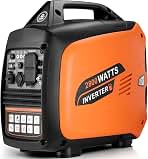
Best for Small Homes and Camping: Oxseryn 2800-Watt Portable Inverter Generator
This is the size class I would hand to somebody whose outage plan is a fridge, a router, a couple of lamps, and a phone charger, and who does not want to wrestle 100 pounds out of a shed at 11 p.m. in the rain. It is listed at 2,800 watts. The listing puts it at 39 pounds with a 1.1-gallon tank and a fuel shut-off valve, and that last detail is worth more than most of the marketing copy on the page.
Here is why. Run the carb dry with the fuel valve before you store a unit, and you skip the spring ritual entirely. Ethanol fuel left sitting in a bowl turns into varnish, and varnish turns into a $200 service call or a carburetor replacement. A shut-off valve is the cheapest insurance in the small engine business, and plenty of units in this price range still do not have one.
Two things to verify before you order, because the word quiet on a product page means nothing to me. Ask for a decibel figure at 25 feet, which is the distance that decides whether your neighbor is going to knock on your door. And check the running watts versus the surge watts, because a fridge compressor needs two to three times its running load for a second or two when it kicks on. Also confirm what it ships with. Generators that arrive with no oil and a sticker that says see manual are a pet peeve of mine, and you do not want to discover that at night during a storm.
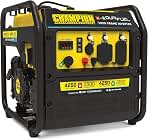
Best for RV and Bigger Loads: Champion 4250-Watt Dual Fuel Inverter
Champion's 4,250-watt dual fuel inverter is the unit I point people toward when one generator has to do everything: run an RV at a dry campsite, carry a fridge and a sump pump and a furnace blower at home, and still be light enough for two people to lift into a truck bed.
Dual fuel is the feature that matters most in a real emergency, and it has nothing to do with watts. After a storm, gasoline stations are the first thing to run dry and the last thing to recover. Propane keeps flowing, keeps for years in a tank, and does not varnish a carburetor. If you have ever spent an hour in a fuel line with a gas can, you already know what that is worth.
The tradeoff is the frame. This is an open frame design, which means the engine is not sealed inside a sound-dampening case. Open frame units are generally louder than sealed-case inverters of similar output, and they are also generally easier to service, because you can actually reach the carburetor. If you camp in a campground with quiet hours, that trade matters. If you need a machine that runs where people sleep, an inverter in a sealed case is the right call. Verify the running watts, the outlet panel, and the noise figure before you buy, and remember that RV ready is a claim about outlets, not about watts.
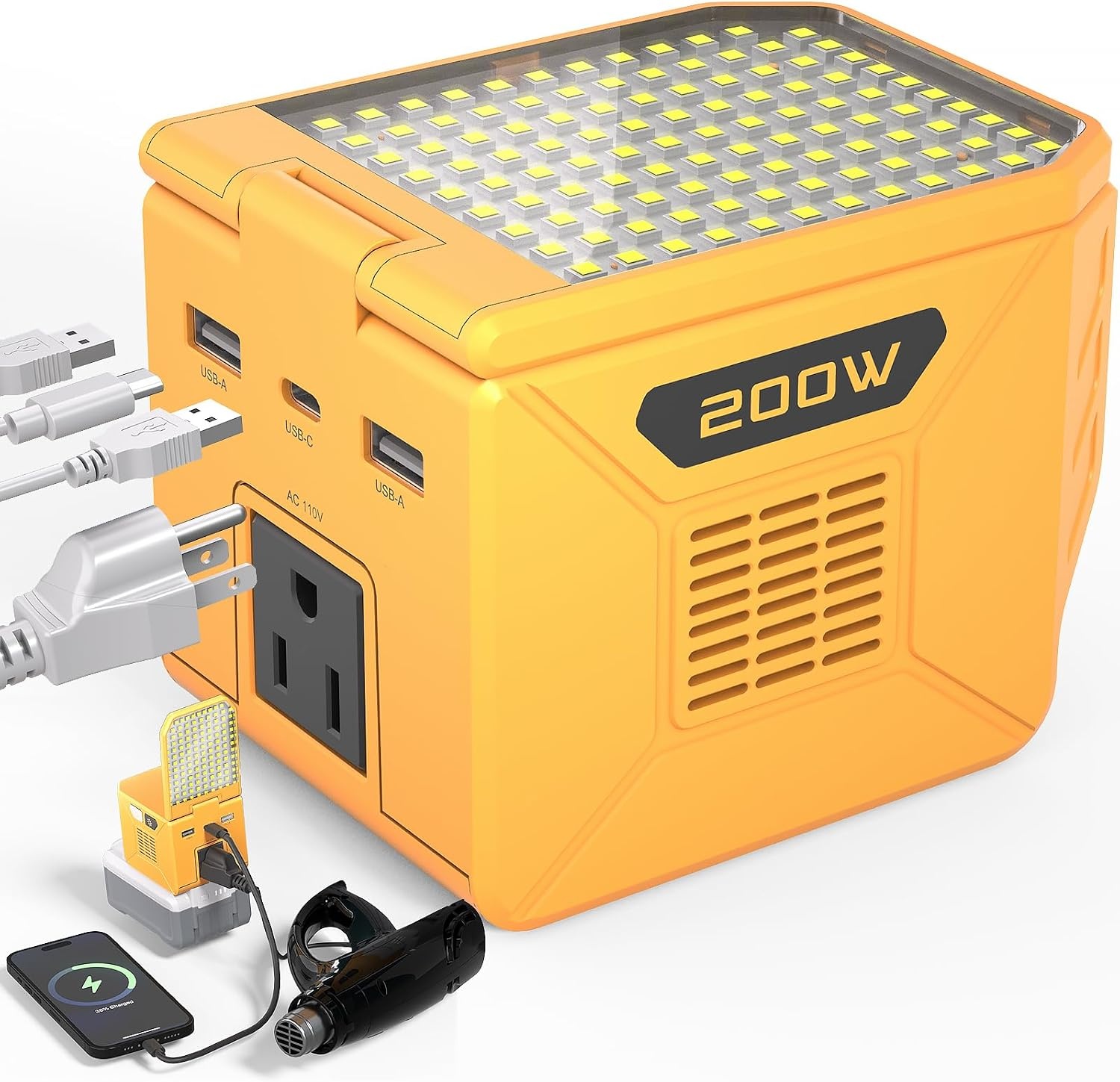
Best for Small Loads: DeWalt 20V Battery Power Inverter
This one is not a generator, and I want to be clear about that up front, because people see the word generator in a listing and assume it will run a fridge. It will not. At 200 watts continuous and 350 watts peak, it is a battery-powered outlet: two USB-A ports, one USB-C port, a 110-volt AC outlet, and a 500 lumen LED light, all running off a DeWalt 20V battery you already own.
What it is genuinely good at is the stuff a generator is bad at. Charging tool batteries, topping off a laptop, running a lamp, lighting a hallway so nobody trips on the stairs, and doing it silently with no fuel and no exhaust. In a nine-day outage, the small loads are the ones that grind people down. You do not want to burn a gallon of gasoline to charge a phone.
It is sold as tool only, which means no battery and no charger in the box. If you are already on the DeWalt 20V platform, that is a bargain. If you are not, add the battery and charger to your math before you decide. And do not leave a battery sitting in it in a cold shed all winter.
The Part Nobody Thinks About: YAMAKATO Huayi P27-1D Carburetor
Every spring, my shop phone rang with the same call: it ran fine in October, and now it will not start. Nine times out of ten the carburetor was full of ethanol fuel that had turned to varnish over the winter. A carburetor is not magic. It is math and patience, a bowl, a float, a needle, and a couple of jets that need to be clean.
This is a replacement carburetor for Champion and Predator units, matched to those machines. It is not a universal part, so look at your model number before ordering, and if you are not comfortable pulling a fuel line, this is a fifteen-minute job for someone who is. My advice is always the same: replace it, then change your habits. Ethanol-free fuel if you can get it, stabilizer if you cannot, and drain the bowl before storage. A carburetor is cheaper than a service call, but clean fuel is cheaper than both.
How I test a generator
The method has not changed in years, and it is deliberately boring. A load bank, which is just heaters and motors that draw real watts, so I can see what a unit delivers at the wall instead of what the sticker promises. A decibel meter at 25 feet at quarter load, because that is the distance and the load where a generator actually lives. A stopwatch and a fuel jug for every tank, because run time on the box is measured at 25 percent load, and almost nobody runs at 25 percent load.
Then the questions that decide it. Can I start it on the second pull, cold, in the rain? Does eco mode react fast enough to catch a fridge surge, or does it stumble and reset? What does the oil look like after a long run? Can I get parts, or is this machine disposable? And the last one, the only one that really counts: would I bet my fridge and my sump pump on it for nine days?
Analysis: what the spec sheet tells you before you pull the cord
Running watts is the continuous load a unit carries hour after hour. Surge watts is the startup spike a motor needs, usually two to three times running watts, and it is the number that decides whether your fridge actually turns on. Peak watts in big print with running watts in the fine print is the oldest trick in this category, so read the small numbers.
THD is total harmonic distortion. Under 5 percent means laptops, TVs, and phone chargers are happy. Inverter generators deliver that. Cheap conventional units do not, and sensitive electronics will whine about it, literally.
Run time is the other place the marketing lives. The spec is hours per tank at 25 percent load. At half load, cut that by a third. At full load, cut it in half. Plan your fuel around the real number, not the box, and buy jugs before the storm, not after.
Two more things. A CO sensor, the carbon monoxide shutoff, is non-negotiable on anything that runs near a house. And ethanol fuel left in a carb for more than a month is a time bomb, which is why every unit in this guide either has a fuel shut-off valve or gets treated fuel.
Portable inverter generator comparison
This is the table I would want in front of me while shopping. The listed output column is what the product itself claims. Where a number is not published in the listing, I write see product rather than guess, because a made-up decibel figure is worse than no decibel figure.
| Product | Listed output | Fuel | Noise at 25 ft | Where it fits |
|---|---|---|---|---|
 Visit on Amazon → Visit on Amazon →Oxseryn 2800-Watt Portable Inverter Generator |
2,800 watts, as listed | Gasoline | See product | Camping, small home backup, one-person moving |
 Visit on Amazon → Visit on Amazon →Champion 4250-Watt Dual Fuel Inverter |
4,250 watts, as listed | Gasoline or propane | See product | RV use, larger home loads, long outages |
 Visit on Amazon → Visit on Amazon →DeWalt 20V Battery Power Inverter |
200 watts continuous, 350 watts peak | DeWalt 20V battery | Phones, laptops, tool batteries, LED light | |
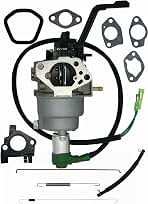 Visit on Amazon → Visit on Amazon →YAMAKATO Huayi P27-1D Carburetor |
Replacement part, not a power source | Gasoline | Champion and Predator service and rebuilds |
Should you buy the Oxseryn 2800-Watt Portable Inverter Generator?
If your list is a fridge, a router, some lights, and chargers, this is the size class that makes sense, and 39 pounds means you can carry it instead of dragging it. The fuel shut-off valve tells me the people who built it have owned a generator. Verify the noise figure and the running watts before you order, keep ethanol-free fuel in it, and this is the machine most households actually need.
Should you buy the Champion 4250-Watt Dual Fuel Inverter?
Yes, if you have an RV, a well pump, or a house full of loads a small unit cannot carry. Dual fuel is the feature that saves an outage, because propane does not run out when the gas stations do. Just go in knowing it is an open frame unit, so it is louder and easier to service than a sealed-case inverter, and check the running watts and the outlet panel against what you need to run.
Should you buy the DeWalt 20V Battery Power Inverter?
Yes, as long as you understand it is a battery-powered outlet, not a generator. It will not start a fridge, and it is not supposed to. It will charge your tools, run a laptop, and light a hallway without a drop of fuel, and in a long outage those small loads are the ones that wear people down. It ships tool only, so factor in the battery if you are not already on that platform.
Should you buy the YAMAKATO Huayi carburetor?
If a Champion or Predator sat all winter with ethanol fuel in it, this is probably the part you need, and it costs less than a shop visit. Match it to your model, because it is not universal. Then change the habit that killed the first one: ethanol-free fuel, stabilizer, and an empty bowl before storage. That is the whole secret.