Related: Portable Generator Run Time: Why the Number on the Box Is Wrong
Nine days. That is how long my street went without power after Helene, and it was long enough to learn things about my neighbors I would rather not know. Two grown men argued over a 50-foot extension cord like it was the last seat on a lifeboat. A fellow in a pickup was selling "priority" hookups out of the truck bed. A 30-year-old contractor generator rattled windows at 2 a.m. while nobody on the block slept.
When the lights came back, I did what I know how to do. I bought a load bank, a decibel meter, and a paper logbook, and I started testing generators the way I used to rebuild carburetors in my shop: take it apart, measure everything, and never trust the sticker. That was 40-plus units and a great many fuel jugs ago.
So this is my portable inverter generator guide, written from the bench instead of the press release. Two machines and two carburetors. The machines are the ones I would actually point a friend toward. The carburetors are the reason either one is still worth owning three years from now, because a generator that will not start is a 90-pound paperweight with a handle.
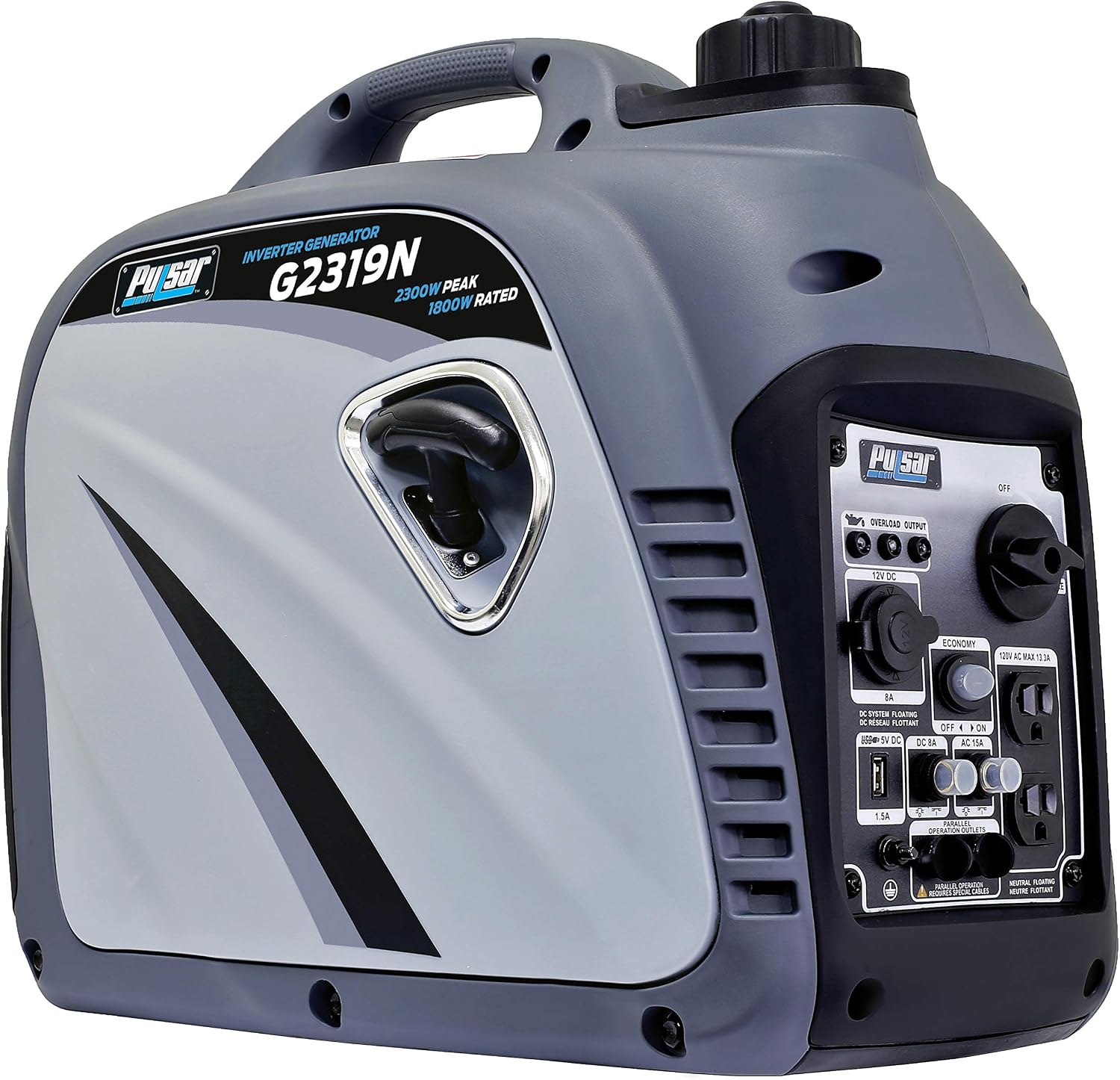
Best Overall: Pulsar 2,300W Portable Gas-Powered Quiet Inverter Generator
This is the one I would hand a first-time buyer, and I would not hesitate about it. Inverter power in a package one person can lift, and a feature list that reads like somebody actually thought about how people use these things. A USB outlet so phones and tablets charge without hunting for a wall brick. Parallel capability, which means when you outgrow it you buy a second unit and a parallel kit instead of starting over from scratch. And it is carb compliant, which matters if you live in California or you ever plan to sell it to somebody who does.
The word "quiet" gets abused in this category. On an inverter, quiet usually means the engine throttles down to match the load, so at a campsite or in a driveway at quarter load it is a hum instead of a hammer. That is the entire point of the technology. A conventional generator runs at full engine speed no matter what you plug in, which is why your neighbor can hear it through a closed window.
What I appreciate about this Pulsar is what it does not do. It does not pretend to run a whole house. It does not weigh as much as a chest freezer. It does not need a second person and a chiropractor to get into a truck bed. For camping, tailgating, a small RV, or keeping the fridge and a few lights alive during a short outage, this is the size that makes sense.
What you give up is headroom. This class of machine is a fridge, a modem, a couple of lamps, and a phone charger. It is not a fridge plus a space heater plus a microwave. Buy for surge watts, not running watts. The startup spike on a compressor is the number that decides whether your fridge actually turns on, and that spike runs two to three times the running load.
Best Value: Champion Power Equipment 4250-Watt Dual Fuel RV Ready Portable Open Frame Inverter Generator with Quiet Technology
If you want more machine for the money, this is where I point people. 4,250 watts, dual fuel, and inverter output. That combination did not exist at this end of the market a few years back, and it changed what I recommend to families who lose power more than once a winter.
Dual fuel is the underrated feature. Gasoline gives you more watts and easier refueling at any station. Propane gives you a fuel that does not go bad, does not varnish a carburetor, and does not care that it sat in the tank since last February. If your generator lives in a shed for eleven months and works for nine days, propane is the answer to the ethanol problem you are going to have otherwise.
Open frame means it is not a suitcase. It is heavier, it is louder than a closed frame unit of the same output, and it has a handle and wheels because it needs them. What you get back is real wattage and a price that does not make you wince.
RV ready is the part I would pay attention to if you dry camp. It means the machine was built with the outlets and the configuration an RV actually needs, rather than an adapter chain you have to assemble in the dark with a headlamp in your teeth. Champion also does the thing that matters most after the sale: they answer the phone, and their parts are actually available. I have recommended brands with better spec sheets and worse support, and support is what you remember at 2 a.m. on day six of an outage.
The carburetors that keep these machines alive
Here is the part nobody puts in a buying guide, and it is the part I care about most.
Ethanol fuel left sitting in a carburetor turns to varnish. Not "gets a little stale." It turns to varnish, plugs the jets, and converts a perfectly good generator into a no-start. I have cleaned hundreds of them. It is the single most common reason a generator that ran fine in October will not start in July.
The YAMAKATO Huayi P27-1D is a replacement carburetor for Champion and Predator machines, the kind of part you buy after the soak-and-rebuild route has already failed twice. Huayi builds the carburetors that come on a lot of these engines in the first place, which is why a replacement meters the way the original did instead of "close enough." Check current Amazon price.
For the Predator 3500 crowd there is a second option: the Huayi carburetor built for the Predator 3500-watt inverter generator. The 3500 is the best thing Harbor Freight sells, in my opinion, and the price is almost unfair. The catch is always parts and the drive to the nearest store. Having a replacement carb on the shelf turns a two-week wait into an afternoon with a screwdriver and a shop towel. Check current Amazon price.
A carburetor is not magic. It is math and patience. But if you are not going to drain the bowl and run ethanol-free fuel, buy the part before you need it.
The portable inverter generator reference table
This is the short version, the same way I keep it in the logbook. Prices move constantly, so check them at the link rather than trusting a number somebody typed into a table six months ago. Every row is a real product with a real part number behind it, which is more than I can say for the mystery units that show up at the flea market every spring.
| Product | What it is | Fuel | Best for | Price |
|---|---|---|---|---|
 Visit on Amazon → Visit on Amazon →Pulsar 2,300W Quiet Inverter Generator |
Inverter, USB outlet, parallel capable, carb compliant | Gasoline | Camping, tailgating, small backup loads | $399.00 |
 Visit on Amazon → Visit on Amazon →Champion 4250-Watt Dual Fuel Open Frame Inverter |
Open frame inverter with quiet technology, RV ready | Gasoline or propane | RV dry camping, longer outages, fuel flexibility | $599.00 |
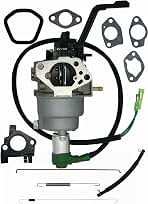 Visit on Amazon → Visit on Amazon →YAMAKATO Huayi P27-1D Carburetor |
Replacement carburetor for Champion and Predator units | Part | Reviving a gummed-up Champion or Predator | $30.99 |
 Visit on Amazon → Visit on Amazon →Huayi Carburetor for Predator 3500 |
Direct replacement carburetor for the Predator 3500 inverter | Part | Predator 3500 owners with a varnished carb | $35.98 |
How I test a generator
Every unit that gets a recommendation from me goes through the same protocol on the bench, and it is not glamorous.
I wire the machine to a load bank and make it carry a fridge, a sump pump, a space heater, and a 5,000 BTU window AC, one at a time and then in combination, watching what the engine does when a compressor kicks on. I put a decibel meter 25 feet away at quarter load, because 25 feet is where your neighbor's window is. I run a stopwatch against a measured fuel jug so I know what a tank actually delivers at half load, not at the 25 percent load the spec sheet brags about. I start it cold, in the rain, on the second pull, because that is the test that matters at 2 a.m. in a storm. And I ask one final question: would I bet my fridge and my sump pump on this thing for nine days?
I am not going to hand you a decibel number I measured in my own driveway and let you treat it as gospel for your yard, your altitude, and your humidity. What I will do is tell you what to measure and what the numbers should look like, so you can run the same test in your own driveway before the storm, not during it.
Analysis and what actually matters
Running watts versus surge watts. The box shouts the big number and whispers the real one. Running watts is the continuous load a machine carries hour after hour, and that is the number that matters during a nine-day outage. Surge watts is the startup spike a motor needs, usually two to three times the running load. If the surge number is not printed anywhere on the box, that tells you something about the company.
THD. Total harmonic distortion. Under 5 percent means laptops, televisions, and phone chargers are happy. Inverter generators deliver it. Cheap conventional units do not, and your electronics will let you know with a whine through the speakers.
Noise, measured honestly. dB(A) at 25 feet at quarter load. Not the one-foot, no-load figure printed on the packaging. If a manufacturer will not put a decibel number on the box, assume it is loud. "Whisper quiet" with no number attached is marketing, not engineering.
Run time math. The spec sheet quotes hours per tank at 25 percent load. At half load, cut it by a third. At full load, cut it in half. Plan your fuel around the real number, not the brochure. That is how people end up making a fuel run on day three of an outage with a generator sitting silent in the yard.
Eco mode. The throttle that drops engine speed to match the load saves fuel and noise, but on some units it cannot react fast enough for a fridge's surge. If your fridge trips the machine into overload on eco, turn eco off before you blame the fridge.
Dual fuel. Propane stores forever and will not varnish a carburetor. Gasoline gives you more output. If your machine sits for months at a time, propane is worth the small output penalty.
CO sensor. Carbon monoxide shutoff. Non-negotiable on anything that runs near a house, and required on new units for a reason.
Parts availability. Champion answers the phone and stocks parts, which is why I keep recommending them. Predator's price is almost unfair until you need a component and the closest store is 40 miles away. That is exactly why a spare carburetor on the shelf is cheap insurance.
Fuel and fuel systems. Ethanol fuel left in a carb is a time bomb. Stabilizer is cheaper than a carburetor rebuild, and ethanol-free fuel is cheaper than both. Drain the bowl if the machine is going to sit.
Should you buy the Pulsar 2,300W?
Yes, if your list is camping, tailgating, a small RV, or keeping a fridge and a few lights alive through a short outage. It is the size I would hand a first-time buyer without a lecture. Inverter output, a USB outlet for phones, parallel capability so you can add a second unit instead of replacing this one, and a weight one person can manage.
The limits are real. It will not run your well pump and your microwave at the same time, and it will not carry a whole house. Buy it for what it is, which is the machine you can actually move, start, and live beside.
Should you buy the Champion 4250-Watt Dual Fuel?
Yes, if you want headroom and you like having two fuel options. 4,250 watts of inverter power, RV ready out of the box, and the ability to run propane when the gasoline cans are empty and the stations are dark. It is an open frame unit, so plan on wheels, a ramp, and a firm grip.
The reason I keep pointing people here is not the spec sheet. It is that when something goes wrong two years in, a human answers the phone and a part ships. That is worth more than a tenth of a decibel.
Should you buy a replacement carburetor?
Yes, if you run ethanol fuel and let the machine sit. It is the most common failure I see, and it is preventable with a fuel can and a little discipline. If you have already lost that fight, the YAMAKATO Huayi P27-1D covers Champion and Predator machines, and the Huayi carburetor is the direct fit for the Predator 3500 inverter. Check current Amazon price on both before you load the machine into the truck.
Buy the generator for the storm. Buy the carburetor for the July after the storm, when the fuel you forgot to drain has turned to varnish and the hardware store is out of stock.