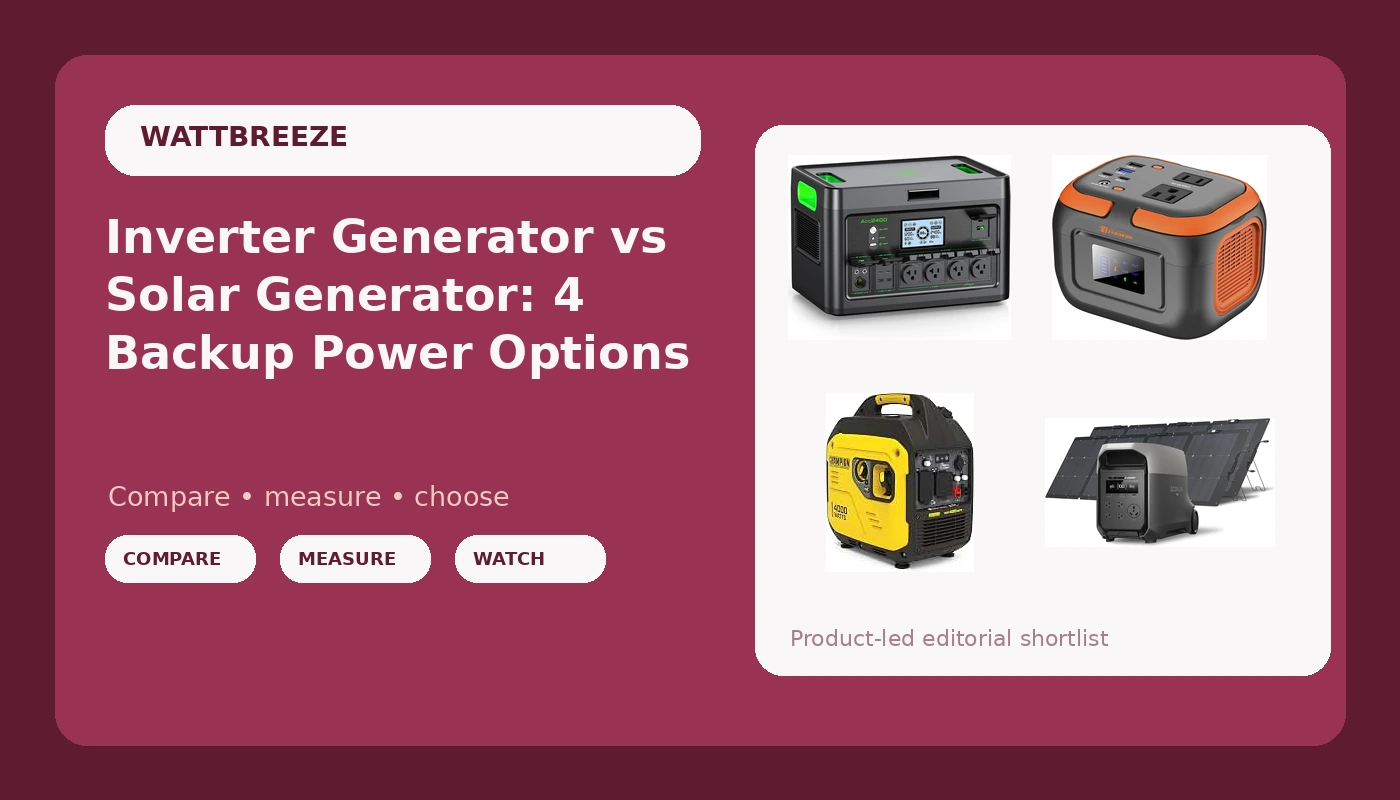
I ran a small-engine shop in Asheville for 22 years, until the work got quieter and the storms got louder. Then Helene took the grid down for nine days, and I watched a polite street turn on itself over a 50-foot extension cord. When the lights came back I bought a load bank, a decibel meter, and a paper logbook, and I started testing generators the way I used to rebuild carburetors: measure everything, trust nothing printed on the sticker. Over 40 units have gone through my shed since, every run logged by hand.
This is a comparison of four very different answers to one question: how do you keep the fridge cold when the grid quits? Two of these burn fuel. Two of them store electrons. That split is the whole argument in the inverter generator vs solar generator debate, and both sides have a failure mode the other one covers.
The short answer: if you need to carry a fridge, a furnace fan, and a few lights for days on end, the Champion 4000-Watt RV Ready Portable Inverter Generator is the most real watts per dollar in this group. If you want silent power, indoor placement, and no fuel cans in the garage, the EF ECOFLOW DELTA 3 Ultra 3072Wh Solar Generator with its two included 220W panels is the pick, as long as you understand what 3,072 watt-hours actually buys you at a 500-watt load.
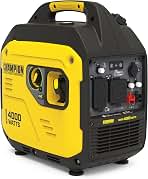
Champion 4000-Watt RV Ready Portable Inverter Generator
Inverter-class power at 4,000 watts, with a tank you can refill in two minutes. It starts motor loads the battery boxes in this group cannot touch.
It burns gasoline, it makes noise, and it must never run indoors, in a garage, or under a window.
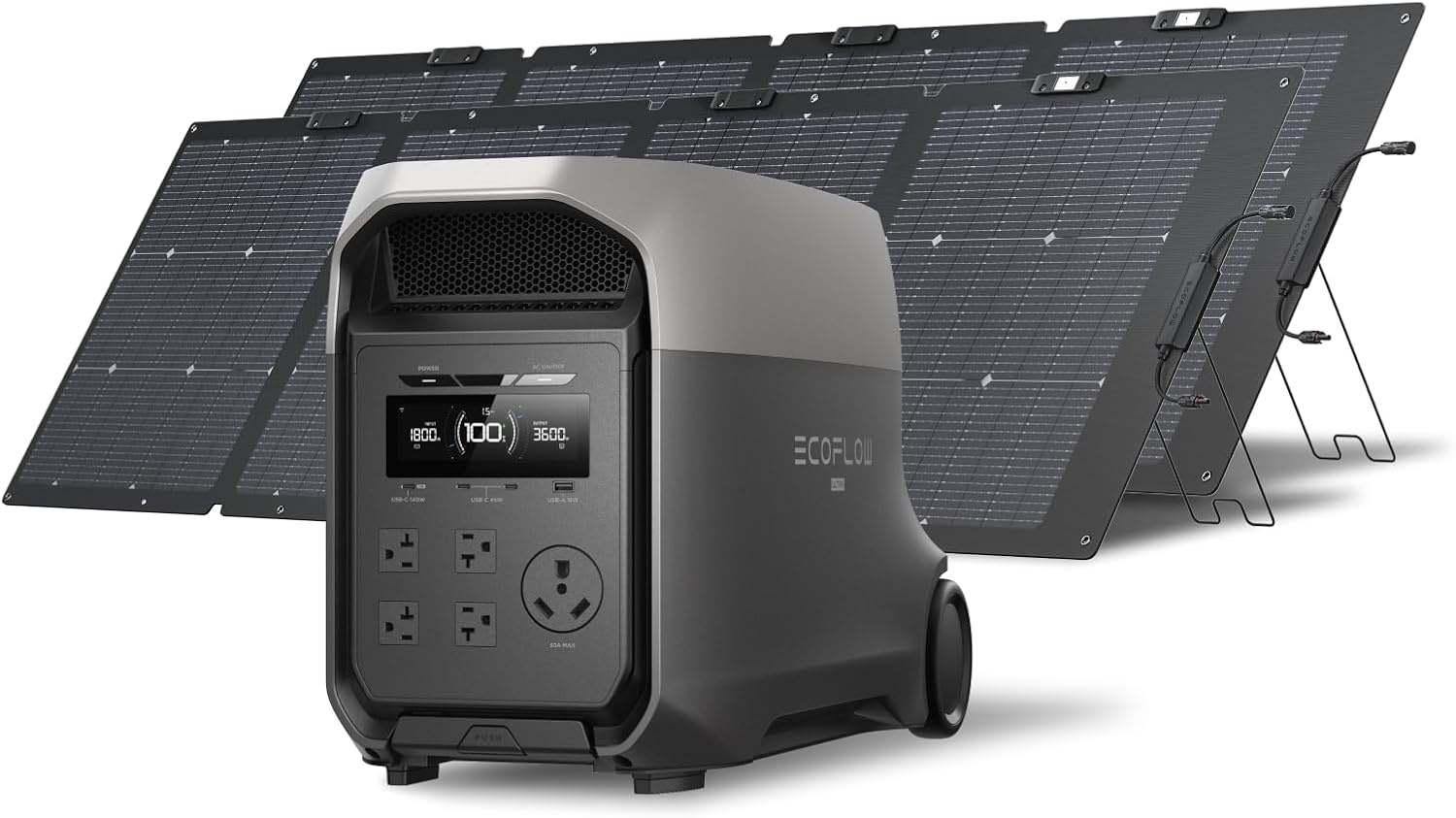
EF ECOFLOW DELTA 3 Ultra 3072Wh Solar Generator with 2X220W Solar Panels
3,072Wh of storage plus 440 watts of included panels. Silent, no exhaust, no carbon monoxide, and it refuels from the sun.
The price and the weight. At a steady 500 watts it is roughly a six-hour box, so multi-day use depends on sunshine and rationing.
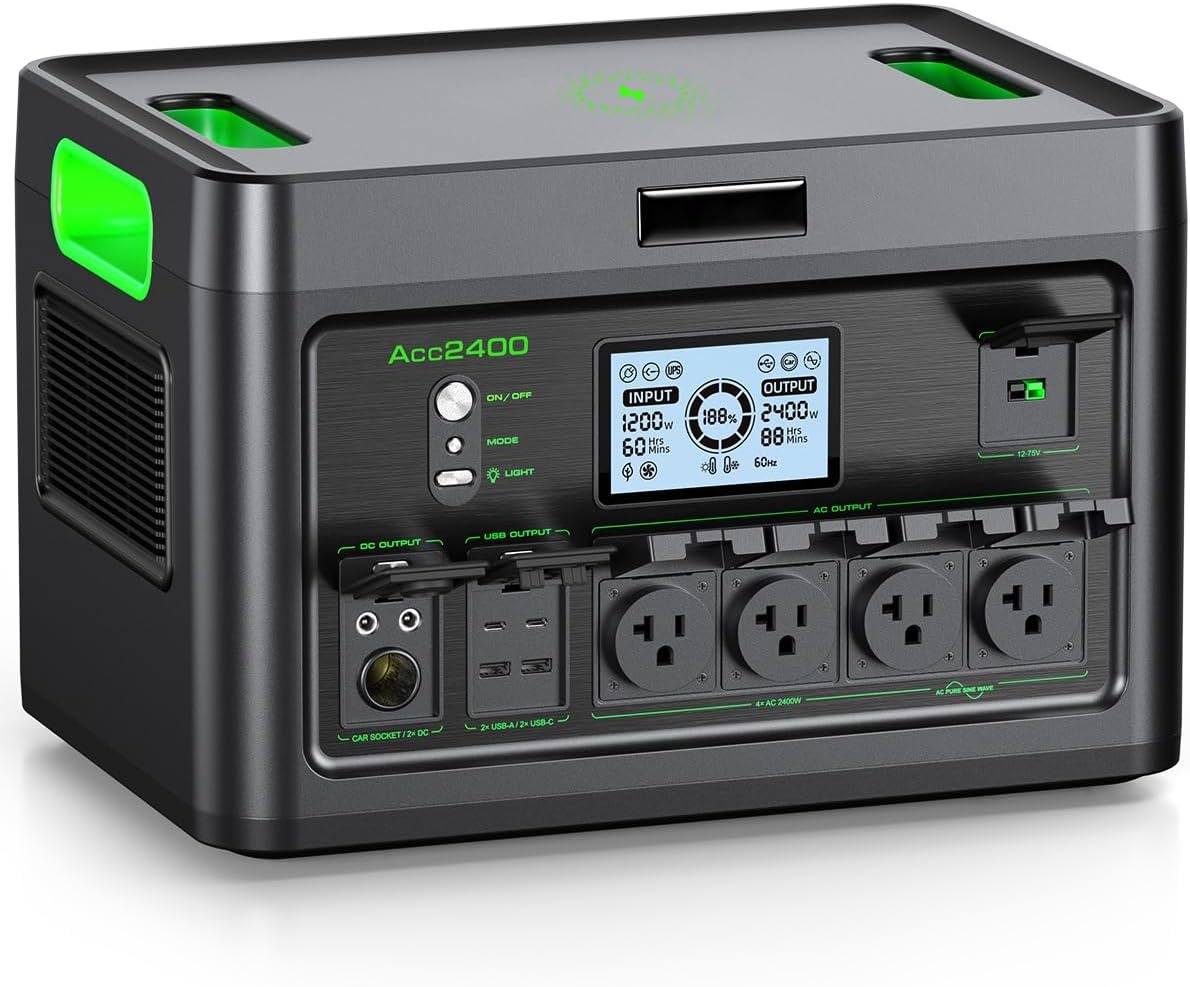
2400W Portable Power Station 1843.2Wh Solar Generator for Home Use
1,843.2Wh and 2,400 watts of output sit right in the middle of the price range. It is the sensible essentials-only compromise.
Storage still limits a long outage. By day two you are deciding which appliance gets to run.
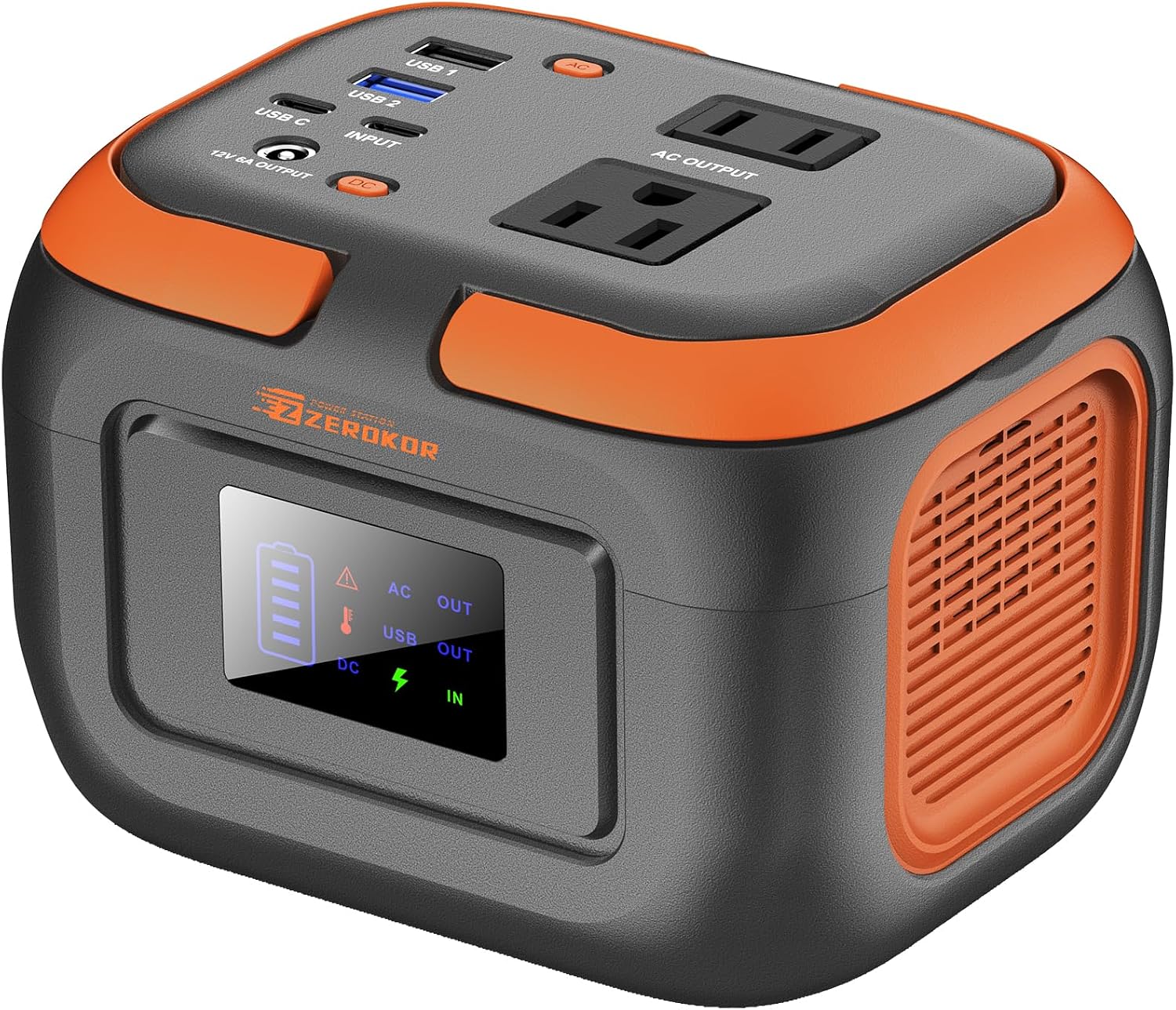
Portable Power Station 120W, 110V Power Bank with DC AC Outlet
Cheap, light, and genuinely useful for phones, laptops, LED lights, and a small fan. It is the box you actually grab first.
120 watts will not start a refrigerator compressor. It is a phone battery with ambitions.
Prices and availability were captured from Amazon Creators API and may change.
How I compare fuel and batteries
Two numbers decide whether a backup plan works: surge watts and running watts. Running watts are what a device pulls hour after hour. Surge watts are the startup spike a motor needs, usually two to three times running watts. A fridge is the classic example. It idles along at a couple hundred watts and then demands a hard spike every time the compressor kicks on. If your power source cannot cover that spike, the fridge just sits there humming and clicking, and your food spoils while you stare at a green light.
Inverter generators and battery power stations both solve the surge problem in the same way, with electronics instead of raw engine speed. That is why an inverter generator can run a laptop without the whine, and why a battery station can run one at all. The clean power promise is the same on both sides: low total harmonic distortion, meaning laptops, TVs, and phone chargers stay happy. Conventional generators are cheaper per watt, but they are not what you want running near a bedroom.
Noise and fuel are where the two camps separate. An inverter generator makes noise and burns gasoline, which means carbon monoxide, which means it lives outside, 20 feet from the house, with the exhaust pointed away. A battery station makes no noise and no exhaust, which means it lives in the kitchen. That difference is worth real money to some people and is irrelevant to others.
The fuel-burning option: Champion 4000-Watt RV Ready Portable Inverter Generator
This is the only unit in the group that can run indefinitely, because it does not run on stored energy. It runs on gasoline you pour into it. A 4,000-watt inverter in this class typically gives you a 30-amp RV outlet for a travel trailer, plus standard household outlets for everything else, and the RV-ready label is the clue that this one is aimed at people with a camper or a trailer to keep alive.
Where it wins is motor loads. A fridge, a sump pump, a well pump, a furnace blower, a space heater: these are the loads that punish battery boxes, and they are exactly what this class of generator was built for. It also means the CO sensor is doing real work, and I will not recommend a portable that runs near a house without one. Modern units shut themselves down when carbon monoxide builds, and that is not a feature you shop around for.
Where it loses is everything people forget about until the second night of an outage. You need fuel on hand, and fuel goes stale. Ethanol left in a carburetor for a month turns into varnish and a service bill, so plan on ethanol-free gas, a stabilizer, and a rotation schedule, or you will be the guy rebuilding a carburetor by flashlight. And it is loud enough that you will think about your neighbors, because they are definitely thinking about you.
The silent heavyweight: EF ECOFLOW DELTA 3 Ultra 3072Wh Solar Generator
This one is the opposite philosophy. It stores 3,072 watt-hours, ships with two 220W solar panels for 440 watts of collection, and produces nothing you can smell. It sits in the hallway, it charges off a wall outlet before the storm, and it runs the fridge overnight without anyone in the house knowing it exists.
Run the math on the storage, because this is where buyers get surprised. At a constant 500-watt draw, 3,072 watt-hours is about six hours. But a refrigerator does not run constantly. It cycles. If your fridge averages 150 watts once it is cold and closed, that same battery stretches toward 20 hours of keeping food safe. Add the two panels and you can put meaningful energy back into the bank every sunny day, which is the only reason a battery station survives a nine-day outage.
That is the honest pitch. The Delta 3 Ultra is a solar generator with a real solar array attached, not a toy panel you unfold for a photo. It is quiet, it is indoor-safe, and it does not care whether the gas stations have power, which was the actual problem during Helene.
Where it loses is cost and the hard ceiling of physics. A battery has a finite number of watt-hours in it. Once they are gone, you are waiting on the sun or a wall outlet, and in a storm the wall outlet is the thing that died. It is also heavy, and heavy means you move it once and leave it there.
The middle of the road: 2400W Portable Power Station 1843.2Wh
This is the compromise unit, and for a lot of households it is the right size. It stores 1,843.2 watt-hours and puts out up to 2,400 watts, which is enough output to start appliances the little 120W box cannot dream about.
Run the same math. At a 500-watt load you are looking at roughly three and a half hours. At a fridge's average cycling draw of about 150 watts, closer to 12 hours. That covers a night and a morning, and then it needs sun or a wall outlet. If you own a small panel and you are willing to plug in a laptop, a router, and a lamp instead of a space heater, this box handles a short outage comfortably.
Where it wins is price against capacity, and the fact that it is a home-use unit first. Where it loses is that it cannot be refilled. There is no fuel can to top it off. Once you drain it, your only move is to charge it, and if the outage is long and the sky is gray, you will be rationing.
The little one: Portable Power Station 120W
I want to be straight with you about this one, because 120 watts sounds like a lot in the marketing and is not a lot in a kitchen. It has DC and AC outlets, it is small, and it is cheap, and it will happily run phones, tablets, laptops, LED lights, a small fan, and a router for hours.
It will not run a refrigerator. Not the compressor, not the surge, not for a minute. Anyone who tells you otherwise has not put a watt meter on a fridge. If you have a CPAP, check the actual draw on your machine and the humidifier setting before you count on it, because heated humidifiers pull more than people expect.
Where it earns its place is as the first thing you grab. It lives in a closet charged up, it goes in the car, it goes camping, it keeps the family's phones alive during a nine-day outage when the big unit is outside making noise and burning fuel. As a backup power source it is a supplement. As a phone and light station, it is genuinely excellent for the money.
The trade-offs nobody prints on the box
Peak watts in big print, running watts in the fine print. That is the oldest trick in this business, and it is why I ignore the headline number on any box and hunt for the continuous rating.
Run time claims. The hours on the label are measured at a quarter load with a gentle breeze and a fresh tank. At half load, cut that number by a third. At full load, cut it in half. Plan your fuel around the real number, not the marketing number.
Battery capacity claims. Watt-hours are watt-hours, but cold weather is not kind to lithium, and every conversion from DC to AC costs you something. Plan on getting less than the math says, especially in an ice storm.
Noise claims with no decibel number. If a box says whisper quiet and does not give you a dB(A) reading at a stated distance, there is no claim there at all. I measure at 25 feet at quarter load, because that is where your neighbor's bedroom window is.
Carbon monoxide. Never run a fuel generator indoors, in a garage, in a shed, or in a breezeway, and never "just for a minute." The CO sensor on a modern unit is a backstop, not a license.
Who should buy which
If your outage plan includes a well pump, a sump pump, or a furnace blower, buy the Champion. Those loads need watts and they need them for days, and only fuel delivers that.
If you live where the roads flood and the gas stations close, or you cannot run a generator where you live, buy the Delta 3 Ultra. Silent, indoor-safe power with panels that keep working after the last can of gas is gone.
If you want one box for a two-day storm, a tailgate, and a camping weekend, the 2400W station is the sane middle. It covers the essentials without asking you to store fuel.
If you want something for phones, lights, and a laptop, and you already own a bigger plan, buy the 120W box and keep it charged.
What I would actually do
I would not pick one. My own setup is a battery station for the quiet hours and a fuel generator for the long haul, because they fail in opposite directions. The battery runs out of electrons and needs the sun. The generator runs out of gas and needs a station that is open. Together, they cover each other's worst day.
That is the whole test I run on every unit: would I bet my fridge and my sump pump on it for nine days? The Champion and the Delta 3 Ultra are the two that answer yes, for different reasons and in different weather. Everything else in this group is a supporting player, and there is nothing wrong with that. Just know which role you are buying.