Related: How to Read Generator Spec Sheets Without Getting Fooled
I have been rebuilding small engines in Asheville for 22 years, and I have watched more outages than I care to count. The nine days after Helene taught me something I already half knew: the generator on the box is not the generator in your driveway. A portable inverter generator setup is three decisions, not one. What you plug in, in what order, and how loud the thing is at 25 feet when your neighbor is trying to sleep.
Most people buy watts the way they buy horsepower. Big number, big comfort. Then the fridge compressor kicks on, the surge hits, and the unit trips. Or the unit runs fine and the whole street learns your name at 2 a.m.
I own a load bank, a decibel meter, and a paper logbook. Over 40 generators have gone through my shop since that storm, every run logged by hand. This is the short version of what that logbook says, applied to four pieces of gear that belong in the same conversation.
Start with the load, not the label
Running watts are what a generator carries hour after hour. Surge watts are the startup spike a motor needs, usually two to three times running watts for a second or two. The spike is the whole ballgame, and it is the number that decides whether your fridge actually turns on.
Write your loads down before you shop. A fridge is one motor. A sump pump is a second. A window AC is a third, and it is a hungry one. If two of those ask at the same moment, a unit that looked oversized on paper trips a breaker, and you are standing in the rain at midnight resetting it.
Noise is the second decision, and it is the one people underrate. dB(A) at 25 feet at quarter load is the honest measurement, not the one-foot, no-load number printed on the box. Inverter generators are quieter because the engine throttles down to match the load instead of screaming at a fixed rpm no matter what. If you camp, tailgate, or have neighbors within earshot, that matters more than another 500 watts.
The third decision is grounding, and almost nobody thinks about it until something refuses to work. A floating neutral generator does not bond neutral to ground inside the unit. For a house panel, a transfer switch, or certain RV and job-site setups, that bond has to exist somewhere. A bonding plug is the cheap fix.
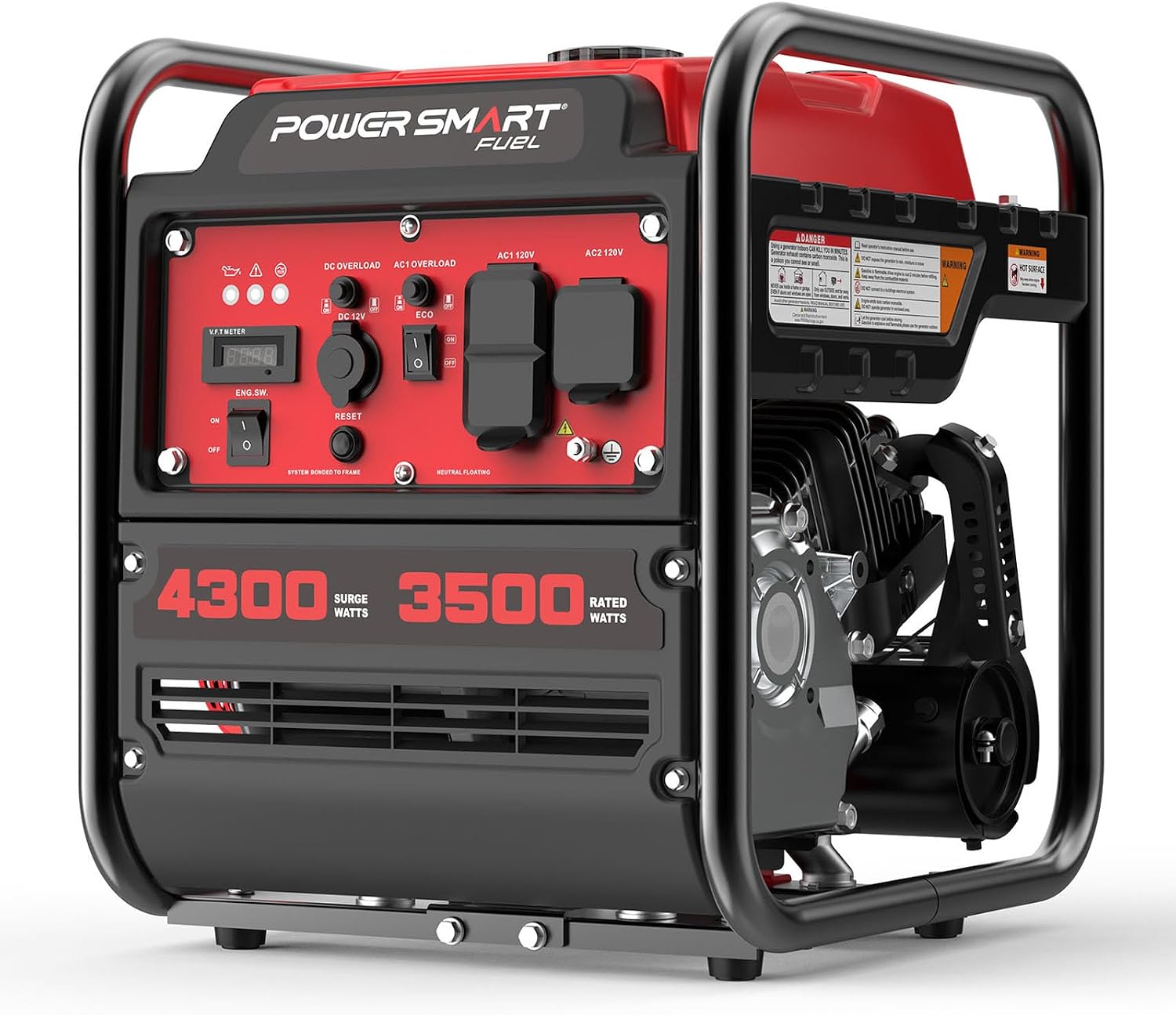
PowerSmart 4300 Watt Portable Generator with Inverter Technology
The 4,300 watt class is where a house stops being a camping trip. This is the size I would point at a family that wants a fridge, a modem and router, a few LED lights, a charging station for phones, and a space heater or a microwave, one at a time, managed by a human being who is paying attention. It is inverter technology, which is the part that matters if you care about laptops, televisions, and anything with a circuit board inside it.
The whole point of an inverter is clean power. Total harmonic distortion under 5% is the line I care about, and it is the line that keeps electronics from whining. Check the harmonic distortion figure on the listing rather than assuming it. Inverter is a design, not a promise, and a cheap unit can still be sloppy.
What I would verify before trusting any unit in this class for a long outage: cold start on the second pull, a real dB reading at 25 feet at quarter load, and whether eco mode reacts fast enough for a fridge surge. Eco mode saves fuel and noise, but on some units the engine is slow to ramp when a compressor kicks on, and the unit stumbles. That is a five minute test with a fridge and a stopwatch.
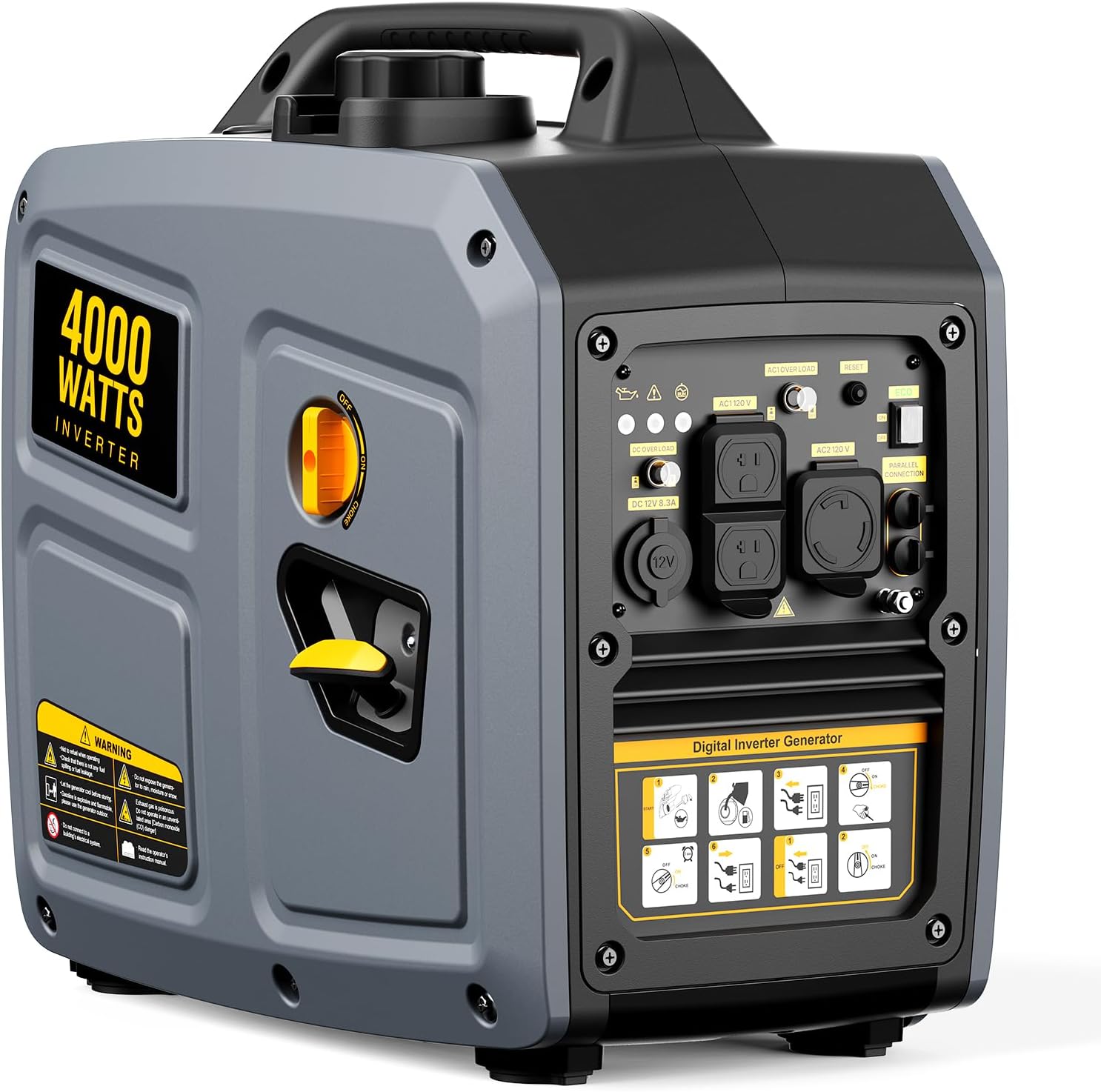
4000W Portable Inverter Generator for Home Use, Gas Powered
The 4,000 watt inverter is the same job description with a slightly different budget. Gasoline only, no dual fuel option, which simplifies the fuel plan and complicates the storage plan, because gasoline with ethanol in it does not want to sit. If this is your unit, your routine is ethanol-free fuel, stabilizer in every jug, and a carburetor that gets drained before it hibernates. Ethanol left in a bowl turns to varnish, and varnish turns into a service call.
Run time is where the spec sheet lies by omission. Box numbers are measured at a quarter load. At half load, cut that number by a third. At full load, cut it in half. I keep a stopwatch on the fuel jug for every unit that comes through the shop, and the math has never once favored the sticker. Plan your fuel around the real number and you will not be the person siphoning a lawnmower at 3 a.m.
For a home backup role, this class runs the essentials, not the whole house. Furnace blower, fridge, a few lights, internet. Add a well pump or central air conditioning and you are shopping in a different category. Know which category you are in before the storm, not during it.
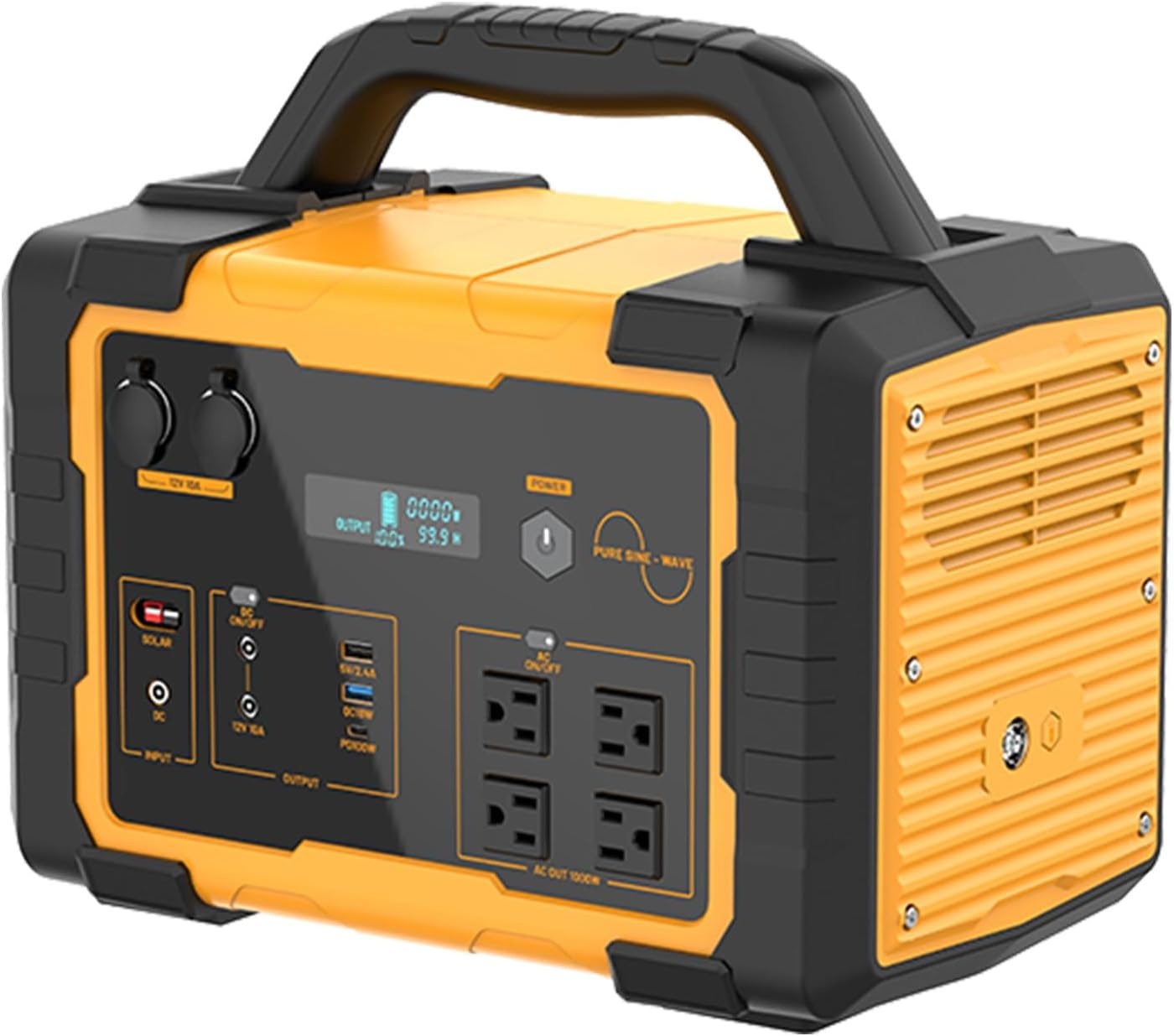
1000W Portable Power Station 1024Wh LiFePO4 for Outdoor & Home
This is not a generator. It is a battery with an inverter bolted to it, and that is exactly why it belongs in a generator guide. No noise, no exhaust, safe indoors, and it starts with a button instead of a pull cord. The listing puts it at 1,000 watts of output and 1,024 watt hours of capacity, with LiFePO4 chemistry, which is the chemistry I want in something that sits in a closet for a year and then has to work on the first try.
A 1,000 watt output will not start a fridge compressor, and it is not meant to. What it will do is run the small loads that keep a house feeling human during an outage: phones, laptops, a modem and router, a CPAP, LED lamps, a fan. Overnight, when you do not want a gas engine running outside the bedroom window, this is the unit that carries the load while the generator sleeps.
Capacity math is simple and unforgiving. Watts times hours equals watt hours. A 10 watt load for 100 hours is 1,000 watt hours, minus inverter losses. Decide what you are actually powering, then size it. LiFePO4 also holds up to far more charge cycles than the older lithium blends, which is why I would rather have a smaller LiFePO4 bank than a bigger bargain cell.
Neutral Ground Bonding Plug for Floating Neutral Generator, 2 Pack
Ten dollars. Two of them. This is the least glamorous item in the article and the one that saves the most forum scrolling. If your generator has a floating neutral, the frame is not bonded to the neutral, and that matters the moment you connect to a house panel, a transfer switch, or certain RV pedestals. The plug goes into a receptacle on the generator and creates that bond.
The two-pack is the right call, because one lives on the generator and one lives in the bag with the extension cords, where you will actually find it. Read your owner's manual first, because not every generator needs one, and a unit with a bonded neutral does not want a second bond. Five minutes with the manual beats an afternoon of guessing.
The setup reference table
This is the same table I keep taped inside my shop cabinet, and it is built the way I build every reference table: what the piece is for, what the listing actually states, and what it pairs with. Prices move, so check them on the listing.
| Product | Role in the setup | What the listing states | Pairs with | Price |
|---|---|---|---|---|
 Visit on Amazon → PowerSmart 4300 Watt Portable Generator with Inverter Technology |
Whole-home essentials, managed one load at a time | 4,300 watts, inverter technology | Bonding plug if the neutral floats | Check current Amazon price |
 Visit on Amazon → 4000W Portable Inverter Generator for Home Use,Gas Powered |
The same essentials job, gasoline only, tighter budget | 4,000 watts, inverter technology, gasoline | Ethanol-free fuel and stabilizer | $389.99 |
 Visit on Amazon → 1000W Portable Power Station 1024Wh LiFePO4 for Outdoor & Home |
Overnight and indoor loads, no noise, no exhaust | 1,000 watts output, 1,024 watt hours, LiFePO4 | The gas generator it lets sleep | Check current Amazon price |
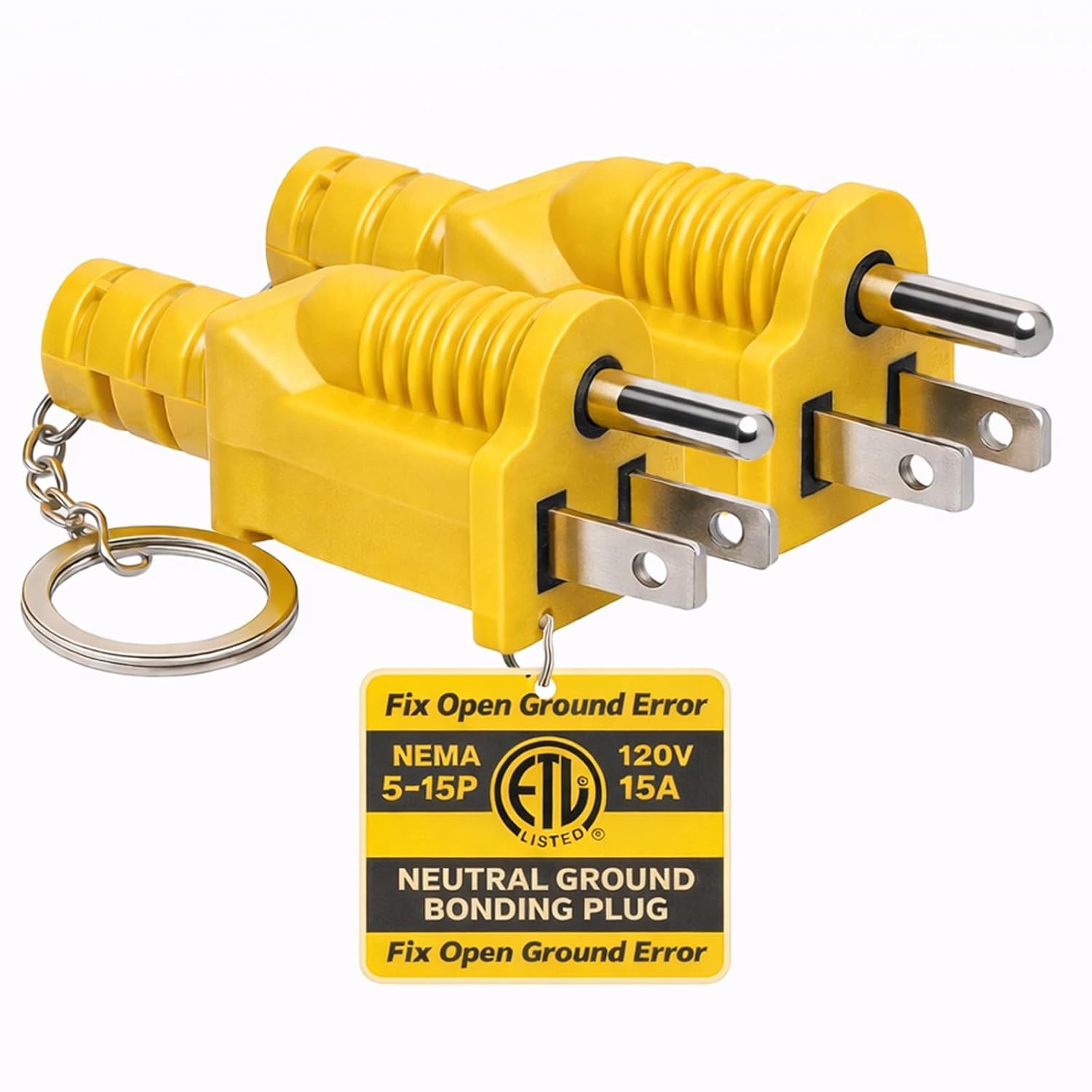 Visit on Amazon → Neutral Ground Bonding Plug for Floating Neutral Generator, 2 Pack |
Creates the neutral to ground bond on a floating neutral unit | 2 pack, for floating neutral generators | Any floating neutral generator | $9.99 |
How I test, and what I will not fake
Every unit that comes through my shop goes on the same bench. A load bank with heaters and motors that draw real watts, so I can measure what the machine delivers instead of what the sticker promises. A decibel meter at 25 feet at quarter load, because that is where people actually live with a generator. A stopwatch on a measured fuel jug, because run time is a number I calculate, not a number I repeat. And a cold start in the rain, because a generator that needs a tutorial will fail at 2 a.m. in a storm.
Here is what I will not do: print a dB number or a run time for a unit that has not been on my bench. That is why the table above tells you what the listing states and what to verify yourself. The watt meter does not care what the box says, and neither should you.
Analysis: matching the machine to the night
Three days of ice and you are running a fridge, a furnace blower, and a lamp. A 4,000 or 4,300 watt inverter handles that with room to spare, and the power station handles the overnight shift so the engine can be off.
Nine days of hurricane outage and the math changes. Now you are rotating loads, stretching fuel, and measuring noise because everyone is home and nobody is sleeping well. This is where an inverter earns its premium, where fuel planning stops being theoretical, and where the bonding plug stops being an afterthought.
Tailgating and RV dry camping are the easy cases. Small loads, short runs, neighbors close enough to hear everything. Quiet and clean power win, and both inverter units plus the battery cover the whole weekend.
Should you buy the PowerSmart 4300?
Yes, if you want the essentials of a house to keep running and you are willing to manage loads like an adult. It is inverter technology, so the sensitive electronics in your life are protected, and the wattage covers a fridge, a modem, lights, and one heat-producing appliance at a time. Verify the harmonic distortion figure and test eco mode against your own fridge before you lean on it for a week.
Should you buy the 4000W inverter generator?
Yes, for the same essential-loads job with a gasoline-only fuel plan. The tradeoff is storage discipline, not capability. Ethanol-free fuel, stabilizer, drained bowl. Do that and it will start on the second pull in February. Skip it and you will be rebuilding a carburetor in the spring, which is a job I have done more times than I can count.
Should you buy the power station?
Yes, but not as a generator replacement. It is the quiet overnight unit and the indoor unit. Phones, laptops, a modem, a CPAP, lamps, a fan. It will not start a fridge compressor and it is not meant to. Buy it to let the gas engine sleep, and it will be the piece of gear you reach for most often.
Should you buy the bonding plug?
Yes, if your manual says your generator has a floating neutral and you are connecting to a house panel, a transfer switch, or certain RV pedestals. The bond has to exist somewhere. Check the manual first, because a bonded neutral unit does not want a second bond. Ten dollars for the two-pack is the cheapest insurance in this entire article.