Related: Best Portable Inverter Generator for a Nine-Day Outage
I ran a small-engine shop in Asheville for 22 years, and I have load-tested more than 40 generators since the storm that took my street's grid down for nine days. In that time I have learned that a tri-fuel inverter generator setup is really three purchases wearing one coat: the machine, the fuel path, and the ground path. Most people buy the machine, skim half the manual, and figure out the rest at 2 a.m. in the rain.
This guide covers the four pieces I would actually put in the truck: one inverter generator worth building around, one carburetor for the generator already sitting in your shed, and two grounding kits for two different jobs. No sticker watts. No "whisper quiet" with no decibel number. Just what each piece does and who it is for.
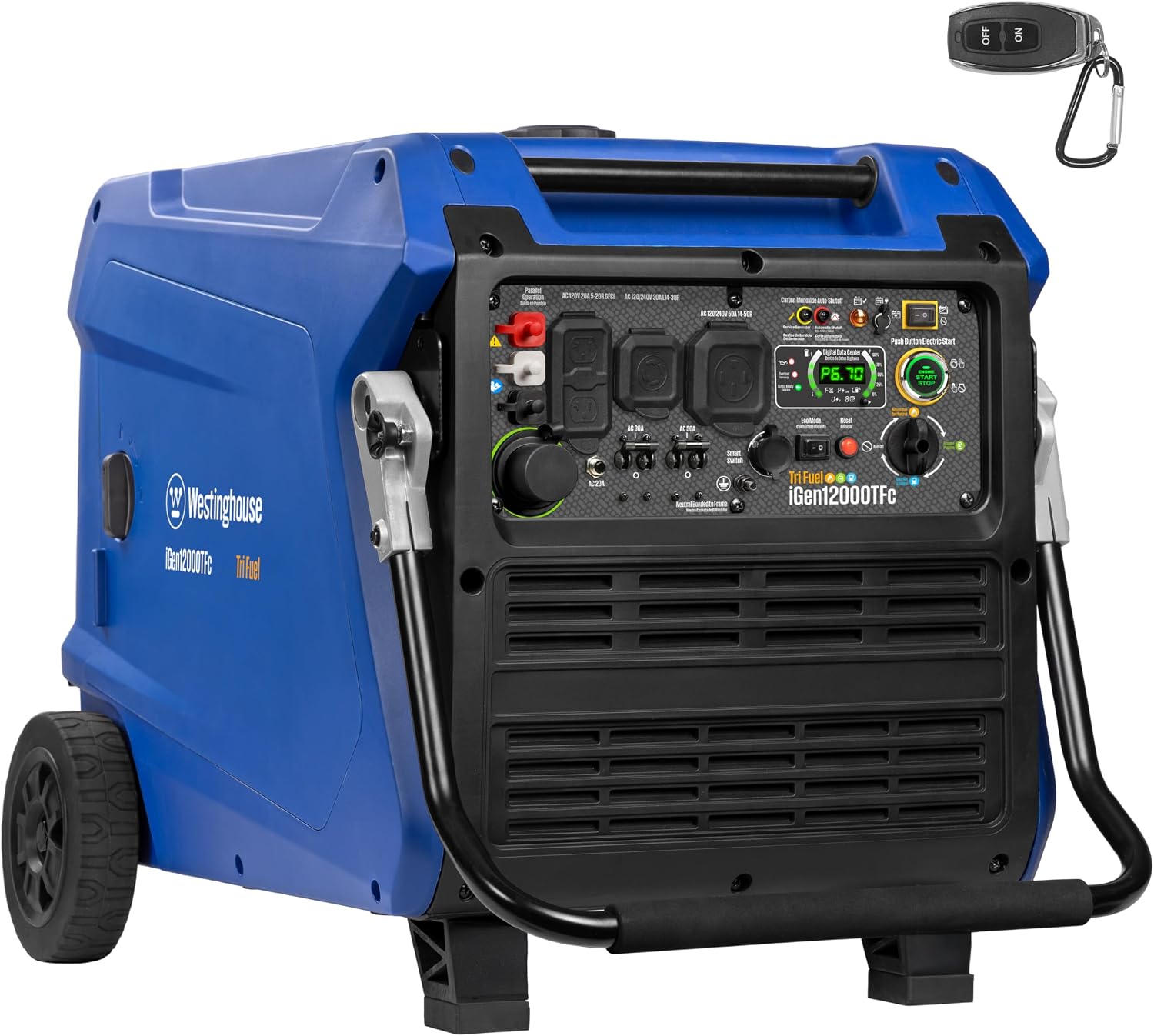
Start With the Machine: Westinghouse Tri-Fuel Inverter Generator
This is the anchor of the whole setup, and the interesting part is right in the name: tri-fuel. Gasoline, propane, or natural gas. That means a nine-day outage does not have to end because the station is dry and your cans are empty. If your house already has a gas line, this unit can keep running as long as the utility keeps pressure, and that is a different kind of peace than five gallons of ethanol blend gives you.
Remote start matters more than people give it credit for. Not because it is fancy, but because at 2 a.m. in freezing rain you want to press a button from the porch instead of yanking a cord in the dark with wet hands. The CO sensor is the other non-negotiable. Carbon monoxide shutoff is not a marketing line, it is the reason you can run a generator near a house without treating it like a hazard.
"Low THD, safe for electronics" is the phrase that separates inverter units from the conventional ones. Total harmonic distortion under 5% means laptops, TVs, phone chargers, and furnace control boards are happy. If you have ever heard a cheap generator make a laptop brick buzz, that is distortion, and it is why I will not put an inverter badge on anything that does not deliver clean power.
Transfer switch ready and parallel capable are the two features that decide how you will actually live with it. Transfer switch ready means an electrician can wire a proper inlet, so you are not running extension cords through a window for a week. Parallel capable means two units can be tied together later if you outgrow one. Buy for the outage you will actually have, not the one on the box.
The Part Nobody Plans For: A Carburetor
The most common reason a generator will not start after sitting all winter is not a worn-out engine. It is a carburetor full of fuel that turned to varnish. Ethanol blend left in a bowl for four months becomes a shellac that plugs the jet, and no amount of pulling will fix it.
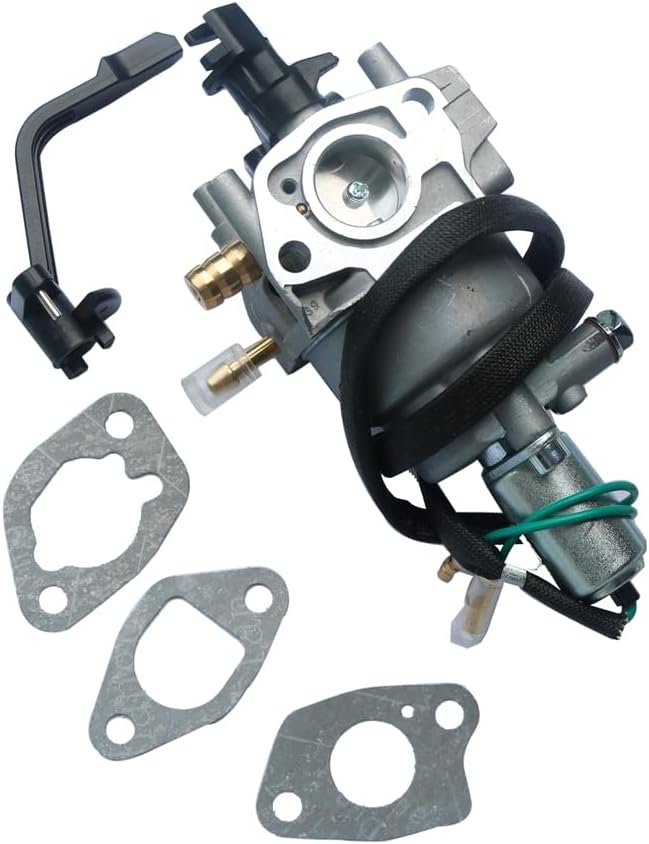
For anyone running a WEN DF475T, DF475X, or DF475 dual-fuel unit, this is the drop-in replacement that gets it back on the job. I have rebuilt enough of these to know the math: a rebuild kit, an afternoon of soaking and poking tiny passages, and a coin flip on whether it runs clean afterward, versus a replacement carb and about an hour with a socket set. For a machine that is your second or third line of backup, the replacement wins almost every time.
The real lesson is not the part, it is the fuel. Ethanol-free gas, or a stabilizer and a full drain before storage. Stabilizer is cheaper than a carburetor every single time. I have a shelf of old carbs that prove it.
Grounding: Two Kits, Two Different Jobs
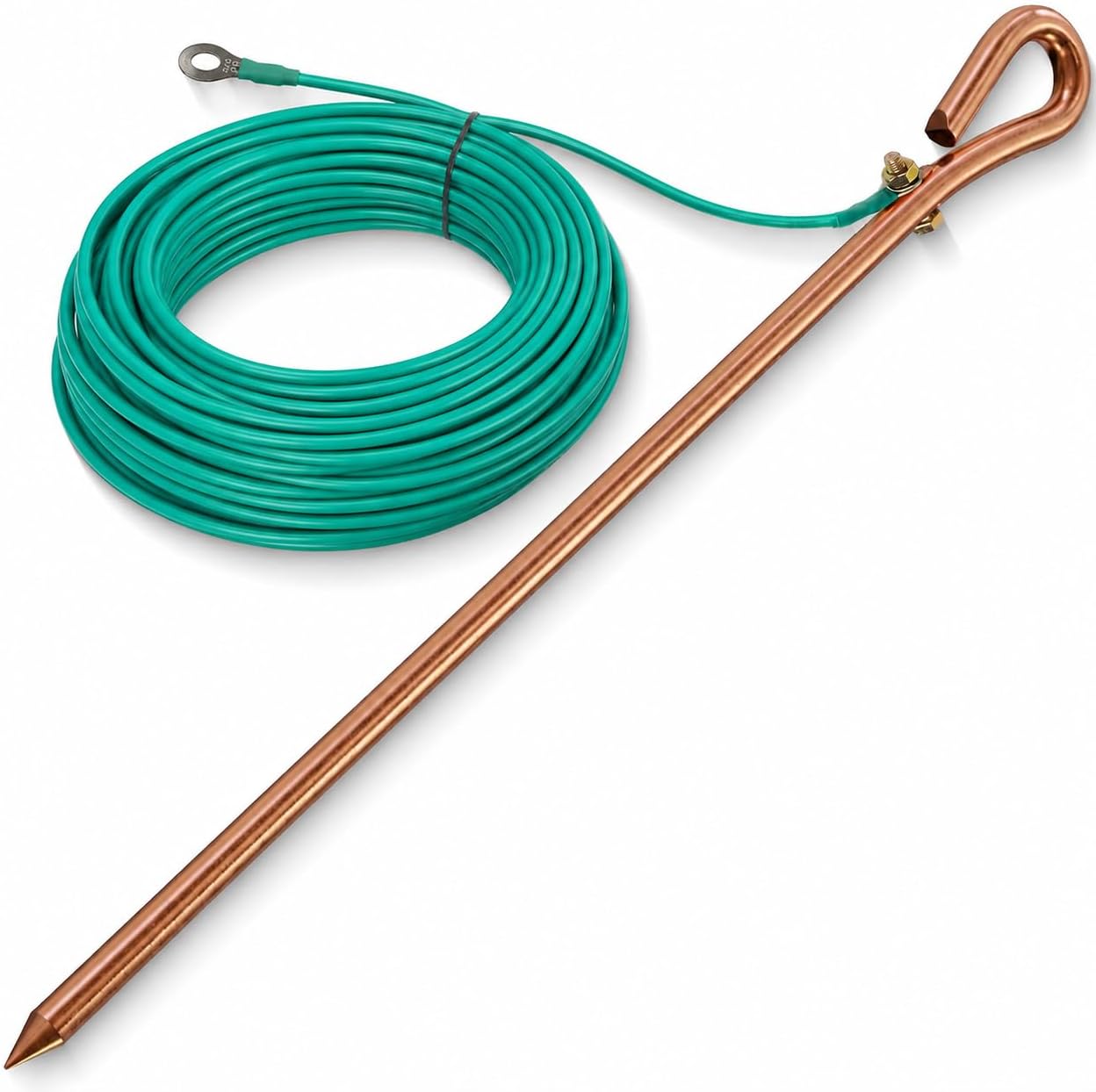
This kit is the one for a generator that parks in the same spot all season. A 17.4 inch rod with 16.4 feet of 12 AWG wire and lugs gives you enough length to reach real soil away from the driveway and enough rod to get below the loose top layer. If your unit lives beside the house and gets wheeled out for outages, this is the setup to leave in place. Read your owner's manual and your local code, and have a licensed electrician handle anything that ties into your home's wiring.
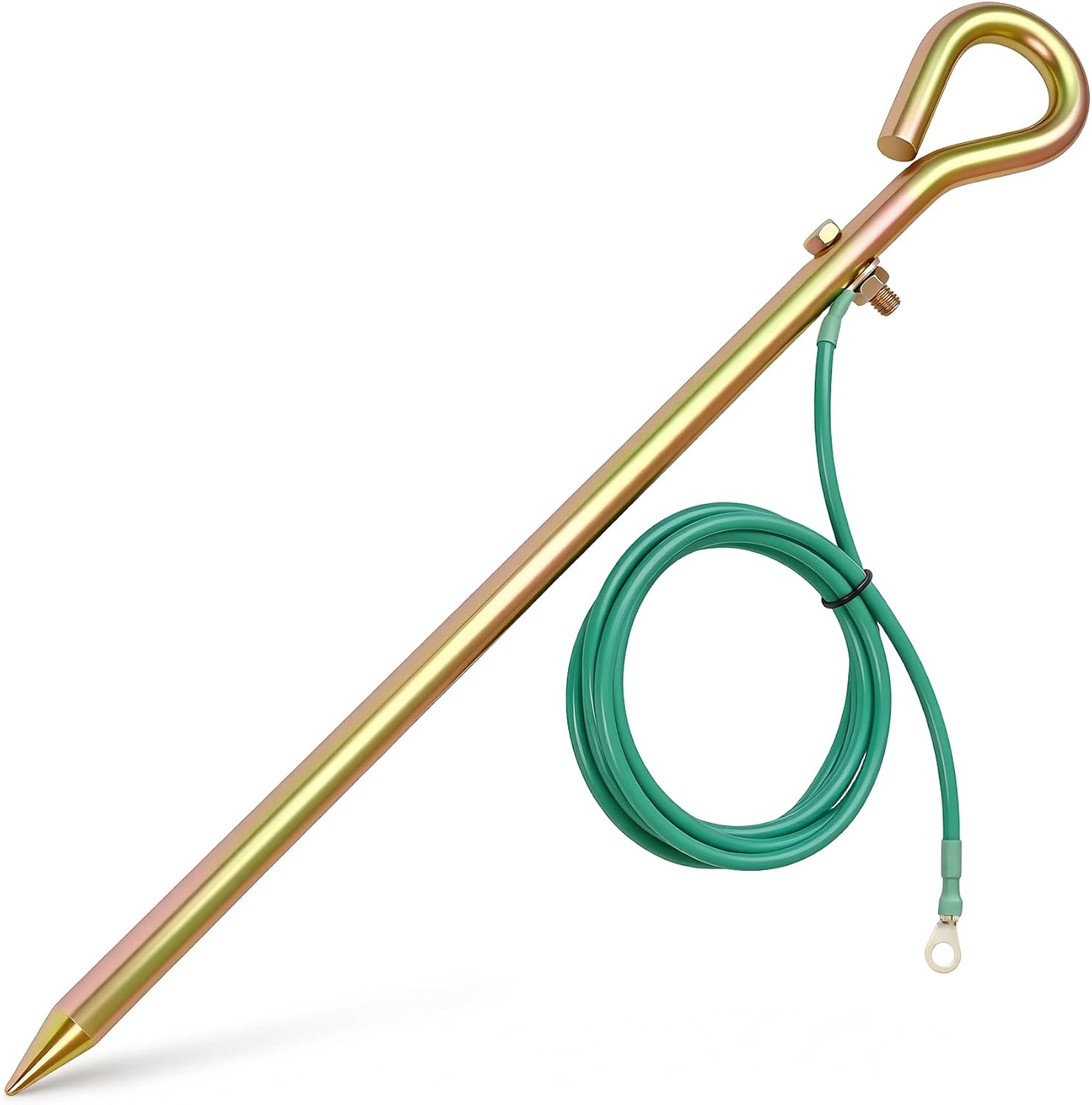
The portable rod is the traveler. A 17.5 inch solid steel rod with 6 feet of 12 AWG wire, sized to live in a bag with the rest of your kit. This is the one for a tailgate, a job site, an RV stop, or a ham radio setup in a field. Short lead, easy storage, and it does not ask you to dig a permanent hole for a weekend.
Two kits, two jobs. Buy the long one for home, the short one for the road. Both are cheap compared to the mistake of guessing.
How I Test Gear Like This
Every generator that comes through my shop goes on the same rig. A load bank of heaters and motors so I can draw real watts instead of trusting a sticker. A decibel meter at 25 feet at quarter load, because that is where your neighbor actually hears it, not one foot away with no load. A stopwatch on every fuel jug, because run time on the box is measured at a quarter load and almost nobody runs there.
The fridge test comes first. A refrigerator's surge is two to three times its running draw, and a generator that cannot catch that spike is not backup power, it is a paperweight with a pull cord. Then the sump pump, because water does not wait for you to finish troubleshooting. Then the cold start in the rain, because that is the only start that counts.
I log everything by hand in a paper notebook. Date, temperature, fuel type, hours on the unit, dB at 25 feet, and what it ran. After a while the notebook tells you things a spec sheet never will, like which units get easier to start after break-in and which ones get harder.
For parts and grounding gear, the test is simpler. Does it fit, does it hold, and would I trust it on the worst night of the year? A carburetor that bolts up cleanly and a rod that drives into clay without bending pass. Anything that needs a workaround does not.
The Setup Reference Table
This is the way I break the four pieces down when someone asks me what to buy. Same information I keep in the logbook, minus the handwriting.
| Product | Role in the setup | What matters | Notes |
|---|---|---|---|
 Visit on Amazon → Westinghouse Tri-Fuel Inverter Generator |
The power source | Tri-fuel, remote start, CO sensor, low THD, transfer switch ready, parallel capable | The anchor. Buy this first and build around it. |
 Visit on Amazon → Carburetor for WEN DF475 series |
Fuel system repair | Fits the DF475T, DF475X, and DF475 dual-fuel units | For the generator already in your shed, not a new purchase. |
 Visit on Amazon → Generator grounding kit |
Permanent-ish earth ground | 17.4 inch rod, 16.4 feet of 12 AWG, lugs included | For the unit that parks in one spot all season. |
 Visit on Amazon → Portable grounding rod |
Ground on the move | 17.5 inch solid steel rod, 6 feet of 12 AWG wire | For tailgates, job sites, RV stops, and field radio. |
What the Numbers Actually Tell You
Run time is where most people get burned. The spec sheet number is hours per tank at a quarter load. At half load, cut it by a third. At full load, cut it in half. If you plan fuel around the printed number, you will be making a gas run on day two of a nine-day outage.
Surge watts are the other trap. Peak watts in the big print, running watts in the fine print, and the motor you care about needs the surge. That is the number that decides whether your fridge actually turns on when the compressor kicks.
And noise. A decibel reading at 25 feet at quarter load is the only honest measurement, because that is how far your neighbor's bedroom is from your patio. Inverter units win here, and that is worth real money when everyone on the street is already on edge.
Should you buy the Westinghouse tri-fuel inverter generator?
If your house has a gas line, or you want propane as a second fuel, yes. Tri-fuel ends the fuel-can math that ruins most outages, remote start is the feature you will be grateful for at 2 a.m., and the CO sensor is the one I would not compromise on. Transfer switch ready and parallel capable mean it can grow with your setup instead of being replaced by it.
Should you buy the carburetor?
Yes, if you already own a WEN DF475T, DF475X, or DF475 and it has been sitting with old fuel. It is the cheapest way to turn a dead generator back into a working one without an afternoon of soaking jets and hoping. Buy it, install it, and then switch to ethanol-free fuel so you never need a second one.
Should you buy the grounding gear?
Yes, and buy the right one for how you use the machine. The long kit with the 17.4 inch rod and 16.4 foot lead is for the generator that lives beside the house. The portable rod is for the one that rides in the truck. Neither is expensive, and both beat improvising. Check your manual and your local code, and let a licensed electrician handle the house side.
Check current Amazon price on each piece before you buy, because these things move. And whatever you end up with, run it under a real load before the storm, not during it. The watt meter does not care what the box says.