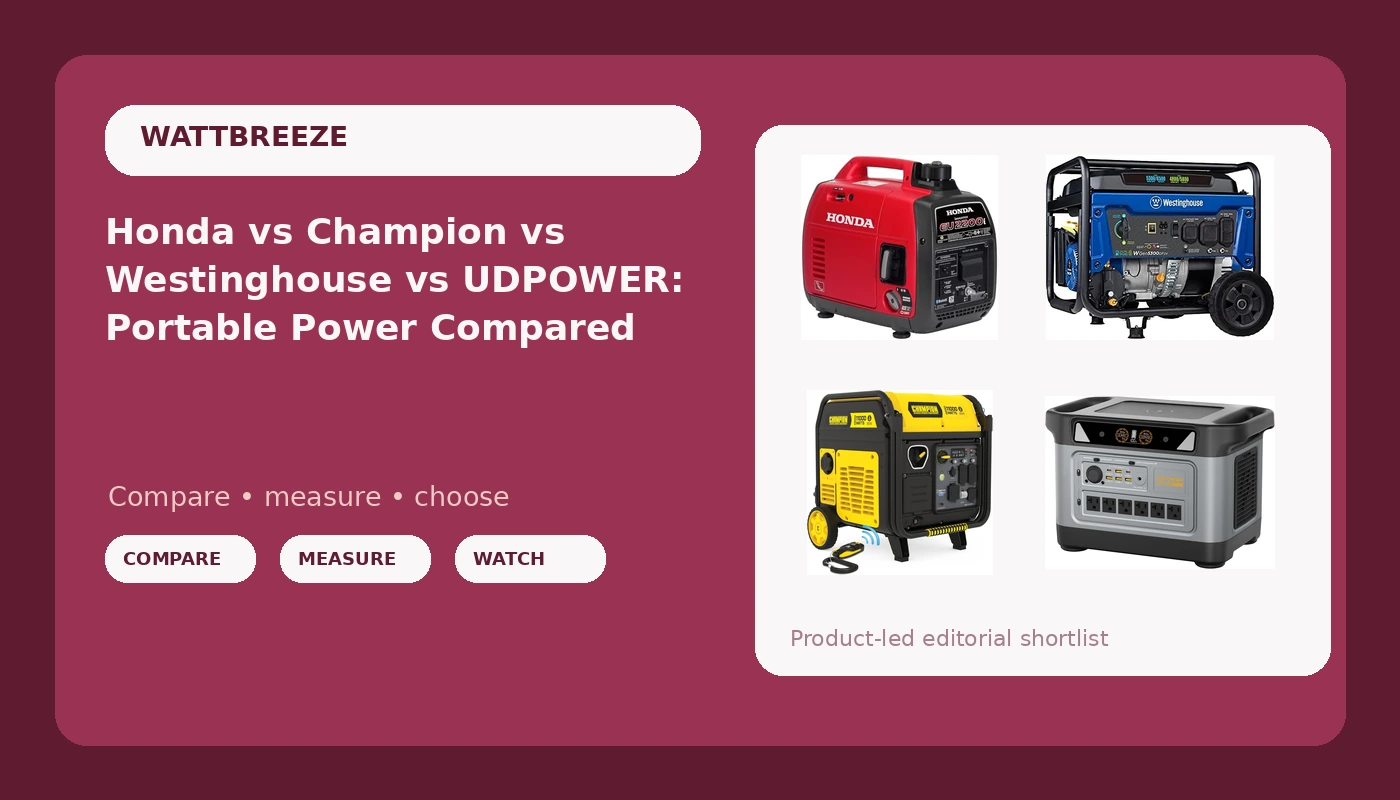
I ran a small-engine shop in Asheville for 22 years, and the work got quieter right around the time the storms got louder. After Helene took my street down for nine days, I watched a polite neighborhood argue over a 50-foot extension cord and a guy in a pickup sell "priority" hookups out of the truck bed. That is when I bought a load bank, a decibel meter, and a paper logbook and started testing every generator that comes through the shed. This portable inverter generator comparison covers four very different answers to the same question: the Honda EU2200i, the Champion 11,000-watt wireless remote start inverter, the Westinghouse 6500 dual fuel, and the UDPOWER S2400 power station.
The short version: the Honda EU2200i is the one I would hand a camper or a tailgater, the Champion is the one for a house that wants big loads without a panel, the Westinghouse is the value play for a transfer switch, and the UDPOWER S2400 is what you want for the hours when a running engine is more trouble than it is worth. The long version is below, and it is mostly about surge watts, fuel math, and noise measured at 25 feet instead of at the muffler.
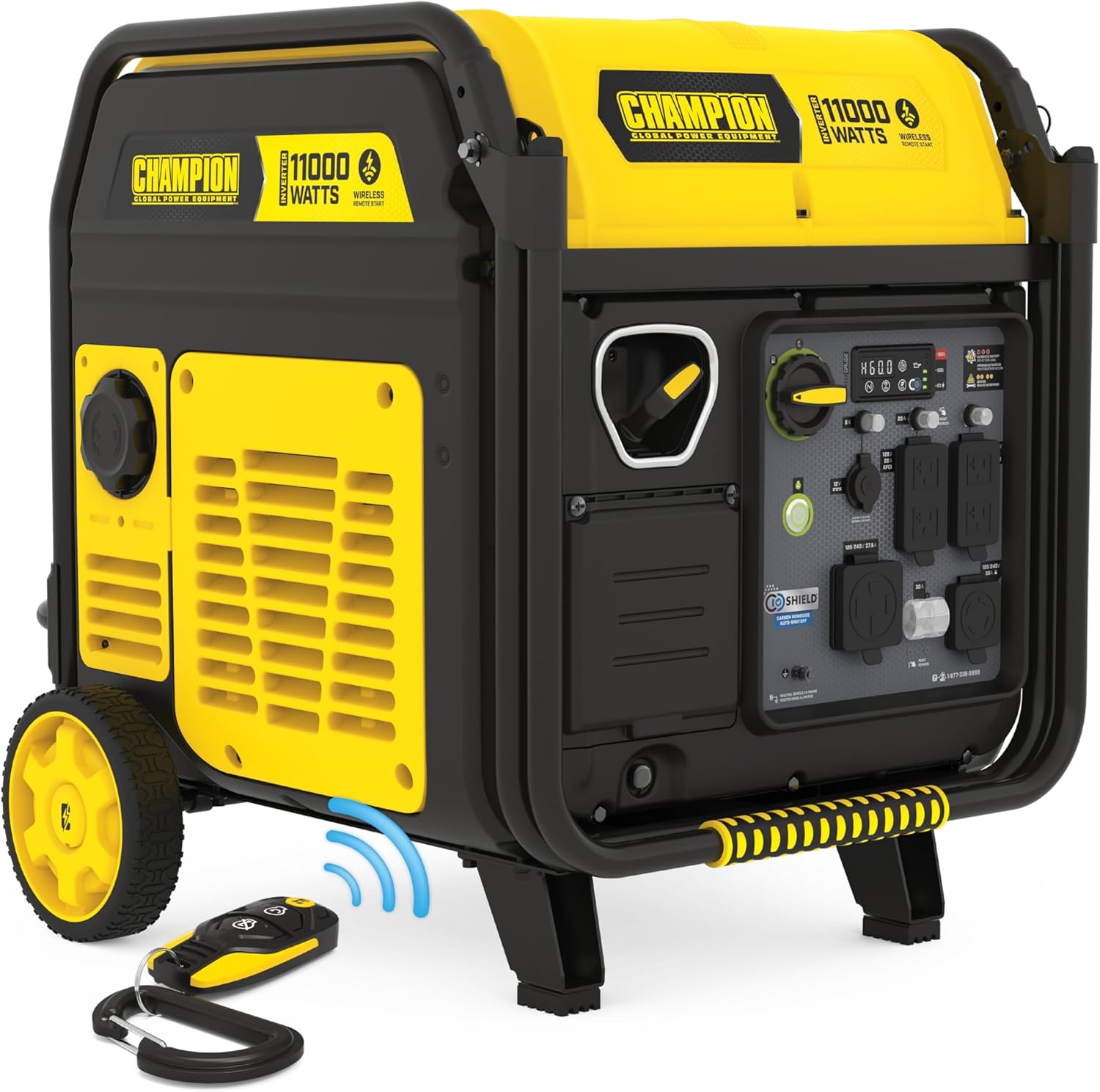
Champion 11,000-Watt Wireless Remote Start Portable Inverter Generator
The biggest inverter output in this group, plus a remote fob so you can start it from inside the house
It is a heavy, thirsty machine, and you will not want to move it twice in one storm
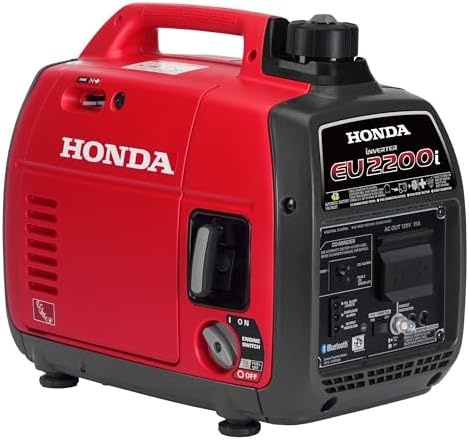
Honda EU2200i 2200 Watt Inverter Generator (EU2200ITAN)
The quiet, easy-starting benchmark for camping and tailgating, and it sips fuel
You pay a premium for the name, and 2,200 watts will not carry a whole house
Westinghouse 6500 Watt Dual Fuel Home Backup Portable Generator, Transfer Switch Ready 30A Outlet, RV Ready 30A Outlet, CO Sensor
Dual fuel plus a 30A transfer-switch outlet means it can feed a panel on gasoline or propane
It is not an inverter unit, so it is not the one for a campsite where people sleep
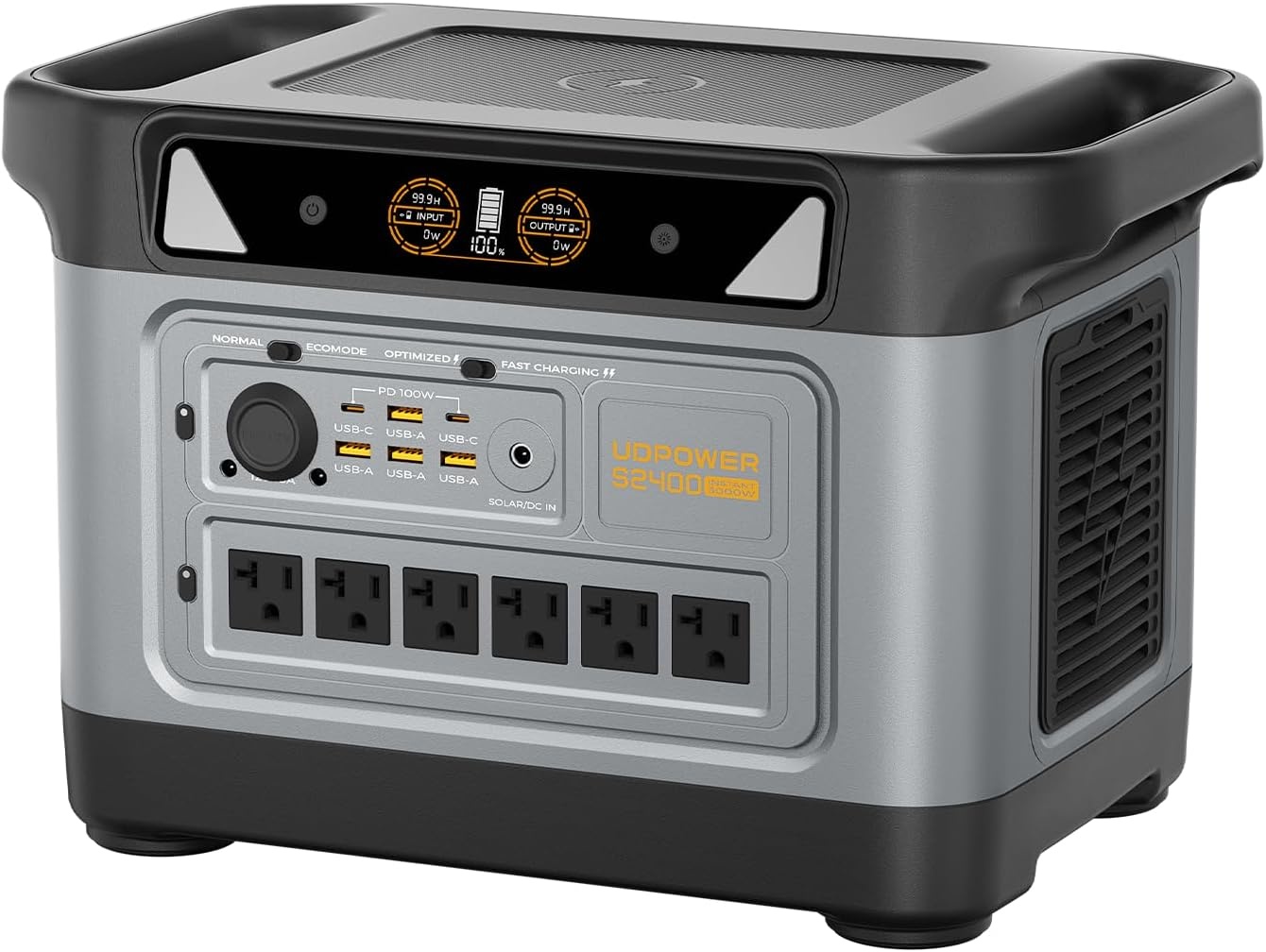
UDPOWER S2400 Portable Power Station, 2083Wh LiFePO4, 2400W (Surge 3000W) UPS, 6 AC Outlets, Solar Generator for RVs Camping Emergency, Home Backup
No fuel, no fumes, no pull cord, and it can double as a UPS with solar as an option
A 2,083Wh battery is a night of power, not a nine-day outage
Prices and availability were captured from Amazon Creators API and may change.
What these four machines actually are
This is not a lineup of four versions of the same thing, and treating it that way is how people end up disappointed. Two of these are inverter generators that burn gasoline and make clean power. One is a dual-fuel home backup unit built around a transfer switch. One is a battery with an inverter bolted to it, and it burns nothing at all.
That matters because the sticker numbers do not compare across categories. A 2,200-watt inverter and a 2,400-watt battery station can both run your fridge, and only one of them needs a fuel can, an oil change, and a place far enough from the house that the exhaust does not come back in a window.
So I sort by job first, watts second. Watts are cheap to print and expensive to live with.
Honda EU2200i: the benchmark, and the premium
The EU2200i has been the answer to "which small inverter" for so long that it is almost boring to write about. It starts when you pull it, it runs clean enough for laptops and phones, and it is the unit people compare everything else to. Honda earned that reputation one camping trip at a time, and the EU2200ITAN version is the same machine with the standard packaging.
Here is the honest part: you are paying a premium, and it is a premium, not a miracle. A 2,200-watt inverter is a 2,200-watt inverter, and this one will not run a well pump, a central air unit, or an electric water heater. What you get for the money is refinement, parts availability, and a machine that a first-time owner can start cold in the rain without a YouTube tutorial. If that sounds like faint praise, it is not. In a storm, easy beats impressive every single time.
Where it loses is capacity and price. If your backup plan is a whole house, this is the wrong tool, and no amount of brand loyalty changes that math.
Champion 11,000-watt inverter: the biggest hammer in the shed
The Champion is the odd one in a good way. Eleven thousand watts out of an inverter generator is a serious number, and it puts this unit in a class where it can carry loads that would trip a 2,200-watt machine without blinking. Wireless remote start is the feature I did not know I wanted until I used one: standing in a doorway, pressing a fob, and hearing the engine catch beats walking out in a downpour to pull a cord.
The cost is weight and thirst. A machine with this much output is not a tailgate toy, it is a piece of equipment that wants wheels, a ramp, and a plan. Fuel consumption scales with output, and nobody runs an 11,000-watt inverter at quarter load and calls it a day. If you buy this, buy it because you have real loads to feed, not because you want headroom you will never use.
It is also, for what it is, the quietest way to make that much power. Inverter electronics mean the engine can drop to a low idle when the load is light, which is the difference between background hum and a small engine screaming in your driveway.
Westinghouse 6500 dual fuel: built with a transfer switch in mind
The Westinghouse is the one I would hand someone who has already talked to an electrician. The 30A transfer-switch-ready outlet is the whole point of the unit, and dual fuel means you can run it on propane when gasoline lines are a mile long, which is exactly what happens after a hurricane.
Two things to understand before you buy it. First, propane and gasoline do not produce the same output, and any dual-fuel owner should read the manual's derate table rather than assume the big number applies to both fuels. Second, this is not an inverter generator, so it is not the machine for a campground with quiet hours or a neighbor's open window. It is a home backup unit that happens to be portable, and the CO sensor is a feature I consider non-negotiable on anything running near a house.
If your goal is a fridge, a freezer, some lights, a router, and a well pump through a panel, this is the most practical money in this comparison.
UDPOWER S2400: silence for the hours a generator is overkill
The S2400 is a different animal and deserves to be judged that way. It stores 2,083Wh in a LiFePO4 pack, puts out 2,400 watts continuous with a 3,000-watt surge, and gives you six AC outlets without a drop of gasoline, a pull cord, or a decibel reading anyone will complain about. It can also run as a UPS, which means your router and your chest freezer do not notice the grid blinking. The solar panel option is what makes it a real dry-camping tool instead of a very large phone charger.
The limitation is capacity, and it is not a flaw, it is physics. Battery capacity is a tank you cannot refill from a can at 2 a.m. Run a space heater and you will watch the percentage fall in real time. Run a fridge through its cycles and you will get a night, maybe a bit more, depending on how often the compressor kicks on. That is a different promise than a generator makes, and it is a promise that is perfect for apartment dwellers, tent campers, and anybody who wants power without carbon monoxide.
The trade-offs the box never mentions
Surge watts are the number that decides your morning
Every motor in your house demands a startup spike that is two to three times its running watts, and the spike lasts a fraction of a second. A fridge that runs at a few hundred watts can pull well over a thousand when the compressor kicks in. The spec sheet's running watts tell you what a machine can carry all day. The surge rating tells you whether your fridge actually starts. Ignore the second number and you will spend a storm listening to a generator bog down and trip.
Run time math is always optimistic
Run time on the box is measured at a light load, usually around a quarter of capacity, on a full tank, at sea level, on a cool day. At half load, cut that number by a third. At full load, cut it in half. Then plan fuel around the cut number, because the fuel you did not buy is the fuel that ends your outage early. I keep a logbook and a marked jug for exactly this reason, and I trust my stopwatch over any sticker.
Quiet is a measurement, not a marketing word
"Whisper quiet" means nothing without a number and a distance. I measure at 25 feet, which is roughly where a neighbor's bedroom window sits, and I measure at quarter load, which is where most of these units actually run overnight. Inverter generators win this category because the engine can slow down when the load is light. Conventional units do not, and no amount of sound shielding fixes that.
Inverter power protects your electronics
Inverter generators produce power with total harmonic distortion under 5%, which is the threshold where laptops, TVs, and phone chargers stop caring. Cheap conventional generators can push distortion high enough that sensitive electronics hum, run hot, or fail. If your backup plan includes a modern furnace board, a TV, or a CPAP machine, that spec matters more than a few hundred watts of capacity.
Fuel storage and ethanol are the quiet killer
Gasoline with ethanol left in a carburetor for a couple of months turns into varnish, and varnish turns into a service call. Use ethanol-free fuel if you can find it, add stabilizer if you cannot, and run the carb dry before you store anything. A generator that will not start in a storm is a lawn ornament with a handle.
Carbon monoxide is not a theory
Never run any of these indoors, in a garage, or under a carport, even with the door open. Twenty feet from the house, exhaust pointed away from windows, and a working CO sensor on the unit. This is the one rule where there is no trade-off to discuss.
Which one for which outage
If you camp, tailgate, or need quiet power for a few small loads, the Honda EU2200i is the safest recommendation in this group and it will hold its value.
If you have a house with real loads and no interest in a panel install, the Champion's output and remote start make it the most capable single unit here, provided you can move it and feed it.
If you have a transfer switch, or you plan to add one, the Westinghouse 6500 dual fuel is the most sensible home backup purchase, and the propane option is worth more than people realize until the gas stations close.
If you want power without fuel, noise, or fumes, or you need a UPS for a freezer and a router, the UDPOWER S2400 is the one that does a job the other three cannot.
The bottom line
There is no single winner here, and anyone who tells you otherwise is selling something. What there is: a quiet benchmark, a big inverter, a dual-fuel home backup unit, and a battery that never needs an oil change. Match the machine to the outage you actually have, not the one you imagine, and buy fuel stabilizer on the same trip.