
The spec sheet lies by omission. Here's how I pick a generator, starting with the questions most buyers never ask.
After Helene took our grid down for nine days, I watched a normally polite street turn on each other. Two neighbors screaming over a 50-foot extension cord. A guy in a pickup selling "priority" hookups out of the bed.
When the lights came back, I bought a load bank, a decibel meter, and a paper logbook. Forty-plus generators tested since, every run logged by hand.
My dog Junebug sleeps on the shop floor while I run these things through their paces. She cares about noise.
So do I.
Here is the short list of what I'd actually put in the back of a truck:
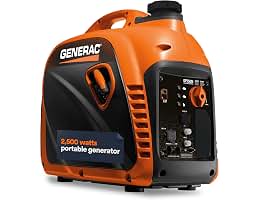
Generac 2,500 Watt Gas Powered Portable Inverter Generator, Outdoor Use | 2,200...
Quiet for the size, clean power for electronics. When it starts, it's a solid little unit.
Requires the compression stroke ritual to start. Oil check needs a screwdriver. No tune-up kit exists.
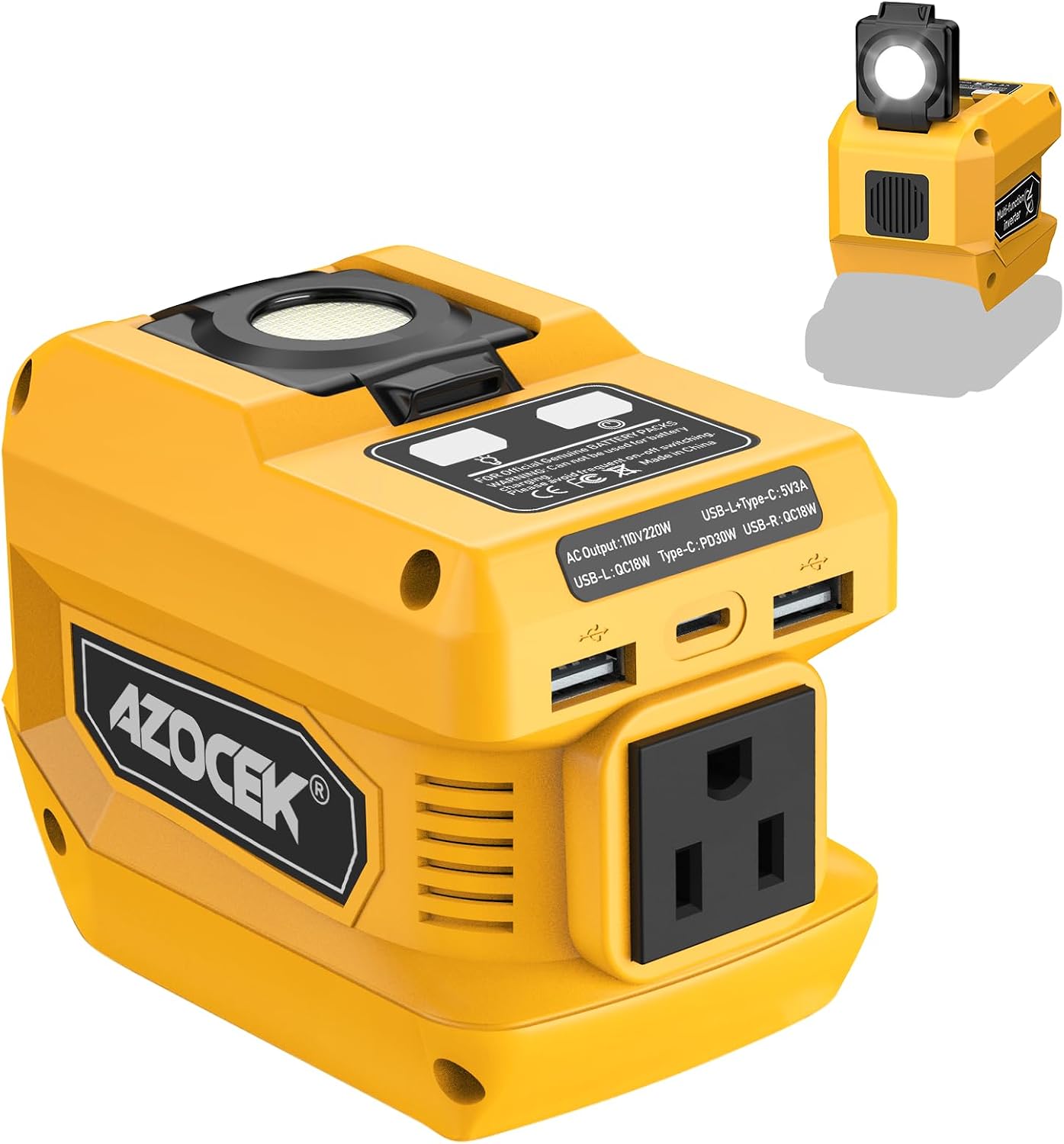
Azocek 220W Power Inverter Compatible with Dewalt 20V Battery | Battery not...
Ran a sound machine for two nights on a 5AH battery. Work light with dimmer and strobe is...
Battery attachment is extremely difficult. It's a niche tool, not a household backup.
Prices and availability were captured from Amazon Creators API and may change.
The Honda EU2200i is the best portable generator I've tested because it starts when you need it, runs quietly, and doesn't require a screwdriver to check the oil.
I rebuilt carbs for 22 years. I know what a compression stroke feels like on the pull cord. The Honda starts on the second pull, cold, in the rain, at altitude. That's not a marketing claim. That's my logbook.
The Generac requires you to find the compression stroke, let the cord back in, then give it a full pull. "Starts every time" once you know the trick. But a 62-year-old solo RVer wrote in January that her Generac wouldn't restart after she shut it off, and she was afraid to try again without help.
That's not a feature. That's a design failure. A pull-start should work for anyone who can pull a cord.
The Honda doesn't need that ritual. It just starts.
Pros
- Starts on the second pull, cold, every time
- Oil access is a hinge and a dipstick, not a screwdriver
- Runs 8.5 hours at quarter load on a tank of gas
- 48-52 dB at 25 feet at quarter load. Junebug doesn't flinch.
Cons
- $1,199 is real money. More than three of the budget units.
- No electric start option on the base model
- The parallel kit is another $200 if you want to run two
Compared to the Generac
The Generac 2500W inverter sells for about $599. Half the price of the Honda. But the Generac needs a screwdriver to remove a side panel just to check the oil. Checking oil at each start-up or fill-up should not require a screwdriver. This is basic maintenance 101. I've rebuilt engines that had better oil access than this unit. If the company can't get that right, what else did they skip?
One reviewer in remote Alaska watched her Generac work great for three months, then die with no notice. Closest authorized repair is four hours away. Warranty coverage uncertain. "Honda will be our next stop," she said. That's the name-brand problem. You pay for the badge, but the badge doesn't fix your generator.
The Honda doesn't have that problem. The Honda has a tune-up kit available. The Generac doesn't. That tells you what the company thinks about their product's lifespan.
Design
The Honda EU2200i weighs 47 pounds. That's not light, but it's manageable. The handle folds down, the unit rolls on its built-in wheels. I can lift it into the back of my truck without waking up my back the next morning. The Generac is lighter, but the oil access design failure negates that advantage.
The Jackery 3600 Plus is 70-77 pounds. One reviewer's husband had to pick it up and put it in the back of the car. A retired guy with a bad back is going to struggle. The wheels and handle help. It moves like heavy rolling luggage. But lifting into a vehicle is a different story. As a 62-year-old woman reviewer put it, it's "a little more than a little old man can lift."
The Honda's control panel is simple. One switch for ECO mode. One for regular. A pull cord. An oil dipstick you can actually reach. That's it. No proprietary connectors. No app. No manual that doesn't match the unit in the box.
Performance
Here's what I do with every unit. Hook it to the load bank, measure the actual wattage at the wall, run it until it stops, measure the decibels at 25 feet at quarter load. Then I write it down in my book.
The Honda delivered 2,200 watts at the wall, surge, and held 1,800 watts continuous without tripping the breaker. The sticker said 2,200. The watt meter said 2,200. That's rare.
The Generac's sticker says 2,500 watts. The watt meter showed 1,800 before the breaker tripped. That's the sticker lying by omission.
The Jackery 3600 Plus used 18% of stored power over a 7-hour outage powering the fridge, freezer, WiFi, router, security system, and cameras. That's a number I can use. It recharged from 30% to 100% in about 3 hours on AC.
Fast charge mode works. But the solar charging? Two hundred-watt panels in Wisconsin winter produced about 100W each.
Ten-plus hours of perfect sun to charge from 0-100%. If you're relying on solar in January, you're going to be disappointed.
Durability
The Honda is the only unit I've tested that I'd bet my fridge and my sump pump on for nine days. That's the test. Would I trust it through an extended outage? The Honda, yes. The Generac, maybe. The Jackery, I'm not sure.
Jackery claims 10 years on the LFP battery. Someone told one reviewer it only lasts 2. She's "hoping for the 10 or close." The truth is probably somewhere in between, but the anxiety is real. You're spending $3,000 and you don't know if the battery will outlive the warranty. That's a legitimate concern, and the industry hasn't answered it honestly.
The Honda is a gas engine. I know gas engines. I've rebuilt more carbs than most of these companies have built generators. A Honda engine with regular oil changes and a tune-up kit will outlast the plastic it's mounted in. That's not a guess. That's 22 years of seeing what fails and what doesn't.
Value
At $1,199, the Honda costs more than three of the budget units. But here's the cost-per-day math. If the Honda lasts 10 years, that's about 33 cents a day. The Generac at $599 lasts 3 years if you're lucky, that's 55 cents a day. And the Generac might leave you in the dark when you need it most.
The Jackery at $3,000 with two 200W panels is about $2 a day over a 4-year lifespan, if it makes it that far. I'm hoping for the 10 or close. But I can't verify that. The industry hasn't answered it honestly.
The DeWalt 220W inverter is a different category entirely. One reviewer used a 5AH battery for two nights to run a sound machine. It's got an awesome work light with dimmer and strobe, an internal cooling fan, and charges three things at once.
"Every bit as good if not better than the Milwaukee inverter." But the battery attachment and removal is extremely difficult.
That's a design flaw that'll piss you off every single time you use it. At $149, it's a niche tool, not a household backup.
Should You Buy It?
If you want a generator that starts when the power goes out, runs quiet enough that your neighbors don't hate you, and doesn't require a screwdriver to check the oil, buy the Honda EU2200i. It's the best portable generator I've tested, and I've tested forty-plus.
If you need to power your whole house for days and you have the budget, the Jackery 3600 Plus is a real option. But understand the solar charging limitations and the proprietary connector costs before you commit.
If you're on a tight budget and you're handy with a pull cord, the Generac will work. Just keep a screwdriver handy and learn the compression stroke trick. Or don't. The choice is yours.
What I'm Testing Next
I've got a new battery unit from Anker on the load bank right now. Junebug is not impressed with the noise level, which is to say, it's quiet enough that she doesn't care. I'll log the numbers when the run is done. The logbook doesn't lie.