Grounding a portable inverter generator is the part of storm prep nobody photographs. It does not make the lights come back any faster, and it never shows up on the sticker next to the watts. What it does is give fault current somewhere to go instead of through your wiring, your tools, or your hand.
I spent 22 years running a small-engine shop in Asheville before the work got quieter and the storms got louder. When Helene took the grid down for nine days, I watched a polite street turn on each other over a 50-foot extension cord, and a guy in a pickup selling "priority" hookups out of the bed. When the lights came back, I bought a load bank, a decibel meter, and a paper logbook, and started testing generators the way I used to rebuild carburetors: take it apart, measure everything, and never trust the sticker.
This is the order I hand people now. One generator, one ground rod, and about forty minutes of work you do on a sunny Saturday instead of in the rain at 2 a.m.
Why you should trust me
I have run more than 40 generators through a load bank since that outage. Every one got a real load, not a hair dryer and a guess, and every run went into the logbook by hand. I keep a decibel meter at 25 feet because that is where the neighbor's bedroom is, not one foot from the case where the box claims its number. I have torn down enough carbs to know what ethanol does to a machine that sits for eleven months, and I still own the cheap budget unit I tell people to think twice about, so I am not going to pretend everything I own is a recommendation.
The two items below are not a ranked shootout. They are the two halves of one job: a generator that can carry a house through a long outage, and the ground path that makes the setup defensible.
How I picked and what I check
I do not pick a generator by the number in the product name. The name is where the marketing lives. What I check, in order:
- Running watts versus surge watts. Surge is the startup spike a fridge or a well pump needs, usually two to three times running watts. The surge number decides whether the compressor actually turns over.
- Inverter or conventional. An inverter generator holds total harmonic distortion under 5%, which keeps laptops, TVs, and furnace boards happy. A conventional unit is cheaper per watt and louder, and it is the right answer only when nobody sleeps near it.
- A CO sensor. Carbon monoxide shutoff is non-negotiable on anything running near a house, and it is on new units for a reason.
- Serviceability. Oil drain access, air filter access, and whether a carburetor can come off without pulling the whole side panel.
- A real ground path. That means a ground lug on the frame, plus a rod and wire rated for the job.
For the grounding side the checklist is shorter, but it is not optional: UL listed wire, a gauge heavy enough for the length of the run, a clamp that bites into the rod, and a clip that comes off the frame in a hurry. A ground lead that is undersized or corroded is worse than useless, because it looks like protection.
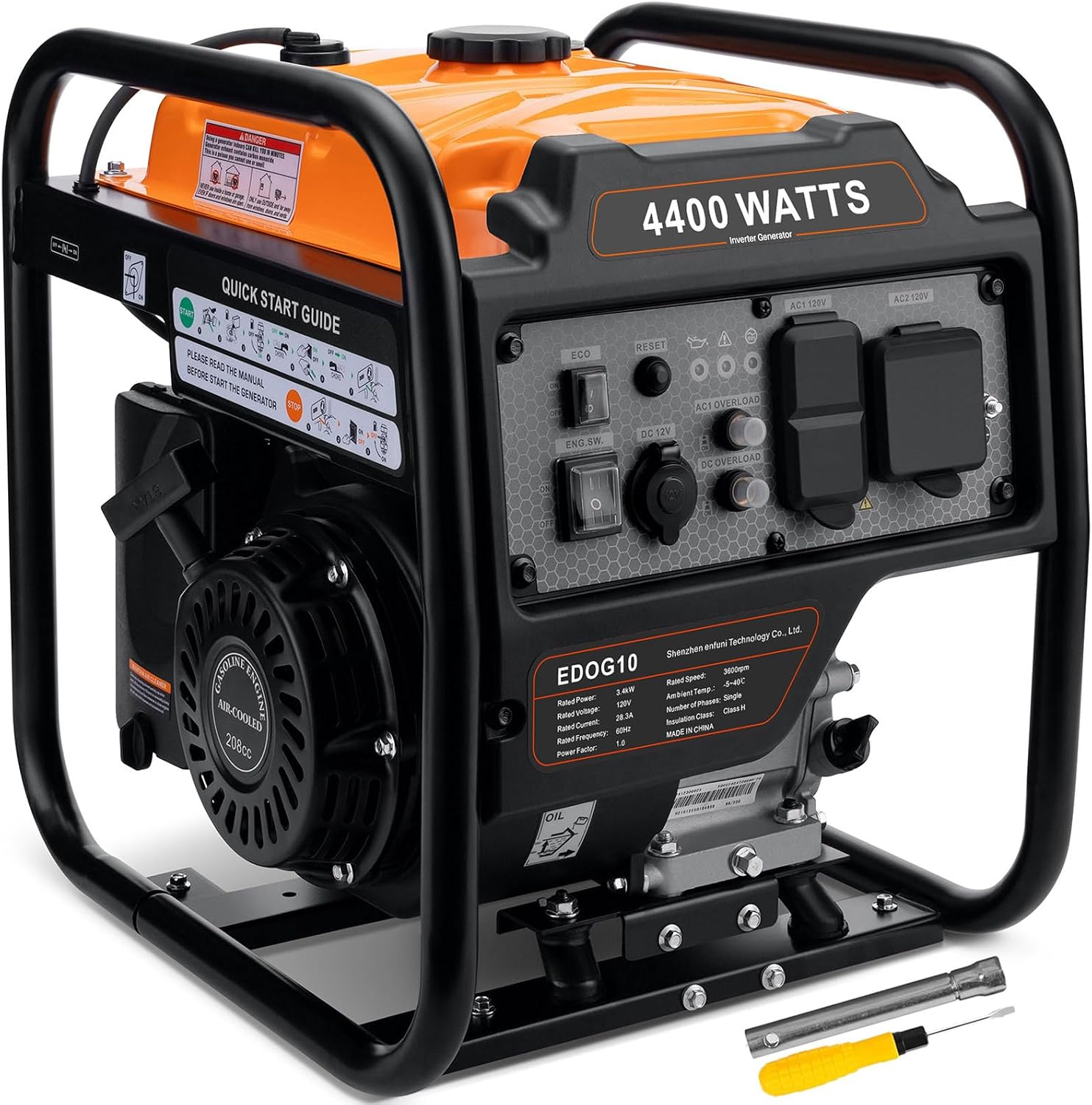
The generator: Oxseryn 4400-Watts Inverter Generator, Open Frame Generator Gas Powered, Emergency Home Backup, RV Ready 30A Outlet, EPA Compliment
Check current Amazon price.
This is the big half of the setup. The class of unit matters more than the badge: a 4,400-watt inverter in an open frame is a workhorse shape. Inverter means the power coming out of the 30A outlet and the household receptacles is clean enough for electronics, which is the whole reason you pay the inverter premium in the first place. Open frame means it is serviceable and it is honest about being a machine instead of a piece of furniture.
The RV-ready 30A outlet is the detail I care about most for anyone with a travel trailer, because it lets you plug the trailer cord straight in instead of running a dogbone adapter and hoping. Gas powered and EPA compliant means it is a standard gasoline unit, so your fuel discipline matters: ethanol-free fuel if it is going to sit, stabilizer if it is not, and a drained carb before storage. Ethanol left in a carb is a time bomb, and stabilizer is cheaper than a carburetor rebuild every single time.
Before you buy any generator, read the manual section on neutral bonding. Some portable inverter generators ship with a floating neutral, and that matters when you tie into a house system. If the manual does not answer it, call the manufacturer and get the answer in writing. That one phone call is worth more than a forum thread.
Flaws but not dealbreakers: An open frame unit is not a campground-quiet machine. If quiet is the deciding factor, an enclosed inverter is the right answer and it costs more. This one is for the person who wants capacity and serviceability first.
Anyone backing up a house through a transfer switch, powering a travel trailer, or running a job site will get the most out of it.
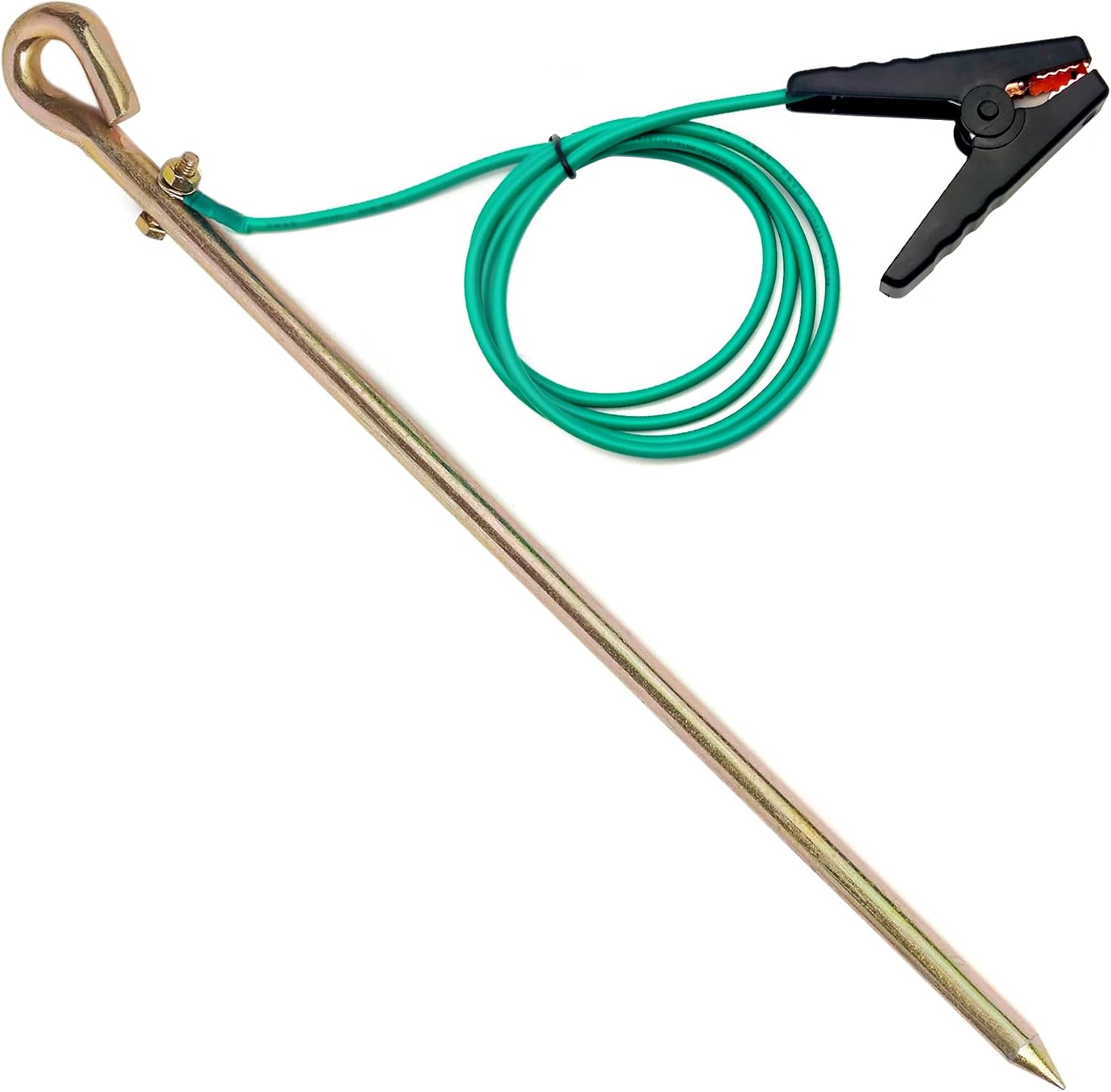
The ground rod: Portable Ground Rod with 5.1ft 12AWG UL Listed Grounding Wire with Crocodile Clip,Great for Electric Fences,Antennas,Generator,Ground Post Pin(Grounding Rod with 5.1ft Wire)
Check current Amazon price.
This is the piece that turns "I have a generator" into "I have a grounded generator," and it is a small line item next to the machine it protects.
Three details on this one are worth naming out loud. The wire is 12AWG, which is a real gauge for a short ground lead, not the lamp cord you see on some kits. It is UL listed, which means an independent lab looked at it, and that matters more on a ground path than on almost anything else you will buy. And the crocodile clip means you can attach to the frame ground lug and pull it off again without hunting for a wrench in the dark.
The 5.1-foot lead tells you the rod has to sit close to the generator, so plan the spot accordingly. The rod and pin also work for electric fence chargers and antenna masts, so it earns its shelf space outside of storm season.
Flaws but not dealbreakers: Rocky or bone-dry soil will fight you. Soak the spot, pick the low corner of the yard, or use an existing grounding electrode if your local code allows it. And this is a portable ground path, not a substitute for a permanent house ground installed by an electrician.
Anyone running a portable generator, a fence charger, or a mast who wants a ground path they can set up and take down will be happy with it.
The actual setup workflow
Here is the order. Do it once on a dry day, then write the steps on a card and tape it inside the generator cover.
Step one: read the manual and settle the neutral question. Find out whether your generator has a bonded or floating neutral and how the manufacturer wants it grounded. This is the step people skip, and it is the step that decides whether the rest of this is correct.
Step two: pick the spot. Twenty feet from the house at minimum, away from windows, doors, and vents, on level ground, and never in a garage, breezeway, or under a deck. CO does not care how cold you are. Keep the unit out of standing water and away from anything that can melt.
Step three: call 811 before you drive anything into the ground. A ground rod is a metal spike going into the earth, and you want to know where the gas, water, and internet lines run before you swing a hammer. The call is free and it takes a few days, which is exactly why you do this in September instead of during the storm.
Step four: drive the rod. Work the pin into the soil with a fence post driver or a small sledge, keeping the clamp end above grade. Aim for the damp corner of the yard. If the ground is dry, water the spot and let it soak before you start.
Step five: make the ground connection. Clip the crocodile end to the generator frame ground lug, then attach the wire to the rod clamp. Tug on both ends. A connection that pulls loose is not a connection.
Step six: start the generator, then add load slowly. Start it with nothing plugged in and let it stabilize for a minute. Add the biggest motor load first, one item at a time, and listen to the engine when the fridge compressor kicks on. If the engine bogs and recovers, you are fine. If it stumbles and dies, you are over the surge limit, and eco mode is usually the culprit. Eco mode saves fuel and noise, but on some units it cannot react fast enough for a fridge surge. Turn it off for the first start of any motor.
Step seven: run the cords correctly. Use heavy gauge cords, as short as you can get away with, and never leave a cord coiled under load. A coiled cord is a heater. Keep the connections out of puddles and off the wet grass.
Step eight: fuel discipline. Ethanol-free fuel if it will sit, stabilizer if it will not, and a written log of every fill. Run time on the box is measured at a quarter load. At half load, cut it by a third. At full load, cut it in half. Plan your fuel jugs around the real number, not the sticker.
Step nine: shut it down in reverse. Kill the loads first, let the engine cool, shut off the fuel, and disconnect the ground lead last. Then drain the carb if the unit is going to sit.
Where people get this wrong
- Backfeeding a dryer outlet. It is the most dangerous shortcut in storm prep, and it puts line workers at risk. Use a transfer switch or an inlet box.
- Running it in the garage "with the door open." CO builds faster than people believe, and a sensor is a backup, not a plan.
- Trusting a dry rod. A ground rod in bone-dry soil is a decoration. Water the spot.
- Using an undersized ground lead. Twelve gauge for a short run. If you need a long run, go heavier and talk to an electrician.
- Trusting the fuel gauge. Most of them read full until the tank is a third empty. Time your fills with a watch, not the needle.
- Leaving ethanol fuel in the carb. This is the number one reason a generator that ran fine in October will not start in January.
What this guide is not about
This is not a standby generator guide. A permanent standby unit with an automatic transfer switch is a different job with a different budget and a licensed electrician in the middle of it. If your goal is power that comes on by itself, that is the conversation you want to have.
It is also not a conventional-versus-inverter sermon. A conventional generator is cheaper per watt and it will run a job site all day. An inverter costs more and gives you clean power and a quieter machine. If people sleep within earshot of where the generator runs, the inverter is worth the money. That is the whole argument.
And this is not a wiring guide for tying a portable generator into your panel. That work belongs to a licensed electrician who can look at your service and your transfer equipment. What I can tell you is the part you own: the machine, the rod, the wire, and the order you do it in.
What this costs
The generator is the real spend. Check current Amazon price on the Oxseryn before you compare it to anything else, because the class of unit sets your budget, not the accessories around it.
The ground rod is a small line item next to the machine. Check current Amazon price on the grounding kit and you will see what I mean. What you are buying there is a UL listed lead, a clip, and a rod you can drive and pull, which is cheap insurance compared to the cost of a fault that has nowhere to go.
The rest of the budget is cords, fuel, stabilizer, oil, and a logbook. Those are the line items that keep the generator alive between storms, and they are the ones people cut first and regret later.
The bottom line
A generator is a machine, and machines do what you set them up to do. Grounding a portable inverter generator is not the exciting part of storm prep. It is the part that lets you sleep while the fridge runs, the sump pump cycles, and the neighbor's lights stay dark instead of yours. Do it on a sunny Saturday, write the steps on a card, and leave the card inside the cover. The 2 a.m. version of you will not want to look anything up.