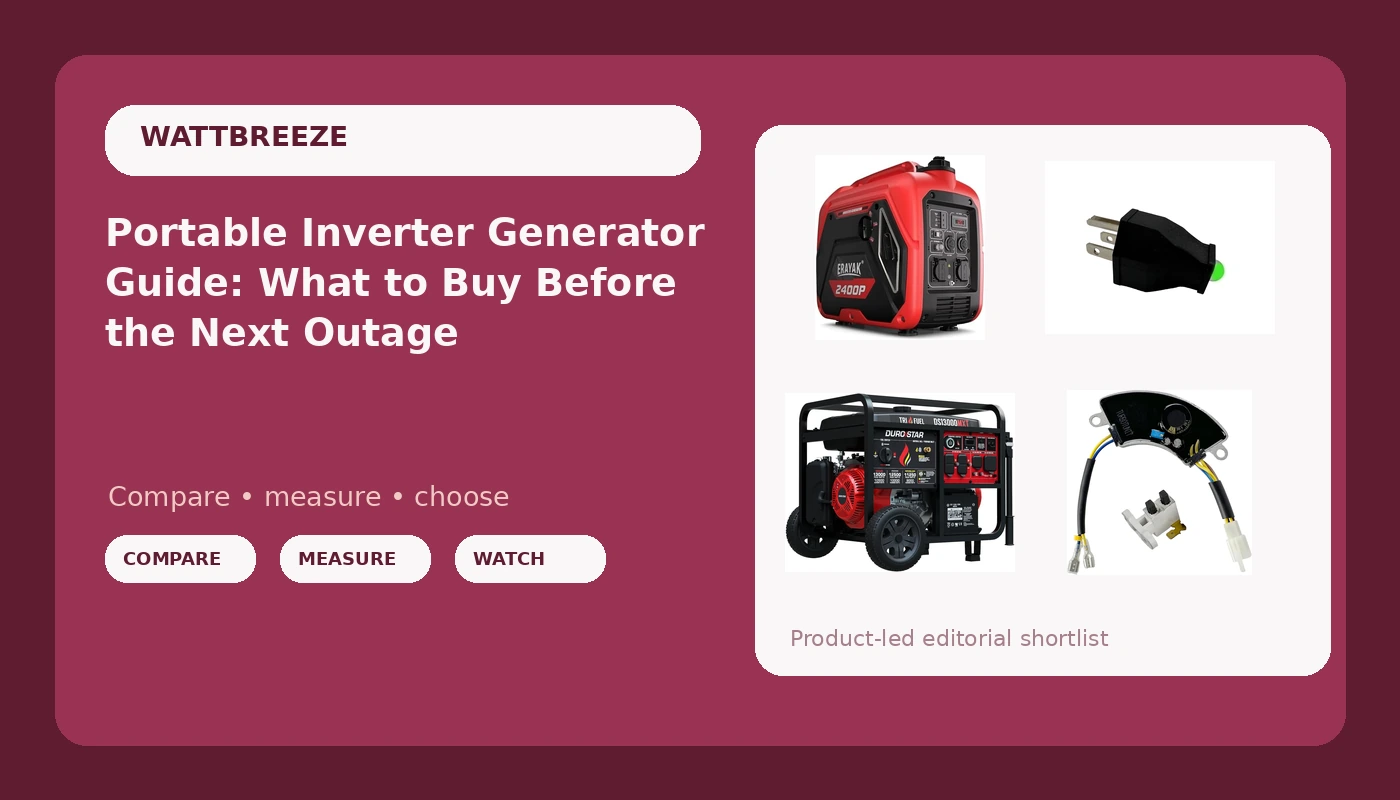
Related: How to Size a Generator for a Fridge and a Sump Pump
Nine days without power taught my street something no spec sheet ever could. I ran a small-engine shop in Asheville for 22 years, and after Helene I watched two normally polite neighbors scream at each other over a 50-foot extension cord while a guy in a pickup sold "priority" hookups out of the truck bed. That is the real reason I bought a load bank, a decibel meter, and a paper logbook. A portable inverter generator is not a gadget. It is the difference between a fridge full of spoiled food and a quiet house with the lights still on.
I have tested more than 40 generators since, every run logged by hand. This guide covers the four pieces of gear I would actually spend money on before the next storm: the quiet inverter unit for camping and small backup loads, the tri-fuel monster for a whole-home transfer switch, and two cheap parts that fix problems nobody warns you about until the power is already out.
Here is the first thing to understand. Spec watts are measured at sea level with a gentle breeze. Real watts are what a fridge surge demands. A compressor pulls two to three times its running watts for a split second on startup, and that spike decides whether your food stays cold. Buy for surge, plan fuel for running watts, and measure noise at 25 feet, because that is where your neighbor actually hears it.
The Quiet One: ERAYAK 2400W Portable Inverter Generator
This is the class of machine I point campers and tailgaters toward first, and the reason is not the wattage. It is the inverter. Inverter output is what keeps laptops, TVs, and phone chargers happy, and it is the difference between a generator you tolerate and one you can run at a campsite without becoming the villain of the loop.
The ERAYAK is a 2400-watt gas unit built for exactly that job: camping, outdoor use, and small emergency backup at home. ECO mode is the feature that earns its place here. It throttles engine speed down to match whatever load is actually connected, so when you are running a couple of lights and a phone charger, the unit is not screaming away at full tilt burning fuel for nothing. Less RPM means less noise and a longer stretch between fill-ups, and both of those matter more than a tenth of a decibel on a spec sheet.
What it is not is a whole-home solution. A 2400-watt inverter unit runs a fridge, a few lights, a router, and a fan, and it does that quietly. Ask it to carry a sump pump, a space heater, and a microwave at the same time and you will trip it. That is not a flaw, that is arithmetic. It is also gas only, so there is no propane fallback if the stations are closed. For camping, tailgating, and keeping one room of the house alive during a short outage, it is the sensible size. For a nine-day ice storm, it is the backup to your backup.
The Grounding Fix: Neutral Ground Bonding Plug
This one is a thirteen-dollar part that solves a problem most people do not know they have until they are standing in the rain staring at an error code.
Many inverter generators ship with a floating neutral, meaning the neutral leg is not bonded to the frame ground. That is normal and it is fine for most uses. It stops being fine the moment you plug the generator into an RV surge protector or an EMS unit, because those devices test for a bonded neutral and an open ground, and a floating neutral reads as an open ground to them. The result is a surge protector that refuses to pass power at all. People blame the generator, blame the EMS, and start shopping for parts they do not need.
This plug bonds neutral to ground at a standard NEMA 5-15P 120V 15A outlet, which is the outlet your RV cord or adapter is already using. It is built in the USA with a solid-state PCB and a green status LED, so you get a visual confirmation that the bond is live instead of guessing. Plug it into an open receptacle on the generator, then plug your RV or your surge protector in as usual. If you run an EMS, this is the cheap fix that turns a dead outlet into a working one. Check that your unit actually has a floating neutral before you buy it, because a generator with a bonded neutral from the factory does not need this and adding it is pointless.
The Whole-Home Hammer: DuroStar DS13000MXT
When people tell me they want to run the whole house, this is the category I send them to, and the tri-fuel part is the reason. The DuroStar DS13000MXT is a 13,000-watt class portable with a 500cc engine that runs on gasoline, propane, or natural gas. That flexibility is worth more than any single number on the box.
Think about what an outage actually looks like. Gasoline goes stale and stations lose power to their pumps. Propane lasts nearly forever in a tank and you can store it without stabilizer. Natural gas, if you already have a line to the house, never runs out at all. One machine that can drink any of the three means you are not stuck hunting for ethanol-free gas on day four of a nine-day event.
Two things to know before you buy. First, on most tri-fuel units the propane and natural gas ratings come in below the gasoline rating, so check the spec for each fuel instead of assuming the big number applies to all three. Second, remote electric start is not a luxury on a unit this size. It is the difference between walking out in the dark and pressing a button versus hauling on a rope in the rain at 2 a.m. It is transfer switch ready, which means an electrician can wire it to a panel and you stop running extension cords through a window. It is also heavy and loud. That is the honest trade for whole-home power.
The Cheap Part That Saves a Weekend: AVR
An automatic voltage regulator is the part that keeps a generator's output steady as the load changes. When an AVR fails, the symptoms are ugly and confusing: lights that pulse, a fridge that clicks off, voltage that reads high at one outlet and low at the next. Plenty of people replace a perfectly good generator over a fifteen-dollar part.
This AVR is listed for the common small-engine brands, Champion, Predator, Honda, Generac and similar units. It is the kind of spare I keep on a shelf in the shop, because it fails at the worst possible time and it is the difference between a five-minute repair and a week without power. Order the right part number for your specific model before you install it, and disconnect the battery and the fuel supply first. If you are not comfortable working inside the control panel, an AVR swap is a reasonable job for a small-engine shop, and it will still cost less than a new generator.
How I test
Every unit that gets a recommendation from me goes through the same routine. It runs a fridge, a sump pump, a space heater, and a small window AC on the load bank, one at a time and then in combinations, because the combination is what actually kills a generator. I take a decibel reading at 25 feet at quarter load, which is where a generator sits when it is running a house overnight. I time a full tank with my own jug and my own stopwatch, then do the math the box never does: at half load, cut the spec run time by a third, and at full load, cut it in half.
Two rules I will not bend on. No generator that runs near a house without a CO sensor, because carbon monoxide shutoff is not optional and it is required on new units for a reason. And no fuel left sitting in a carburetor. Ethanol blend turns to varnish in a month, and stabilizer is cheaper than a carburetor rebuild every single time.
Portable generator gear at a glance
| Gear | What it does | Where it belongs | Price |
|---|---|---|---|
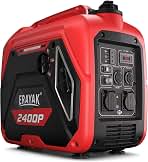 Visit on Amazon → Visit on Amazon →ERAYAK 2400W Portable Inverter Generator |
Quiet inverter power, 2400-watt class, ECO mode, gas only | Camping, tailgating, small backup loads | $329.00 |
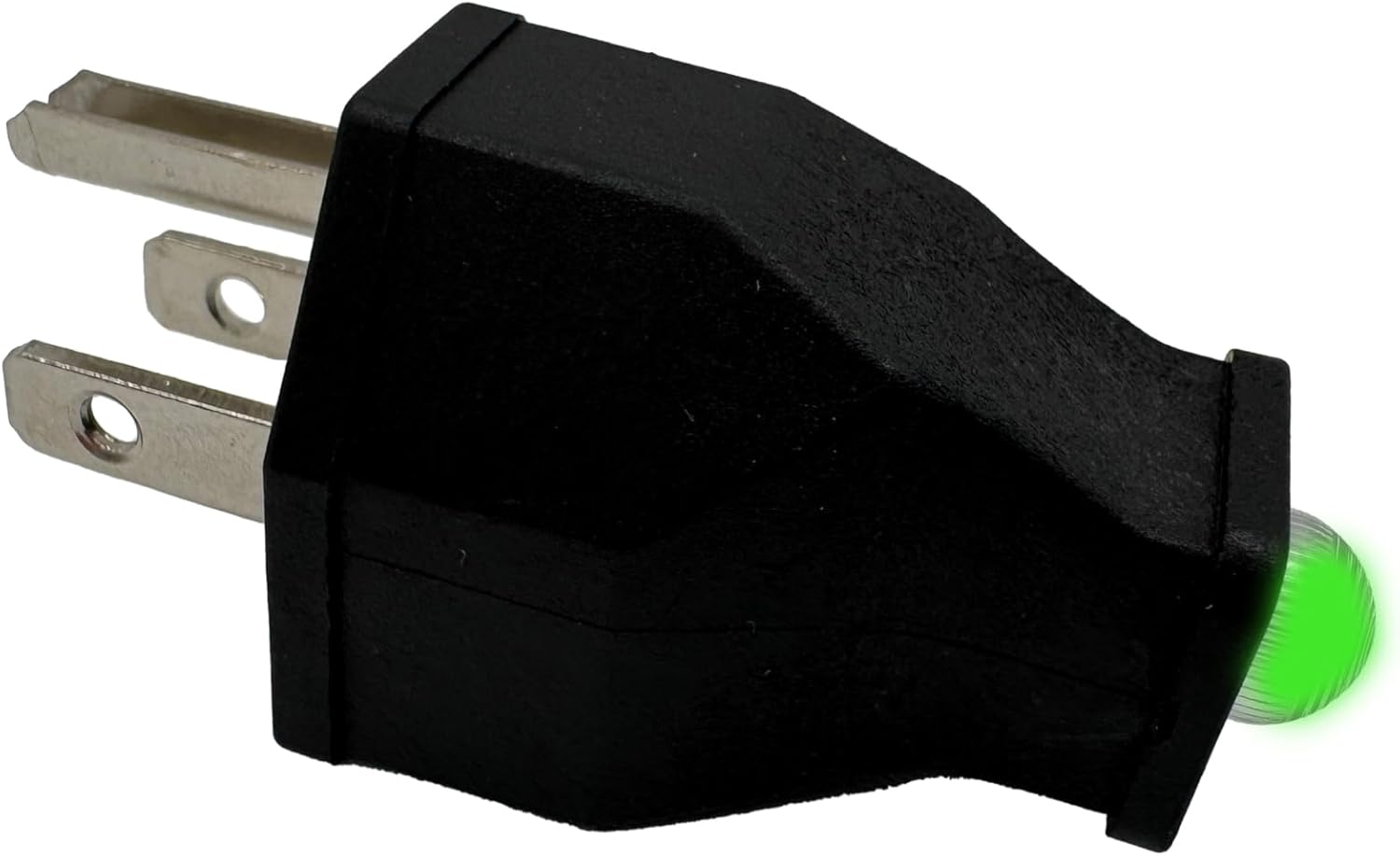 Visit on Amazon → Visit on Amazon →Neutral Ground Bonding Plug |
Bonds neutral to ground at a NEMA 5-15P 120V 15A outlet, green status LED | Floating neutral generators feeding an RV EMS or surge protector | $12.99 |
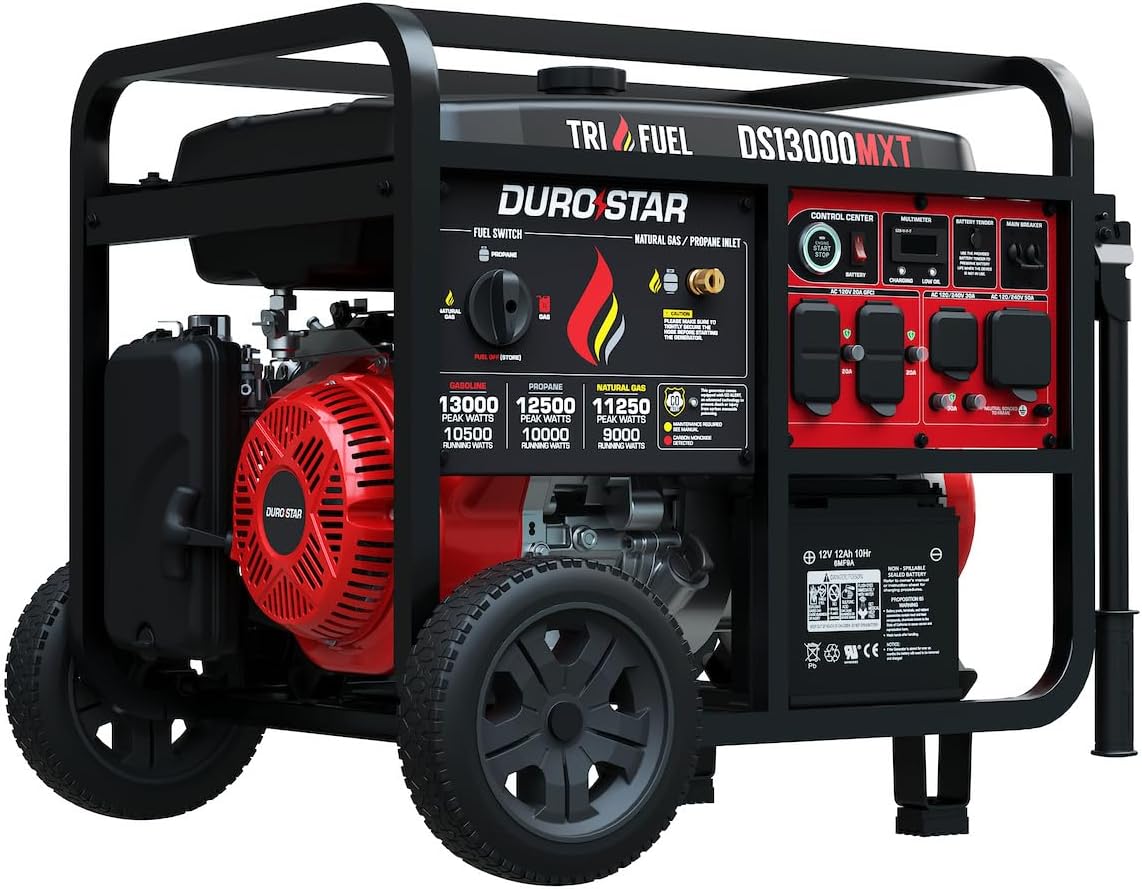 Visit on Amazon → Visit on Amazon →DuroStar DS13000MXT |
13,000-watt class, 500cc, gas, propane or natural gas, remote electric start | Whole home backup, transfer switch, RV and emergency use | $999.00 |
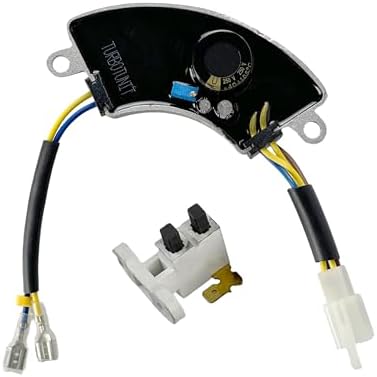 Visit on Amazon → Visit on Amazon →Automatic Voltage Regulator |
Holds output steady when the load changes, fits common small-engine brands | A shelf spare for any portable you depend on | Visit on Amazon → |
Should you buy the ERAYAK 2400W?
Yes, if your real need is quiet power in a place where people sleep. Camping, tailgating, a small backup load at home, that is the job, and ECO mode is what makes it livable instead of annoying. It is gas only and it will not carry a whole house, so be honest about what you are buying. If you want one machine for a nine-day outage, this is not it. If you want one machine you can actually stand to hear, it is.
Should you buy the DuroStar DS13000MXT?
Yes, if you are having a transfer switch installed and you want options for fuel. Tri-fuel capability means you are not dependent on the gas station staying open, remote electric start means you are not pulling a rope in the dark, and the 13,000-watt class means the whole panel gets fed. It is loud and it is thirsty. Buy it for the house, not for the campsite, and check the propane and natural gas ratings before you commit.
Should you buy the bonding plug and the AVR?
Buy the bonding plug if you run an RV surge protector or EMS and your generator has a floating neutral. It is the cheapest fix in this guide and it solves a problem that makes people think their generator is broken. Buy the AVR as a spare if you depend on a portable unit, because a failed regulator looks like a dead generator and it is not. Both are small money against the cost of a night without power.