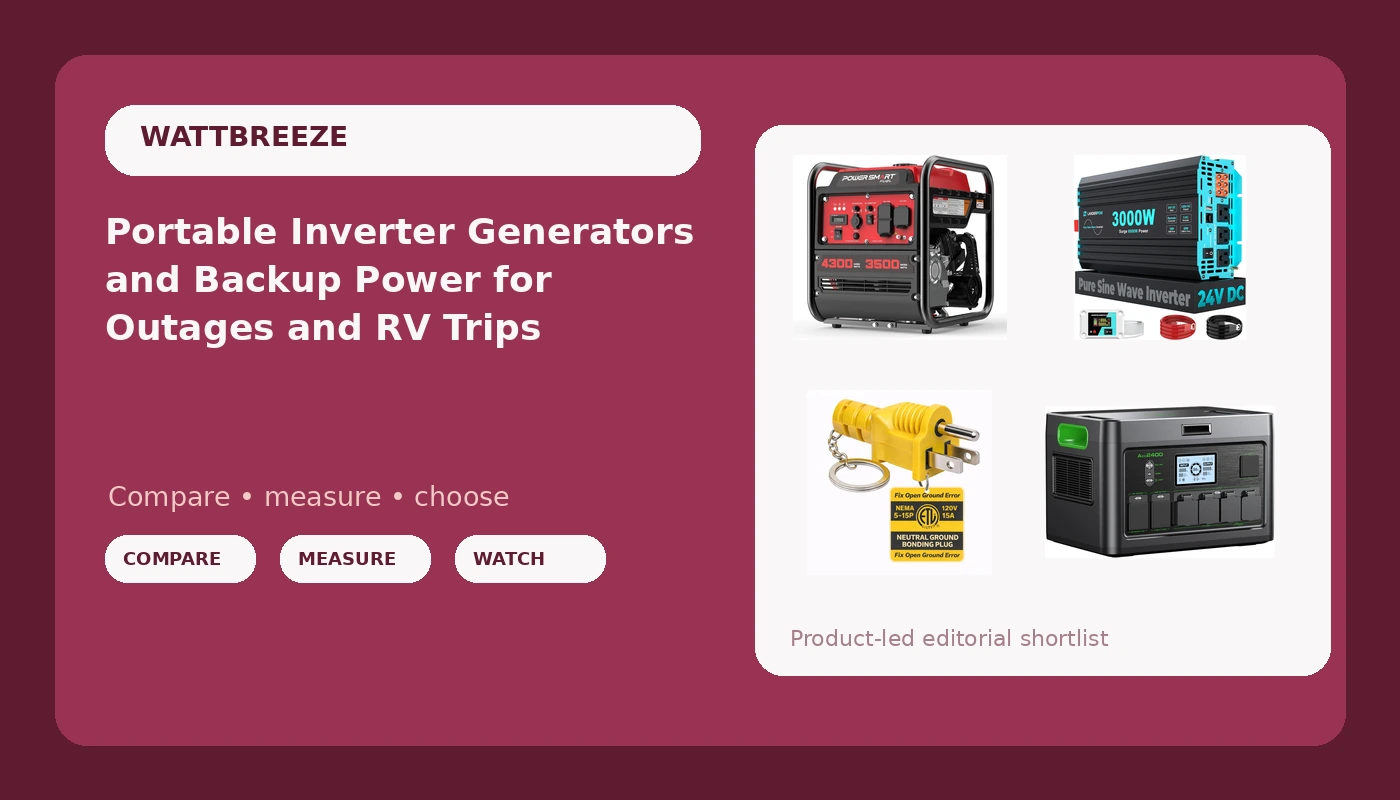
An outage turns a shopping decision into an emergency. The fridge is warming, the sump pump is the only thing standing between you and a wet basement, and the piece you did not plan for is how you keep both running at 2 a.m. This guide covers the practical end of that problem: portable inverter generators, a larger inverter generator, a battery power station, a pure sine wave inverter for a 24V bank, and the small grounding plugs that keep a floating neutral setup wired the way it should be. If you have been comparing portable inverter generators for home backup, RV dry camping, or tailgating, the differences that actually decide the purchase are running watts, surge watts, weight, and how the unit treats sensitive electronics.
Related: How to Size an Inverter Generator for a Refrigerator and Sump Pump
Quick answer
The PowerSmart 4300 Watt Portable Generator with Inverter Technology is the strongest fit for carrying a household's essential circuits during an outage because it pairs inverter output with the highest wattage rating in this group. Choose the EFURDEN 2800W Quiet Gas-Powered Inverter Generator instead when you want a lighter unit for camping, tailgating, and RV use.
Portable power options worth comparing
The six products below cover the whole job, from the generator itself to the accessory that makes a floating neutral setup behave correctly at the outlet. The top pick leads the grid. Prices and stock move around constantly, so use the link on each card to confirm current price and availability.
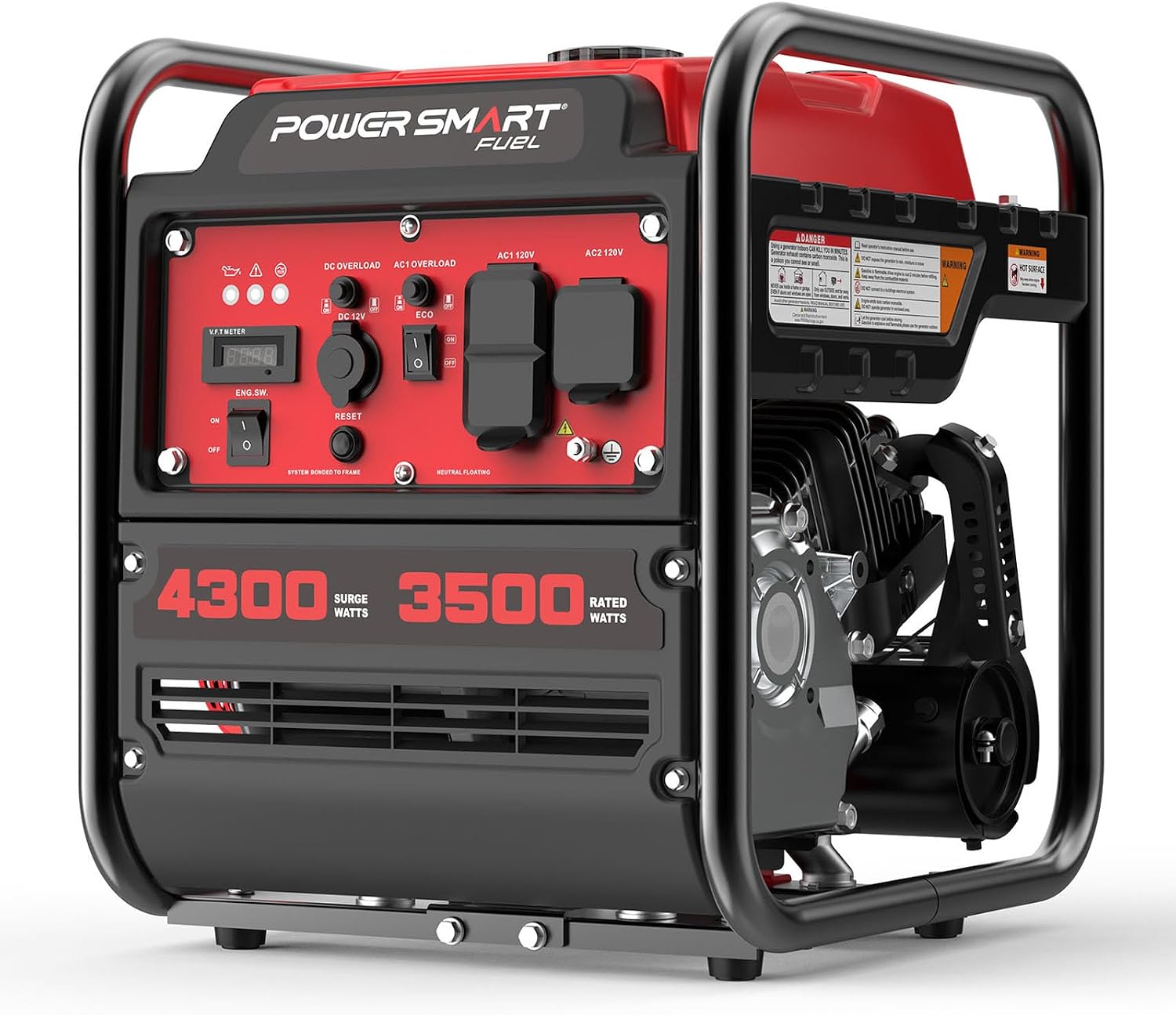
PowerSmart 4300 Watt Portable Generator with Inverter Technology
Check current Amazon price
A 4,300-watt gas-powered portable generator built around inverter technology, which is the combination to look for when household motors and sensitive electronics share the same outlet.
Visit on Amazon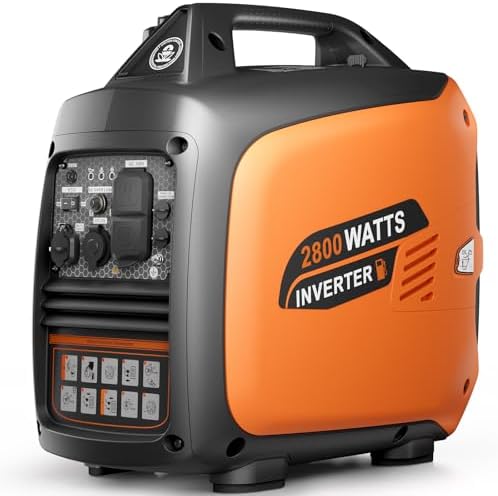
EFURDEN 2800W Quiet Gas-Powered Inverter Generator for Home Use, Camping, RV, 40Lbs, Non-Battery Operated, EPA Compliant
A 2,800-watt gas inverter generator listed at 40 pounds, non-battery operated and EPA compliant, sized for camping, RV trips, and lighter home backup where one person has to lift it.
Visit on Amazon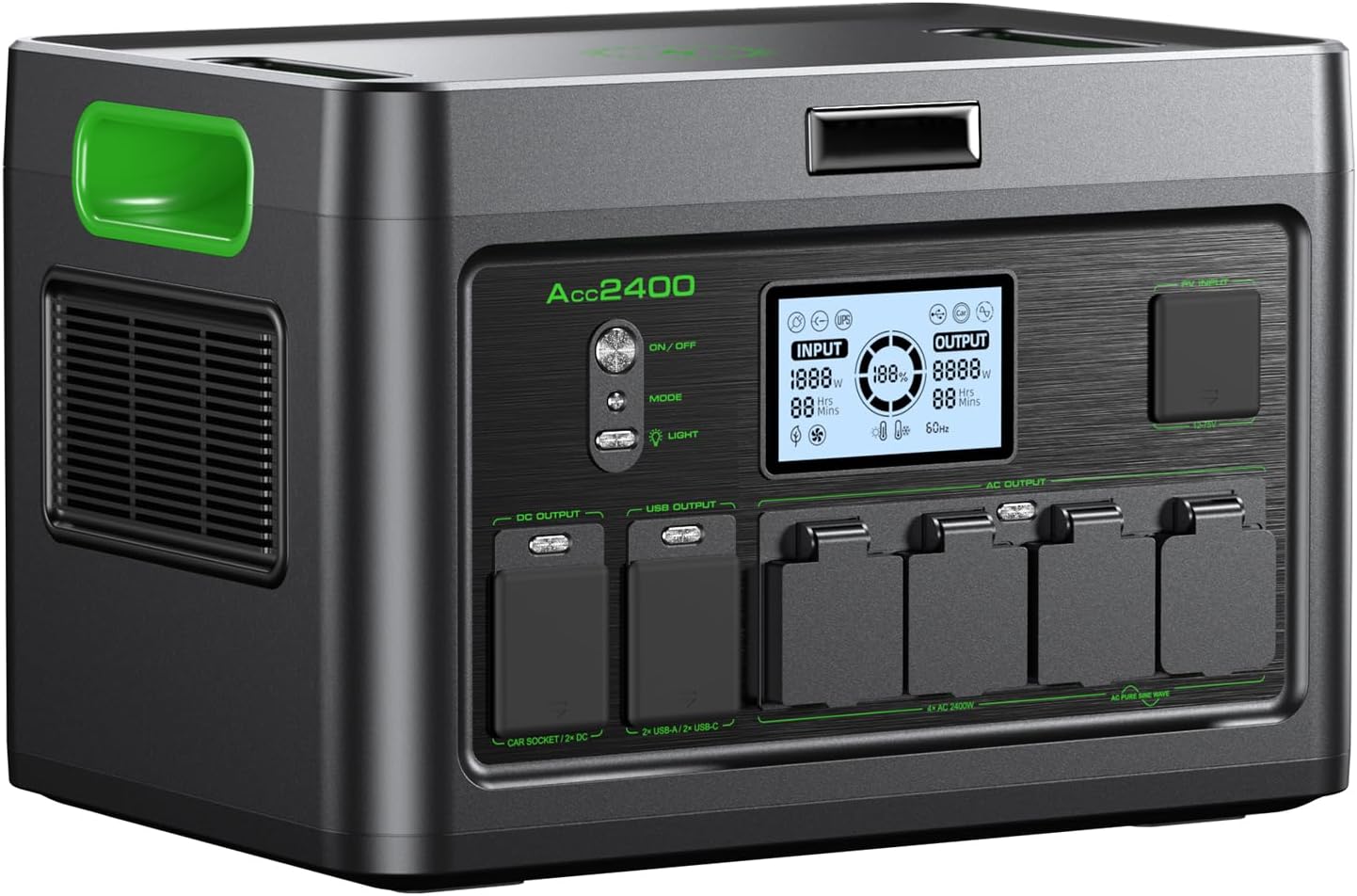
2400W Portable Power Station 1843.2Wh Solar Generator Home Power Backup
A 2,400-watt portable power station with a 1,843.2 Wh battery, aimed at home power backup without fuel, exhaust, or a pull cord to fight with in the dark.
Visit on Amazon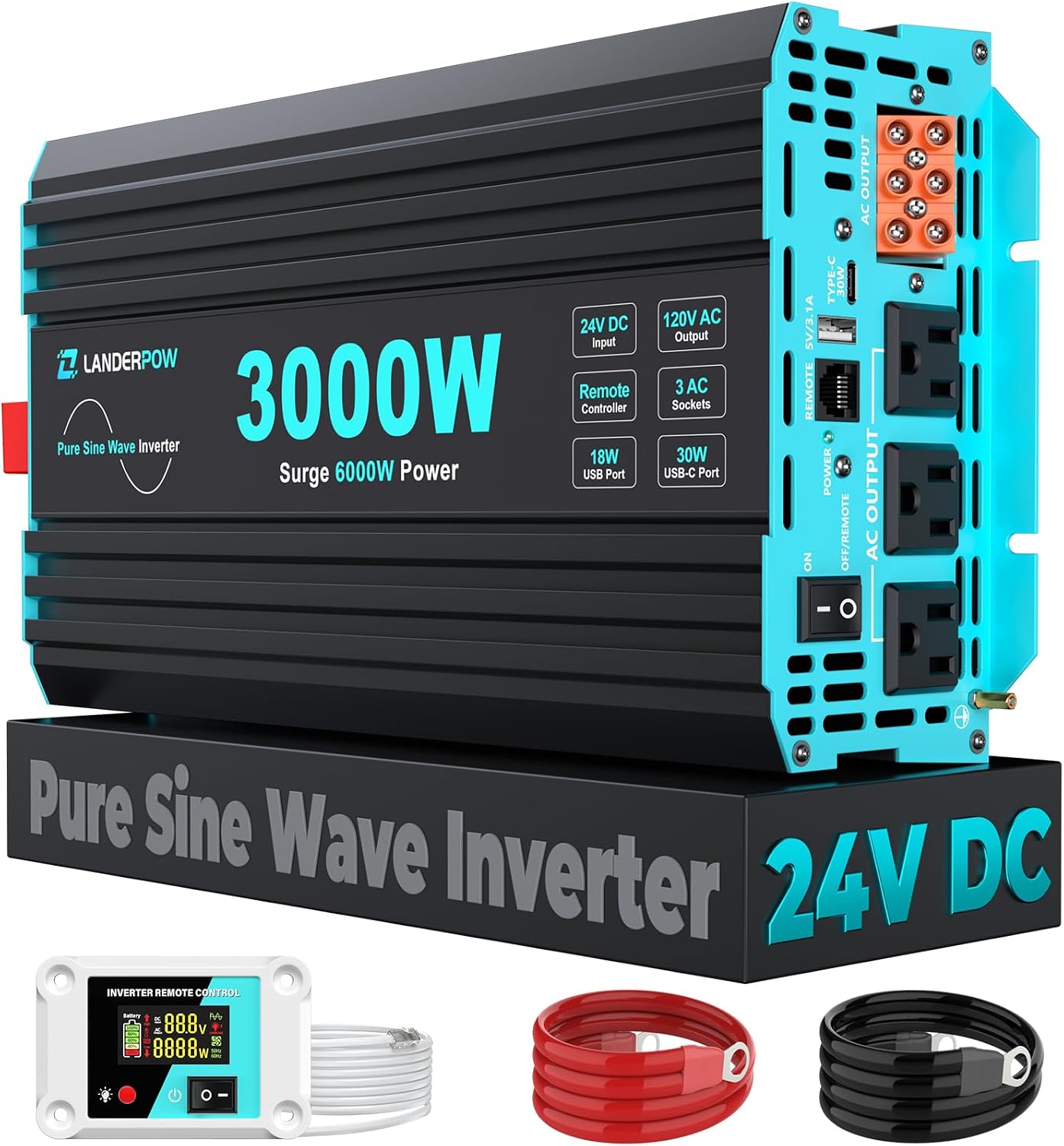
3000 Watt Pure Sine Wave Inverter 24V DC to 120V AC for RV, Truck, Solar, Home, Off-Grid, Power Inverter with 3 AC Outlet, 30W USB-C, 5V 3.1A USB, Hardwire Port, Remote Control, Surge 6000W
A 3,000-watt pure sine wave inverter that converts 24V DC to 120V AC, with three AC outlets, a 30W USB-C port, a 5V 3.1A USB port, a hardwire port, remote control, and a 6,000-watt surge rating. It needs a 24V battery source; it does not generate power on its own.
Visit on Amazon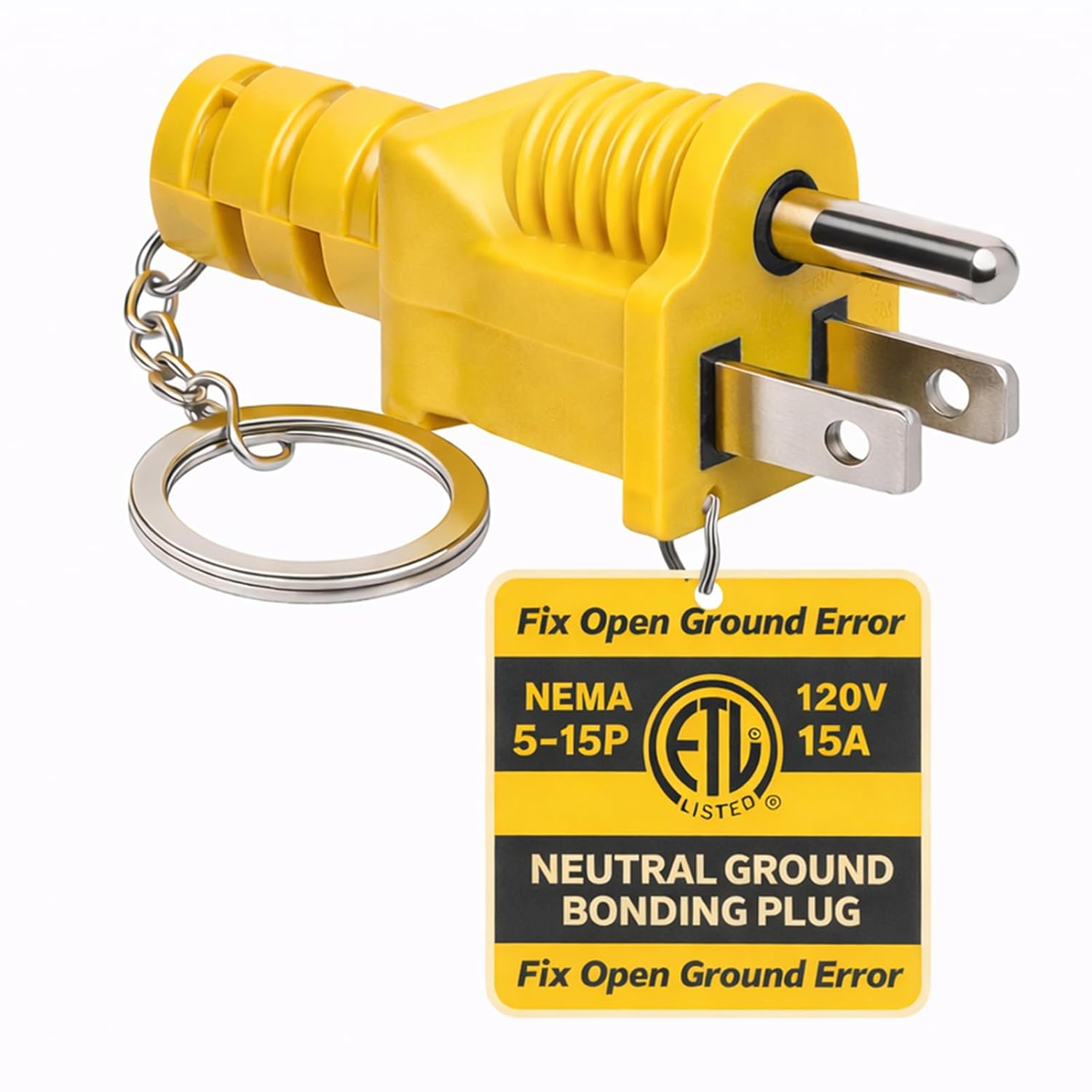
Neutral Ground Bonding Plug for Floating Neutral Generator, 1 Pack
A one-pack neutral ground bonding plug for a floating neutral generator, the inexpensive part that lets a floating neutral unit present a bonded neutral at the outlet.
Visit on Amazon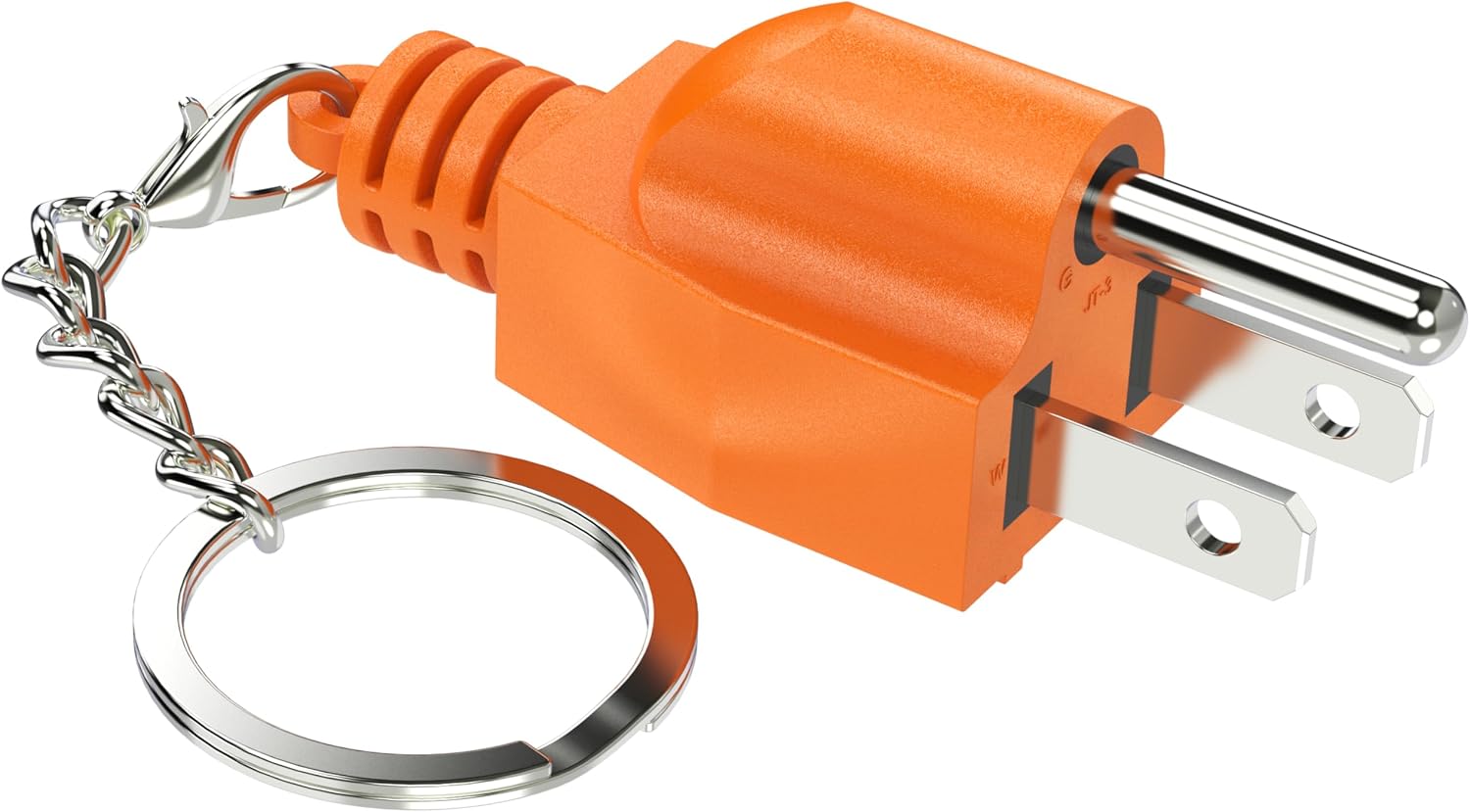
CircleCord Generator Grounding Plug with Keychain
A generator grounding plug that ships with a keychain, a sensible spare to keep with the cord bag so the bonding plug is never the piece you left in the garage.
Visit on AmazonPrices and availability may change. Check the retailer for current details.
How these products were compared
This guide compares output class and inverter or pure sine wave design, the power source each product depends on, listed portability including weight where the product name states it, the outlet and connection types each unit offers, and the grounding and neutral bonding accessories that support them. Product names, images, and retailer links are matched by ASIN so that every card points to the product shown.
The numbers here come from what each product is listed as, not from a bench test on a load bank. Treat the spec sheet as the start of the conversation and confirm the details on the product page before you commit, especially if your house has a well pump, a furnace blower, or a central air unit in the plan.
How to choose the right portable inverter generator
Start with surge watts, not running watts. A refrigerator compressor can pull two to three times its running load for a second or two at startup, and a well pump or furnace blower is worse. A 2,800-watt inverter generator may carry a fridge, a few lights, a router, and a phone charger without complaint, but add a window air conditioner and the same unit will either drop the load or trip its overload protection. Match the unit to the load you genuinely intend to run, then leave margin. The 4,300-watt class unit in this roundup exists for the households that need that margin.
Inverter design is the second decision. An inverter generator produces cleaner power than a conventional unit, which matters for laptops, televisions, and any appliance with a control board. That is also why the pure sine wave inverter in this group earns its place: if you already have a 24V battery bank in a truck, an RV, or an off-grid solar setup, a pure sine wave inverter turns that stored DC power into household AC without the fuel and noise of an engine. It cannot make power by itself, so budget for the battery source as part of the purchase. If you are still working out whether an inverter or a conventional unit fits your house, our walkthrough on how to size an inverter generator for a refrigerator and sump pump covers the load math step by step.
Fuel versus battery is the third fork in the road. A gas unit runs as long as you keep filling it, which is what you want across a multi-day outage, but it needs fuel stored safely, an oil change schedule, and a place outdoors to run. A battery power station needs none of that and can sit in a closet until the day it is needed, but its 1,843.2 Wh capacity and 2,400-watt output set a firm ceiling on how long it lasts and what it can start. Many households end up with both: a battery unit for short outages and overnight quiet, a gas generator for the long haul.
Weight and noise deserve a mention before you click buy. A 40-pound unit is a one-person lift into a truck bed; a 4,300-watt class generator is not, and you will feel the difference every time you move it. On noise, remember that the number on the box is rarely measured the way you will experience it. A generator that sounds tolerable at 25 feet at quarter load sounds very different at full load against a neighbor's bedroom wall. Inverter models are generally the quieter choice, which is the main reason they cost more per watt than conventional units.
Finally, grounding. Some inverter generators ship with a floating neutral, which can leave a household outlet tester showing an open ground even though the generator is running fine. A neutral ground bonding plug is the small, cheap fix, and it belongs in the same bag as your extension cords so it is there when you need it. If you are not sure how your unit is wired, check the manual and confirm the correct configuration before you plug anything into it.
PowerSmart 4300 Watt Portable Generator with Inverter Technology
The PowerSmart 4300 Watt unit is the top pick here because it covers the widest range of household loads in this group. The 4,300-watt rating gives you room for a refrigerator, a sump pump, lights, a router, and a phone or laptop charger, and inverter technology means the power it produces is clean enough for electronics that would complain on a conventional unit. It is the one product in this roundup that can plausibly carry the essential circuits of a small house through an extended outage.
The trade-off is the same one every larger generator carries. It is a gas-powered machine, so it needs fuel on hand, a maintenance routine, and an outdoor spot away from doors and windows. It is heavier and louder than the 2,800-watt class unit, and it will not run indoors or in a garage. If your backup plan is built around quiet overnight operation in a campground, this is more generator than that job requires.
Alternatives to consider
The EFURDEN 2800W Quiet Gas-Powered Inverter Generator is better suited to camping, tailgating, and RV trips, where the 40-pound listed weight and the 2,800-watt rating line up with a smaller load list and a shorter carry. The 2400W Portable Power Station is a stronger fit when you want backup power with no fuel, no exhaust, and no maintenance schedule, and when the 1,843.2 Wh battery is enough to cover a short outage or a night of quiet running.
The 3000 Watt Pure Sine Wave Inverter covers a different job entirely: converting an existing 24V DC bank into 120V AC for an RV, truck, solar, or off-grid setup, with three AC outlets, USB-C and USB-A ports, a hardwire port, remote control, and a 6,000-watt surge rating for motor starts. The Neutral Ground Bonding Plug and the CircleCord Generator Grounding Plug with Keychain round out the list as the low-cost accessories that keep a floating neutral generator correctly configured, and having two means one can live permanently with the cords.
Day-to-day use and maintenance
Gas generators reward a boring routine. Use ethanol-free fuel when you can, or add stabilizer and treat a tank of untreated gas as a short-term item rather than something that sits until spring. Ethanol left in a carburetor for months turns to varnish, and a carburetor rebuild costs far more than a bottle of stabilizer. Change the oil on the schedule in the manual, check the air filter, and run the unit under a real load for a few minutes every month or two so it does not sit idle for a year and then refuse to start during a storm. Drain the carburetor before long-term storage, and store fuel in an approved container away from the house.
The battery power station has the opposite maintenance profile. Keep it charged rather than letting it sit at zero, store it somewhere it will not cook in a hot garage, and check the charge level every few months. The pure sine wave inverter needs clean, well-ventilated mounting and correct wiring to the battery bank, and its hardwire port should be installed by someone who knows what they are doing. The bonding plugs need nothing beyond staying with the rest of your cords.
Safety comes first with any fuel-burning generator. Run it outdoors, well away from windows, doors, and vents, and follow the manufacturer's carbon monoxide guidance exactly. Never run a gas generator inside a house, garage, or attached shed, even with the door open. Keep the unit dry, let it cool before refueling, and do not backfeed a house outlet with a cord. If you are not sure how a transfer setup should be wired, that is a job for a licensed electrician.
Buying checklist
- Measure the surge watts your refrigerator, sump pump, well pump, or furnace blower needs at startup.
- Choose running watts based on normal use rather than an occasional edge case.
- Confirm that the exact model includes the outlet types you need, such as an RV or hardwire connection.
- Check the listed weight against who will actually lift the unit.
- Confirm whether the generator has a floating or bonded neutral, and add the right plug if needed.
- Read the maintenance and storage instructions before the first tank of fuel.
- Verify the current retailer price, availability, and return terms.
Final recommendation
Choose the PowerSmart 4300 Watt Portable Generator with Inverter Technology when your goal is keeping a household's essential circuits alive through a multi-day outage and you have a safe outdoor place to run a gas unit. Choose the EFURDEN 2800W Quiet Gas-Powered Inverter Generator when portability and a smaller load list matter more than headroom. Add the 2400W Portable Power Station if you want silent, fuel-free backup for short outages, and the 3000 Watt Pure Sine Wave Inverter if you already run a 24V battery bank. Whichever way you go, pick up a bonding plug before the storm arrives, because the night you need it is the worst possible time to discover your generator's neutral configuration.