I keep a paper logbook in the shed with more than 40 generator runs written in it by hand, and the entry I still think about is from September 2024, day six of the Helene outage in Asheville. The number I wrote down that night was not watts or decibels. It was "two neighbors, one 50-foot cord, both of them wrong." That is the night I stopped reviewing generators as appliances and started reviewing them as neighborhood infrastructure.
This comparison works the same way. Four products, two of them inverter generators and two of them the support gear that keeps a battery kit alive: a replacement AC adapter for a portable power station and a hard travel case built for one. If you are shopping for inverter generator backup power, the generator is the loud half of the decision. The quiet half is whether the rest of the kit can be charged, carried, and stored without coming apart in a truck bed.
The short answer: the PowerSmart 4300-watt inverter is the one I would buy first for a house that loses power for days, and the WEN 2500-watt unit is the one I would buy first for an RV, a tailgate, or a trunk. The adapter and the case are not generators at all, and that is exactly why they belong in the same conversation.
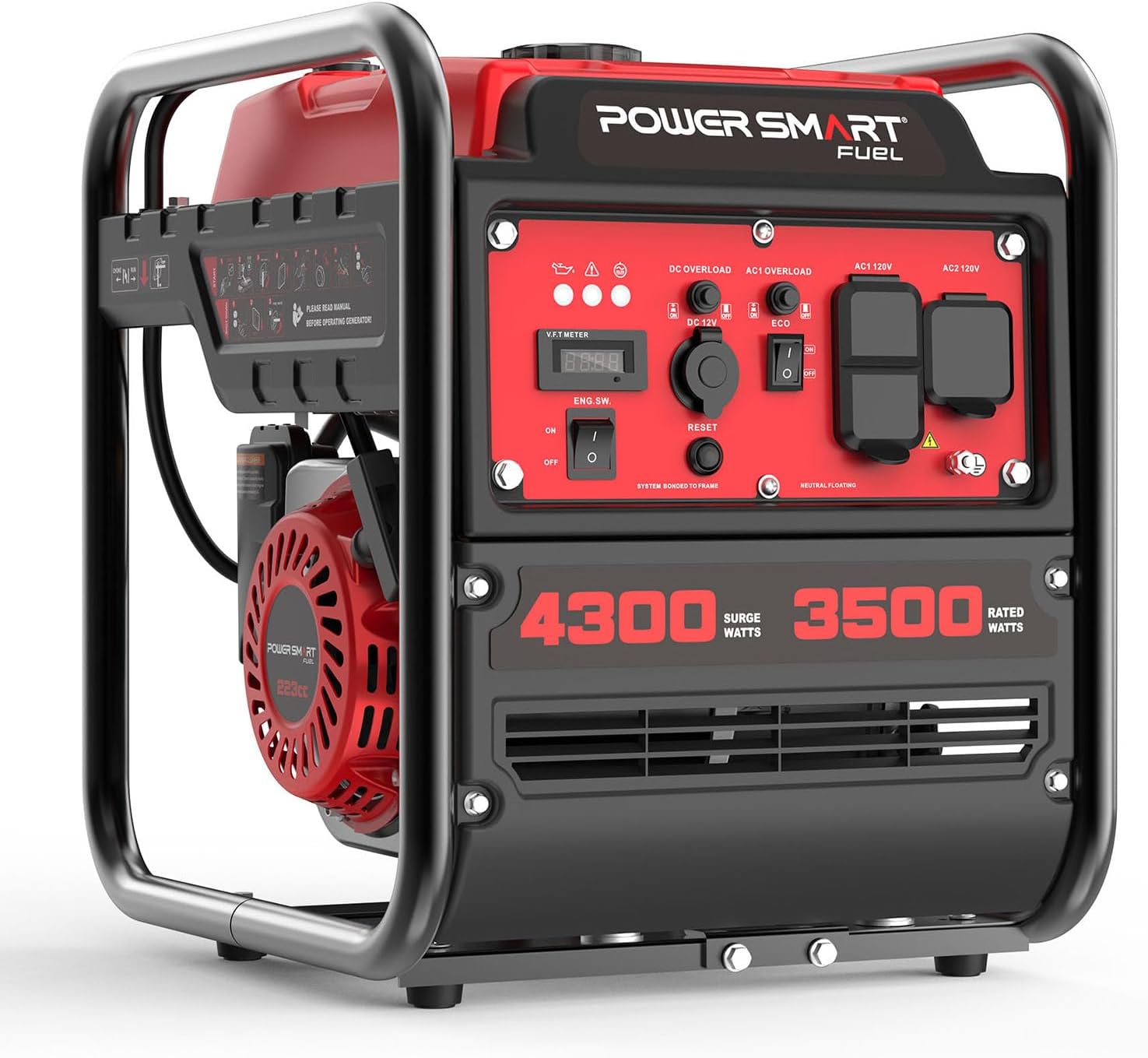
PowerSmart 4300 Watt Inverter Portable Generator for Home Use
Highest watt class in this group, and inverter output is the right shape of power for a fridge, a furnace blower, and electronics
Heaviest unit here, and more generator than a camper or tailgater will ever need
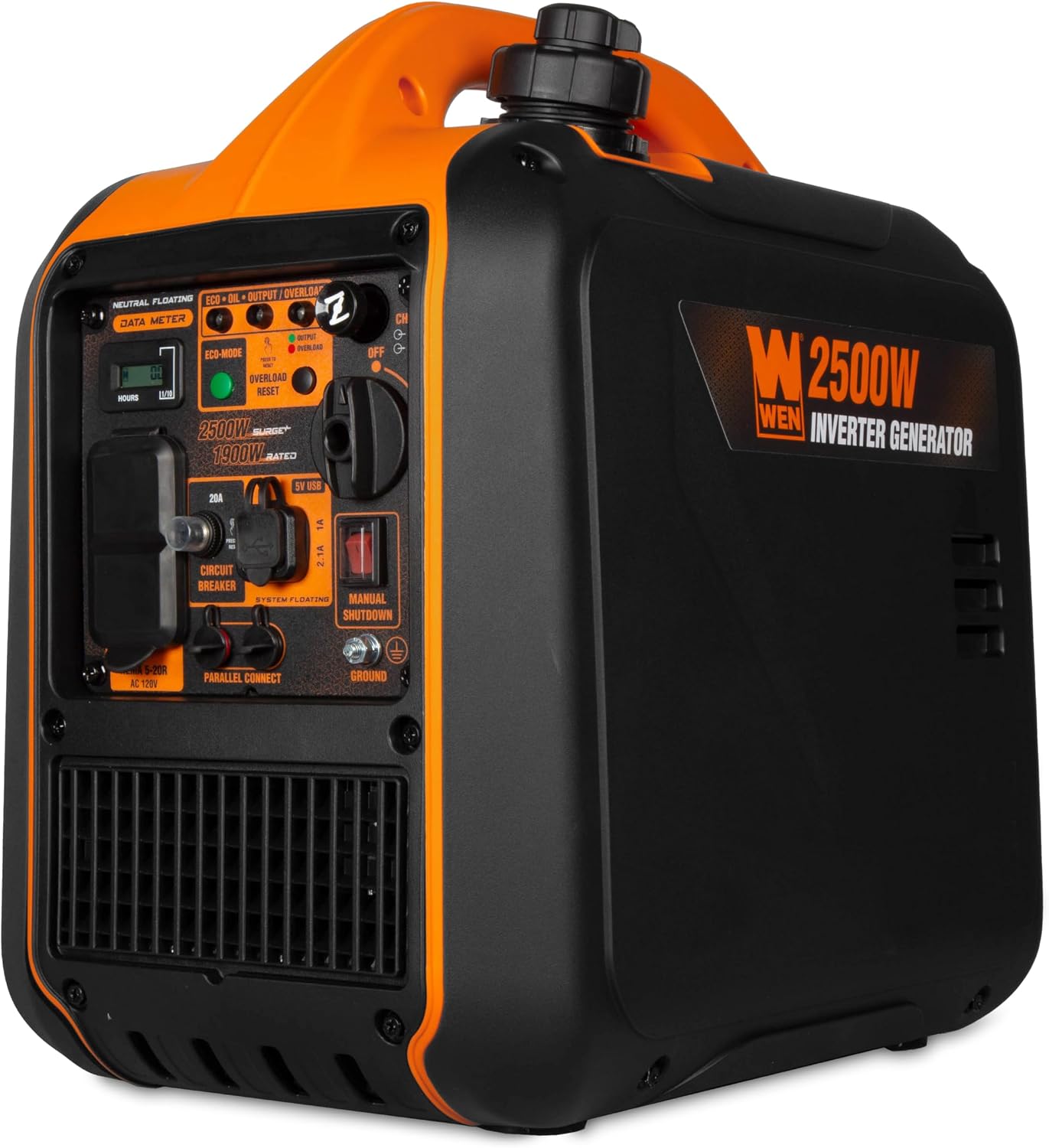
WEN 2500-Watt Inverter Generator (56250i)
The carryable one: quiet and lightweight class, plus a fuel shut off that protects the carburetor between storms
2,500 watts will not carry a whole house, so you will be rotating cords and watching the load
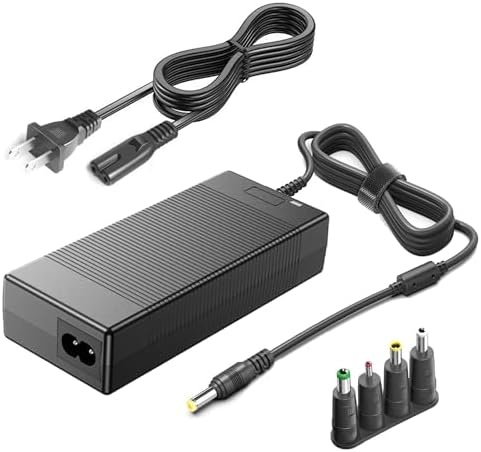
15V 60W AC Adapter Charger for Portable Power Station 50W to 300W
Cheap way to keep a small power station topped up, with a long list of brands it claims to fit
A generic replacement part, so voltage and barrel size have to match your station exactly
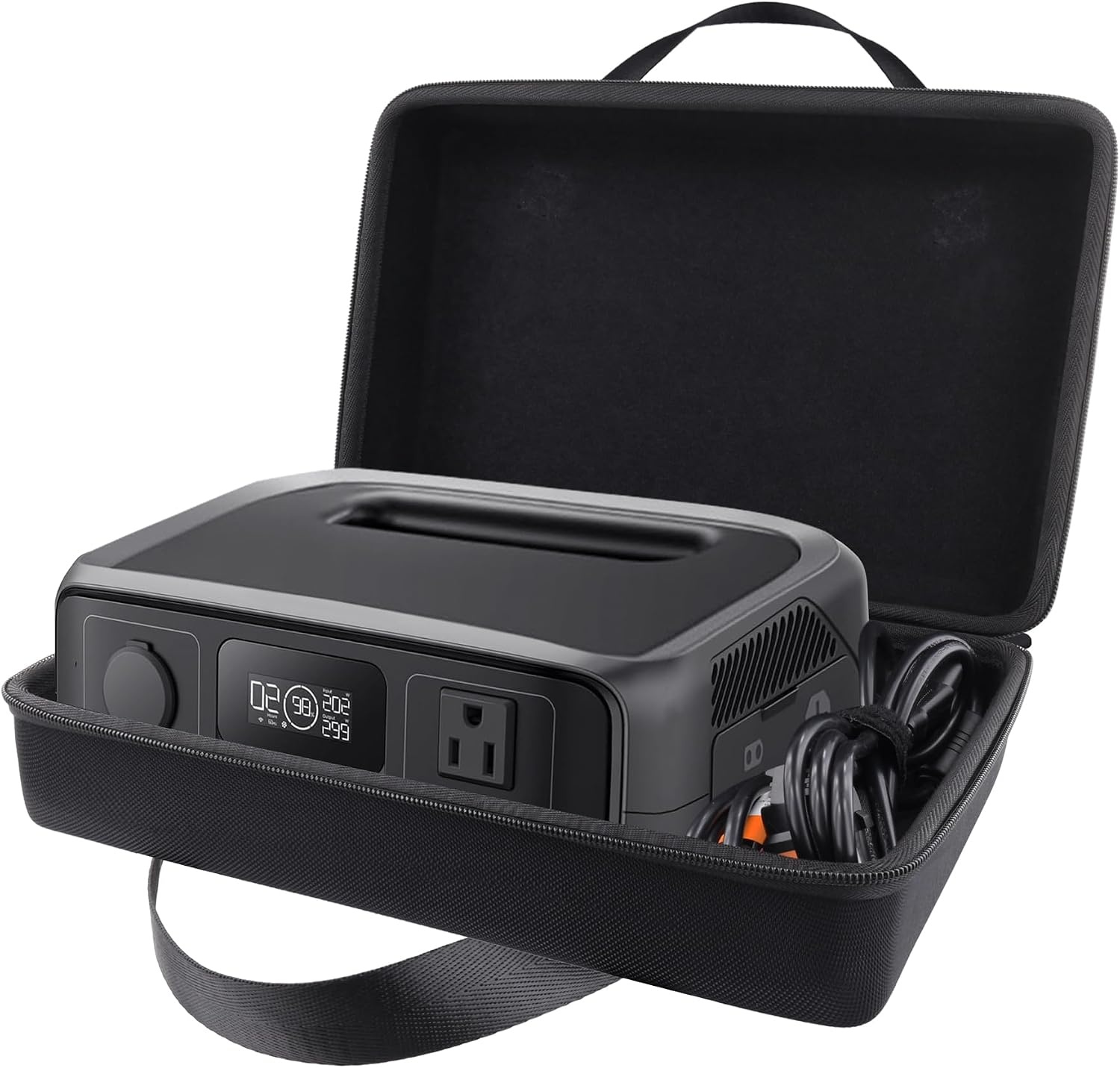
co2CREA Hard Travel Case for EF ECOFLOW Portable Power Station RIVER 3
Turns a loose power station into a grab-and-go box with a hard shell for a truck bed
Molded for one station, so it is dead weight if you own anything else
Prices and availability were captured from Amazon Creators API and may change.
How I decide what makes the cut
Every generator that earns a recommendation in my shed goes through the same three hours. It sits on the load bank with a real motor load, not a space heater pretending to be a house. A decibel meter sits 25 feet away at quarter load, because 25 feet is where the neighbor's bedroom is and quarter load is how the thing actually runs most of the night. The fuel jug gets a stopwatch, because the run time printed on the box is measured at 25% load and nothing else.
I will be straight with you about this article: I have not had either of these two generators on my bench, so I am not going to hand you a decibel number I did not measure. What I can do is tell you what each watt class really covers, what the spec sheet is promising, and what I would check before I bet a fridge and a sump pump on it.
The same rule applies to the small stuff. A charger is a charger until the voltage is wrong and you cook a battery. A case is a case until the latch fails and a power station rides home in a truck bed full of firewood.
What 2,500 watts and 4,300 watts actually cover
Watt class is the whole argument in an inverter generator comparison, and it is also the most lied-about number in the category. Running watts are what the unit carries hour after hour. Surge watts are the spike a motor needs to start, usually two to three times its running load. A fridge that draws 150 running watts can pull 400 or more for the second it kicks on. A sump pump is worse.
So when you see 2,500 watts or 4,300 watts, read it as a running-watts ceiling and plan your loads underneath it, not on top of it. Two units in the same watt class can behave very differently at 2 a.m. because one has the surge headroom and one does not.
PowerSmart 4300 Watt Inverter Portable Generator
The 4,300-watt class is where a house starts to work again. That is enough ceiling for a fridge, a furnace blower or a window AC, the internet gear, and a couple of lamps, with enough headroom that you are not running to the panel every time a compressor kicks. Inverter output matters here for a specific reason: inverter generators produce cleaner power, under 5% total harmonic distortion on a good unit, which is the difference between a laptop power brick that runs cool and one that whines.
What you give up is your back. A 4,300-watt inverter is not a one-hand carry, and anyone who tells you it is has never hauled one up a set of basement stairs in the rain. Plan on wheels, a second person, or both.
This is the pick if your outage plan includes a fridge and a well or sump pump, or if you want one machine that can also run a job site. It is more generator than a camper needs. Visit on Amazon →
WEN 2500-Watt Inverter Generator (56250i)
The WEN 56250i is the other end of the same idea: a 2,500-watt inverter in a quiet, lightweight package, with a fuel shut off so you can run the carburetor dry before the unit goes back on the shelf. That last feature sounds boring until you have rebuilt a carburetor because someone left ethanol fuel in it for five months. It is the cheapest piece of long-term reliability on a small generator.
At 2,500 watts you are covering a fridge and a few lights, a CPAP, a laptop, a phone bank, and a small fan, or an RV's essentials at a dry camp. You are not covering central air, an electric water heater, or a whole panel through a transfer switch, and you should not try. Eco mode on a unit like this drops the RPMs to match the load, which saves fuel and keeps the noise down, but it can also react slowly to a compressor surge, so watch what you plug in while it is running.
This is the one I would grab for a tailgate, a campsite, or a truck bed, and the one I would hand a neighbor who has never started a generator in their life. Visit on Amazon →
The quiet half of the kit: power station gear
Not every outage needs a generator. A 300-watt power station running a CPAP, a router, and a lamp is silent, indoor-safe, and legal on an apartment balcony where a generator is not. The catch is that a power station is only as good as the parts around it, and that is where these next two products live.
The 15V 60W AC adapter for 50W to 300W stations
This is a replacement charger, not a station. It is a 15-volt, 60-watt AC adapter built for portable power stations in the 50W to 300W range, and the listing names a long set of brands it claims to fit, from Anker and GRECELL to FlashFish and MARBERO.
Two things to check before you buy a generic charger. First, voltage. Your station's DC input has an exact number printed next to the barrel jack or in the manual, and 15 volts is not universal. Wrong voltage is not a slow charge, it is a dead station. Second, connector size and polarity. The long "fits these brands" list is a starting point, not a promise, and the brand name on your unit does not guarantee the barrel size.
Where this earns its place is as a second charger. One stays in the RV, one stays in the house, and you stop unplugging the one you own every time you move the station. If your station charges over USB-C PD, buy a good PD brick instead. Visit on Amazon →
The co2CREA hard travel case for the RIVER 3
The EcoFlow RIVER 3 is a small station, which is exactly why people toss it loose in a truck bed and then wonder why the display is scratched and the port cover is full of sawdust. A hard shell case with a fitted interior solves that, and it gives the cables and the charger a home so they do not wander off between trips.
The limits are obvious and worth saying out loud. This case is molded for one station, the RIVER 3. If you own something else, it is dead weight. And a hard case protects against impact, dust, and a splash, not against a station sitting in a puddle. If your station lives on a shelf and only comes out during storms, a cheap soft bag does the same job. Visit on Amazon →
The trade-offs the table cannot show
Watts versus weight. Every watt you add costs pounds. The 4,300-watt unit does more work and hurts more to move. The 2,500-watt unit moves easily and runs out of ceiling fast. Decide which failure you can live with: a generator you cannot lift, or a generator that cannot carry the load.
Noise versus neighbors. This is the trade nobody prices in. A quiet inverter at 25 feet is a machine you can sleep through and your neighbor will not mention. A loud one turns a nine-day outage into a nine-day argument. If you have ever stood in a driveway at 2 a.m. listening to a contractor-grade unit rattle windows, you already know which way you lean.
Fuel versus battery. A generator makes its own power as long as you feed it, and it needs ethanol-free fuel, stabilizer, oil changes, and a dry carburetor to be ready when you need it. A power station needs nothing but a charge, and it goes bad slowly. The honest answer for most households is one of each: a station for the first night and the small loads, a generator for day three.
The charging chain. A power station is only as useful as your ability to refill it. If your plan is a 300-watt station and a 60-watt adapter, do that math before the storm, not during it. That is the same mistake as trusting a run time printed at quarter load.
Storage. Generators fail from neglect more than from use. Fuel shut off, ethanol-free fuel, a dry carburetor, and a case or cover for the unit. The WEN's fuel shut off and the co2CREA case are both, in their own way, storage features.
What I would buy, in what order
If your goal is keeping a fridge and a sump pump alive through a multi-day outage, buy the generator first, and buy the 4,300-watt class. Everything else is an accessory to that decision. Visit on Amazon →
If your goal is quiet power indoors, on a balcony, or in an RV where a generator is banned or unwelcome, buy the station you already have a plan for and add the 15V 60W adapter as your spare charger. Visit on Amazon →
If you already own the RIVER 3 and you move it in a vehicle, the hard case is the cheapest way to stop replacing a station because of a cracked display. Visit on Amazon →
And if you camp, tailgate, or want a generator you can actually carry, the WEN 2500-watt inverter is the one in this group that fits that life. Visit on Amazon →
What to verify before you click buy
- Running watts versus surge watts. The big print is usually the surge number. Plan your loads on the running number.
- THD under 5% if electronics matter to you. That is the entire reason to pay for an inverter.
- A decibel figure measured at 25 feet, not at one foot with no load. If the box has no number, assume the worst.
- Run time at half load, not the 25% figure on the box. Cut the box number by a third and plan fuel around that.
- Voltage and connector size on any replacement charger. Match them to your station's DC input exactly.
- Fit. A case or a charger that fits "most" units fits none of them well. Check your model number first.
None of this is complicated once you stop reading stickers and start reading loads. A generator is a machine that turns fuel into a specific number of watts at a specific noise level, and a kit is only as good as its weakest part. Measure first, buy once, and keep the fuel fresh. Your neighbors will notice, and nine days is a long time to be the guy with the cord.