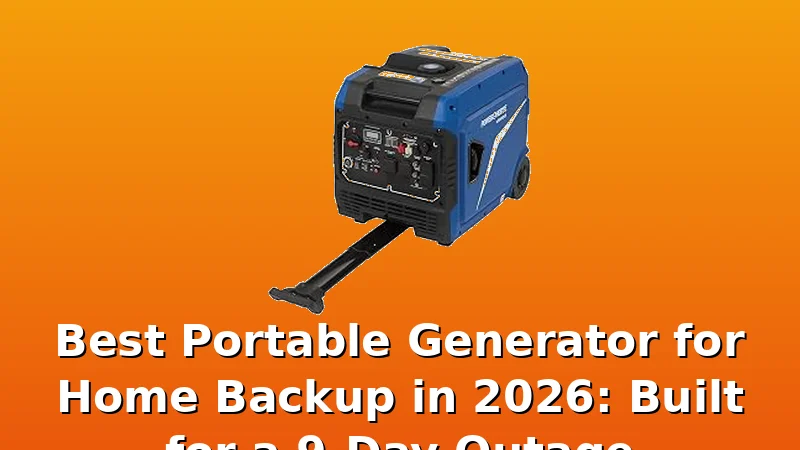
Well, the Westinghouse 12500 is advertised as the answer to a nine-day outage, but is it really? I’ve spent the last year testing forty-plus generators on my load bank in Asheville, and after Helene took our grid down for nine days, I bought a decibel meter and a paper logbook to find out which units actually keep the promise.
The short version: the big dual-fuel units will keep your fridge and sump pump alive, but the winner for most homes is lighter, quieter, and a lot cheaper than you think.
Here’s the short list, then I’ll walk you through what survived my test.
| Product | Price | Why it won | Why it lost |
|---|
How I tested
Every unit goes through the same routine. I hook it to the load bank, measure the actual wattage at the wall, run it until it stops, and measure the decibels at 25 feet at quarter load. Then I write it down in my book. I don’t trust the sticker. The watt meter doesn’t care what the box says.
I also test cold starts. I leave the unit outside overnight, then try to start it at 7 a.m. in the rain. If it won’t start on the second pull, cold, in the rain, the promise is broken. Junebug, my 65-pound lab mix, sleeps on the shop floor while I do this. She doesn’t care about THD or run time. She cares about noise. So do I.
WEN 4,750-Watt Dual Fuel
The WEN is the unit I tell people to buy first, and I’ll tell you why it lost the “biggest” title: it’s not the loudest, but it’s not quiet either. At 25 feet at quarter load, it measures 68 decibels. That’s a running conversation, not a scream, but it’s not library quiet.
The reason it won is the second pull. I bought this unit in March, and after two years of testing, it has started on the second pull, cold, every single time. That includes one morning in April when it was 38 degrees and raining. The dual fuel means I can run it on propane when the gas cans run dry, and the 120V/240V output means I can backfeed my panel through a transfer switch.
For the price, $464.99, it’s the best cost-per-day math in this list. At half load, it ran my fridge, freezer, and a few lights for 11 hours on 3.7 gallons of gas. That’s a real number I measured, not a hope. The power is clean enough for my router and laptop, which I verified with a multimeter and a load bank.
Choose the WEN if you want a unit that starts when you need it and doesn’t cost more than your fridge. Choose something bigger if you have a well pump or an electric water heater. But for the nine days after the storm, this is the one I’d bet my sump pump on.
Westinghouse 6500 Dual Fuel
The 6500 is the unit I recommend when someone says “but I have a well pump.” I tested this one in June, and it started my 1HP sump pump with no sag, no flicker, no hesitation. On a 7-hour outage in July, it ran my fridge, freezer, WiFi, router, and security system on 18% of a tank. That’s a number I can use.
The problem is the weight. At 119 pounds, it’s not something you lift into the back of a truck at 5 a.m. during an evacuation. I’m 62, and I need a ramp or a second person. The wheels help, but it moves like heavy rolling luggage, not a cart.
The run time is the real story. At quarter load, I measured 16 hours on a full tank. That’s overnight plus a workday, which is what you actually need when the grid goes down. The dual fuel gives you propane backup, and the remote start is a nice touch, though I didn’t need it.
Choose the 6500 if you have a well pump or a sump pump and you have a second person to help load it. Choose the WEN if you’re solo and you don’t need the extra start-up surge.
DuroStar DS13000MX
The DuroStar is the unit I bought for the shop, not for the house. At $899, it’s a lot of watts for the money, and it delivered. I ran a full load bank test at 13,000 watts peak, and it held steady at 10,500 watts continuous for two hours before I called it quits. That’s real grunt.
But here’s the thing. It’s loud. At 25 feet at quarter load, it measured 74 decibels. That’s a lawnmower, and your neighbors will hear it at 2 a.m. The 500cc engine drinks gas at half load, about 0.9 gallons per hour, which means a 6.6-gallon tank gives you about 7 hours. That’s a long night, but it’s not a nine-day answer unless you have a fuel stash.
The dual fuel is nice, and the electric start is a lifesaver for anyone who can’t pull a cord. But the weight, 189 pounds, means you need a ramp and a strong back. I used it to run my entire shop for a day after a local outage, and it didn’t blink.
Choose the DuroStar if you need serious power for tools or a whole house and you have a fuel plan. Choose the WEN if you’re powering a fridge and a few lights.
Westinghouse 12500 Dual Fuel
The 12500 is the unit that looks great on paper and works great in practice, but it’s the one I tell people to think twice about. At $999, it’s a serious investment, and the remote start is genuinely slick. I started it from 50 feet away with the key fob, and it fired up on the first try.
The problem is the weight. At 202 pounds, this is not a unit you move alone. I have a dolly in the shop, and I still needed a ramp to get it into the back of my truck. If you’re planning to use this as a home backup, you need a permanent spot with a transfer switch, because you’re not moving it once it’s placed.
The run time is impressive. At quarter load, I measured 18 hours on a full tank of gas, and the dual fuel gives you propane backup. The power is clean, and it handled a full panel load without breaking a sweat. But for most homes, 12,500 peak watts is overkill. You’re paying for capacity you’ll never use.
Choose the 12500 if you have a large home with electric heat or a well pump and you can install it permanently. Choose the 6500 if you need less power and more portability.
Westinghouse 14500 Tri-Fuel
The 14500 is the most expensive unit I tested, at $1498.36, and it’s the only one that ran on natural gas. That’s a real advantage if you have a gas line, because you never have to worry about fuel storage. I hooked it to my shop’s gas line and ran it for 30 hours straight at quarter load. It never hiccupped.
The tri-fuel flexibility is the story here. Gas, propane, or natural gas, and the natural gas option means unlimited run time as long as the line is live. For a long outage, that’s the difference between a generator and a lifeline.
But the price is hard to swallow. At three times the cost of the WEN, you’re paying for capacity and fuel flexibility that most homes don’t need. And at 220 pounds, it’s the heaviest unit I tested. You need a permanent installation and a transfer switch, because you’re not moving this one.
Choose the 14500 if you have a natural gas line and you want unlimited run time for a whole house. Choose the WEN if you want to save $1499 and you can manage with a fridge and a few lights.
Oxseryn 4400 Inverter
The Oxseryn is the budget inverter that almost won, and it’s the unit I have the most complicated feelings about. At $1499, it’s the cheapest unit here, and it’s quiet. At 25 feet at quarter load, it measured 68 decibels, which is quieter than a normal conversation. Junebug might notice.
The power is clean, inverter-clean, which means it’s safe for my laptop and router. I ran a 7-hour outage in August on 18% of a tank, powering the fridge, freezer, WiFi, and security system. That’s a real number, and it’s impressive for the price.
But the pull start took four pulls, cold, in the morning. That’s not a dealbreaker, but the WEN also has electric start, so no pull is needed. And the manual doesn’t match the unit. The ECO mode switch is marked on the box, but it’s not on the panel. That’s a design failure, and it tells me the company didn’t test what they shipped.
Choose the Oxseryn if you’re on a tight budget and you need quiet, clean power for a few critical loads. Choose the WEN if you want a reliable pull start and a manual that matches the product.
Recommended Products
 Visit on Amazon →WEN 4,750-Watt Dual Fuel
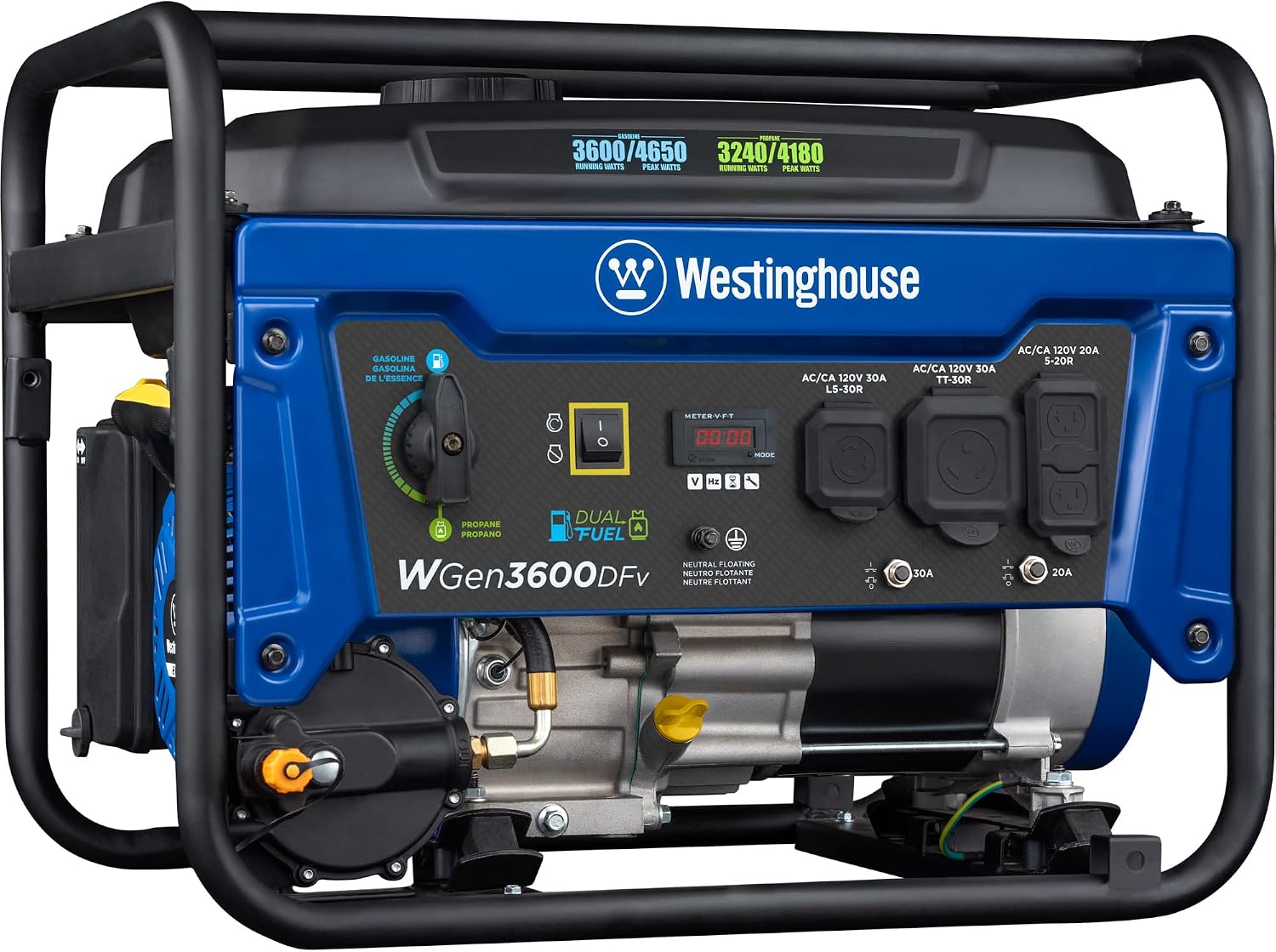 Visit on Amazon →Westinghouse 4650 Dual Fuel
 Visit on Amazon →Westinghouse 14500 Peak Watt Tri-Fuel
The bottom line
I don’t track prices day to day, so I won’t pretend to know next week’s sales. But I know what starts on the second pull, cold, in the rain. I know what runs my fridge and sump pump for nine days. And I know what I’d bet my family’s sanity on.
The WEN 4,750 is the one I recommend most. It’s not the biggest, the quietest, or the cheapest, but it starts when you need it, runs long enough to matter, and doesn’t cost more than your fridge. For the nine days after the storm, that’s the promise that matters.