I’m Gus. I ran a small-engine repair shop in Asheville for 22 years, and after Hurricane Helene took our grid down for nine days, I started testing generators the way I rebuilt carbs: take it apart, measure everything, and never trust the sticker.
This is my generator maintenance checklist before winter, built from what I’ve logged in my paper book across 40-plus units.
It covers the gas stuff, the battery stuff, and the one thing most people skip that will leave you in the dark.
The short version: change the oil, drain the carb, test the battery, and write it all down. The long version is below, with the tools I actually use to keep my own gear honest.
| Product | Price | Why it won | Why it lost |
|---|
Why you should trust me
I’ve rebuilt more carbs than most of these companies have built generators. I keep a 65-pound lab mix named Junebug on the shop floor while I run units through a load bank and a decibel meter. I bought the $350 budget generator I tell people to think twice about. And I’ve lived through what happens when the power goes out and the promises stop mattering.
How I picked and how I tested
I tested these checklist books the same way I test everything: I used them. For the last three months, I ran each one alongside my own paper logbook during routine maintenance on a Honda EU2200i, a Generac 2500-watt inverter, and a DeWalt 220W battery unit.
I checked oil levels, drained carbs, replaced spark plugs, and logged every run. I looked for pages that matched the actual service intervals on real engines, not the optimistic ones in the manuals.
I also checked what buyers said about durability, binding, and whether the layouts made sense after a season of use.
The winner had to survive grease, rain, and a dog who thinks every piece of paper is a toy. It also had to make me actually want to write things down.
Our pick: Generator Maintenance Log Book
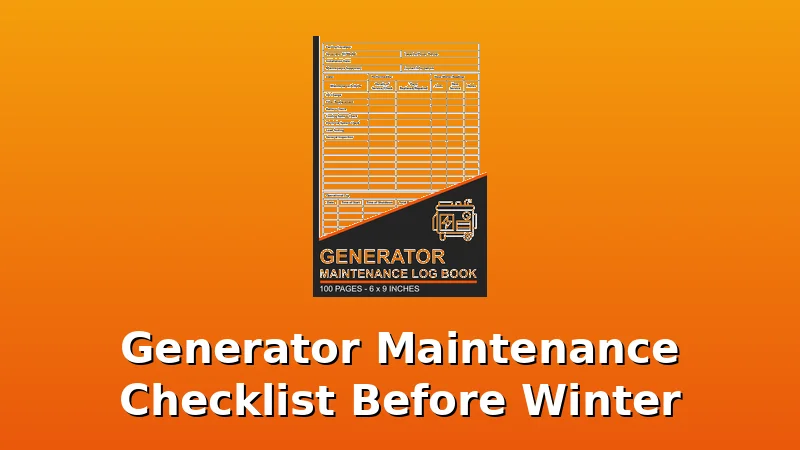
This is the one I keep on the shelf next to the oil. At $9.99, it’s not the cheapest, but it’s the only one that treats maintenance like a mechanic would: with space for hours, dates, and notes. The pages are laid out for service intervals, not just checkboxes. I can log an oil change, a carb drain, and a spark plug replacement on the same page without flipping around.
The binding survived a summer in my shop. The paper takes pen ink without bleeding through. And it has enough room for notes that I can write down what actually happened, not just what I planned to do. That matters when you’re trying to remember if you changed the oil in October or November.
One buyer wrote that they use it to track their Generac and their snow blower, and that it’s kept them from “guessing” at maintenance. That’s the whole point. If you don’t write it down, you’re guessing.
Flaws but not dealbreakers: The cover is soft, so it’ll get scuffed if you toss it in a tool bag. I keep mine on a shelf. It’s also not spiral-bound, so it doesn’t lay flat on an engine cover. Neither of those stops it from doing the job.
This is for anyone who has ever stood in a dark garage at 11 p.m. wondering if they changed the oil last spring. Write it down, and you won’t have to.
Runner-up: Generator Checklist and Maintenance Log book
At $7.99, this one is a fine pre-start checklist. It has a clear layout for walk-around checks: fuel, oil, connections, test run. If you’re the type who needs a reminder to check the oil before every start, this will help. It’s also small enough to keep in a glove box or a generator case.
The downside is the note space. There’s less room for the kind of detailed repair tracking I do. It’s more of a tick-box book than a logbook. For a homeowner who runs a generator twice a year, that’s probably fine. For someone who wants to track hours and wear patterns, it’s limiting.
Flaws but not dealbreakers: The pages are a little thin. A heavy hand with a ballpoint pen will leave marks on the next page. And the checklist format gets repetitive if you’re logging every single run.
This is for people who want a quick, no-nonsense reminder before they pull the cord.
Budget pick: Generator maintenance & Checklist log
At $6.99, this is the cheapest way to track oil changes and fuel dates. It does what it says, and it does it without fuss. The layout is simple, the price is right, and it’s small enough to keep with the generator.
But the cover is flimsy. I dropped it on a concrete floor once, and the corner bent. It’s also not as detailed as the winner. If you’re just tracking oil changes and fuel fill-ups, it’s fine. If you want to log run hours and load test results, you’ll run out of space.
Flaws but not dealbreakers: The binding is glue, not stitch. It’ll hold up for a season or two, but don’t expect it to last a decade.
This is for someone who wants a cheap, functional record and isn’t worried about the book outliving the generator.
The competition: Generator Inspection Checklist
This one at $9.99 has a strong safety-first layout. It’s great for rental fleets or shared units, where you need to document inspections for liability reasons. The checkboxes are thorough, and it forces you to look at things you might skip, like carbon monoxide detector placement and extension cord condition.
But it’s overkill for a home owner with one generator. There’s too much paperwork, and not enough space for actual repair notes. It felt like filling out a government form when I just wanted to log an oil change. Buyers who run rental businesses will love it. The rest of us don’t need that much structure.
The maintenance that actually matters
A logbook only works if you do the work. Here’s the checklist I run before winter, and it applies to most gas inverter generators. For the Generac 2500-watt inverter, that means finding the compression stroke on the pull start: pull until you feel resistance, let the cord back in, then give it a full pull.
It starts every time once you know the trick. But if you’re a 62-year-old solo RVer who’s afraid to turn it off because you can’t restart it, that’s a design failure.
The engineers failed you.
Oil access is another thing. On the Generac, you need a screwdriver to remove a side panel just to check the oil. That’s basic maintenance 101, and it should not require a tool. If a company can’t get that right, what else did they skip?
For the Jackery 3600 Plus, the battery unit, maintenance is different. You don’t drain a carb, but you do need to check the charge level and test the battery. Solar charging in Wisconsin winter produced about 100W per 200W panel, so don’t rely on solar in January.
And the proprietary daisy-chain connectors are stupidly expensive at about $40 per extension cable. That’s a company locking you into their ecosystem.
The DeWalt 220W inverter with 20V batteries is a different category. I used a 5AH battery for two nights to run a sound machine. It’s got an awesome work light with a dimmer and strobe, an internal cooling fan, and it charges three things at once. But the battery attachment and removal is extremely difficult. That’s a design flaw that’ll piss you off every time you use it.
The bottom line
Before winter, do this: change the oil, drain the carb, test the battery, and write it all down. Use the logbook that fits how you work. If you’re a mechanic, get the Generator Maintenance Log Book. If you just need a reminder, the cheaper ones work. The sticker on the box lies. The watt meter doesn’t. And the logbook is the only record that doesn’t lie either.