Inverter generator sizing starts with a pencil and a walk through your own house, not with the biggest number printed on a box. Every fall I watch the same thing happen here in Asheville: the forecast turns ugly, the shelves empty out, and somebody posts a photo of a huge unit they bought because the carton shouted a big number at them. Then they learn that number was peak watts, that running watts are a different and smaller thing, and that the machine sounds like a lawnmower with a grudge.
I ran a small-engine repair shop in this town for 22 years. When Helene took the grid down for nine days, I watched a normally polite street turn on each other over a 50-foot extension cord, and a guy in a pickup selling priority hookups out of his truck bed. That week is why I bought a load bank, a decibel meter, and a paper logbook, and why I stopped believing spec sheets written by the marketing department.
This is the sizing process I run before anyone spends money. It takes about 20 minutes and a notepad.
Why you should trust me
I have put more than 40 generators through the same routine since that storm, every run logged by hand: what the unit actually delivered at the wall under a real load, what it measured in dB(A) at 25 feet at quarter load, and how long a tank really lasted at half load with my fuel jug and my stopwatch. I keep the numbers even when they embarrass a brand I like. Free review units get disclosed, units I bought with my own money get marked as such, and I still own the cheap budget generator I tell most people to think twice about.
How I picked and how I tested
The two units below are not here because of a press release. They are here because they fit two very different points on the sizing curve this article teaches, and because each one clears the three things I will not compromise on:
- A THD rating under 5%, which is what makes an inverter safe for a laptop, a TV, and a modern furnace board.
- A CO sensor with automatic shutdown, which is non-negotiable on any generator that runs within cord distance of a house.
- A starting method a tired person can manage at 2 a.m. in the rain. A remote fob or an electric start button beats a pull cord that needs two hands and a prayer.
Everything else, including fuel type and tank size, is a tradeoff you get to choose.
The test method itself never changes. I load a unit with a fridge, a sump pump, a space heater, and a 5,000 BTU window AC on the load bank, measure noise at 25 feet instead of at one foot, and time the fuel with a stopwatch. The watt meter does not care what the box says.
The load list comes before the generator
Step one: write down running watts
Walk the house and list what you actually need, not what you would like. Running watts are the continuous load a generator can carry hour after hour, and they are the number that matters during a nine-day outage. A refrigerator, a furnace blower, a sump pump, a few LED lights, the router, and phone chargers. That is a real outage list for most families. A space heater is a luxury that eats more watts than the fridge and the furnace combined.
Step two: find the biggest surge
Surge watts are the startup spike a motor needs, usually two to three times its running watts for a second or two. The compressor in your fridge, the motor in your sump pump, and the blower in your furnace all have one. Add the largest single surge to the total of everything else running, and that is your real ceiling. Two motors starting at the exact same moment is rare, but it happens when the power comes back and everything tries to wake up at once.
Step three: add headroom
Take your surge number and give yourself some room. A generator running at 100% of its rating is loud, thirsty, and short-lived. Running at 50 to 75% is where these machines are happiest, quietest, and most efficient.
Step four: decide the fuel
Gasoline is easy to find and gives full output. Propane stores forever and burns clean, but it costs you output, so a tri-fuel unit's propane rating is lower than its gasoline rating. Natural gas is the most convenient of all and the lowest output of the three. Decide which fuel you will actually have on hand in a storm before you decide how big the generator needs to be.
Two units that fit real sizing math
Both of these are inverter generators, which means clean power and a quieter run than a conventional job-site unit. Both carry the specs I look for. They land at very different points on the budget curve.
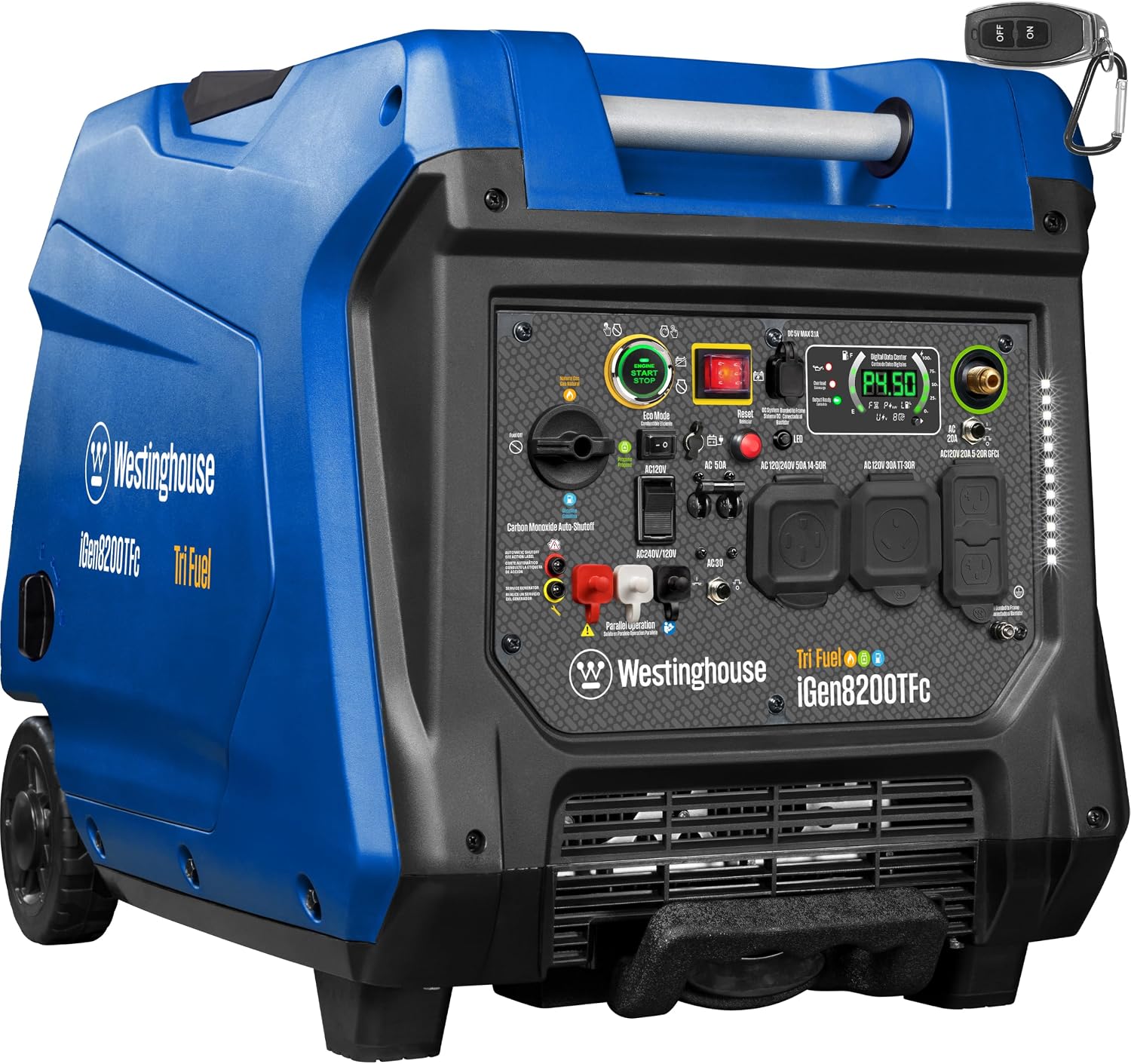
The tri-fuel pick: Westinghouse 8200 Peak Watt Tri-Fuel Portable Inverter Generator, Remote Electric Start, Transfer Switch Ready, Gas, Propane, Natural Gas, Low THD, Safe for Electronics, Parallel Capable, CO Sensor
 Visit on Amazon →
This is the unit I point at when somebody wants one machine that can carry a house's critical circuits and still be an inverter. The spec sheet lists a CO sensor, low THD, remote electric start, transfer switch readiness, parallel capability, and three fuel options, which covers every non-negotiable on my list in one box.
Read the name carefully, though, because it teaches the whole lesson of this article: 8200 is the peak number. Running watts will be lower, and propane or natural gas will bring it down again. That is not a knock on the machine, it is how every tri-fuel unit works, and it is exactly why you do the load math first and shop second.
Flaws but not dealbreakers: Tri-fuel means more hoses, more fittings, and more places for a connection to leak if you get lazy. It is also heavy, and heavy generators get left in the garage when the storm hits. If you buy this class of unit, buy a cover, keep ethanol-free fuel or a stabilizer on the shelf, and practice starting it before you need it. Check current Amazon price.
Anyone who wants one machine for a house, an RV, and a job site, and who is willing to do the fuel math, will get the most out of it.
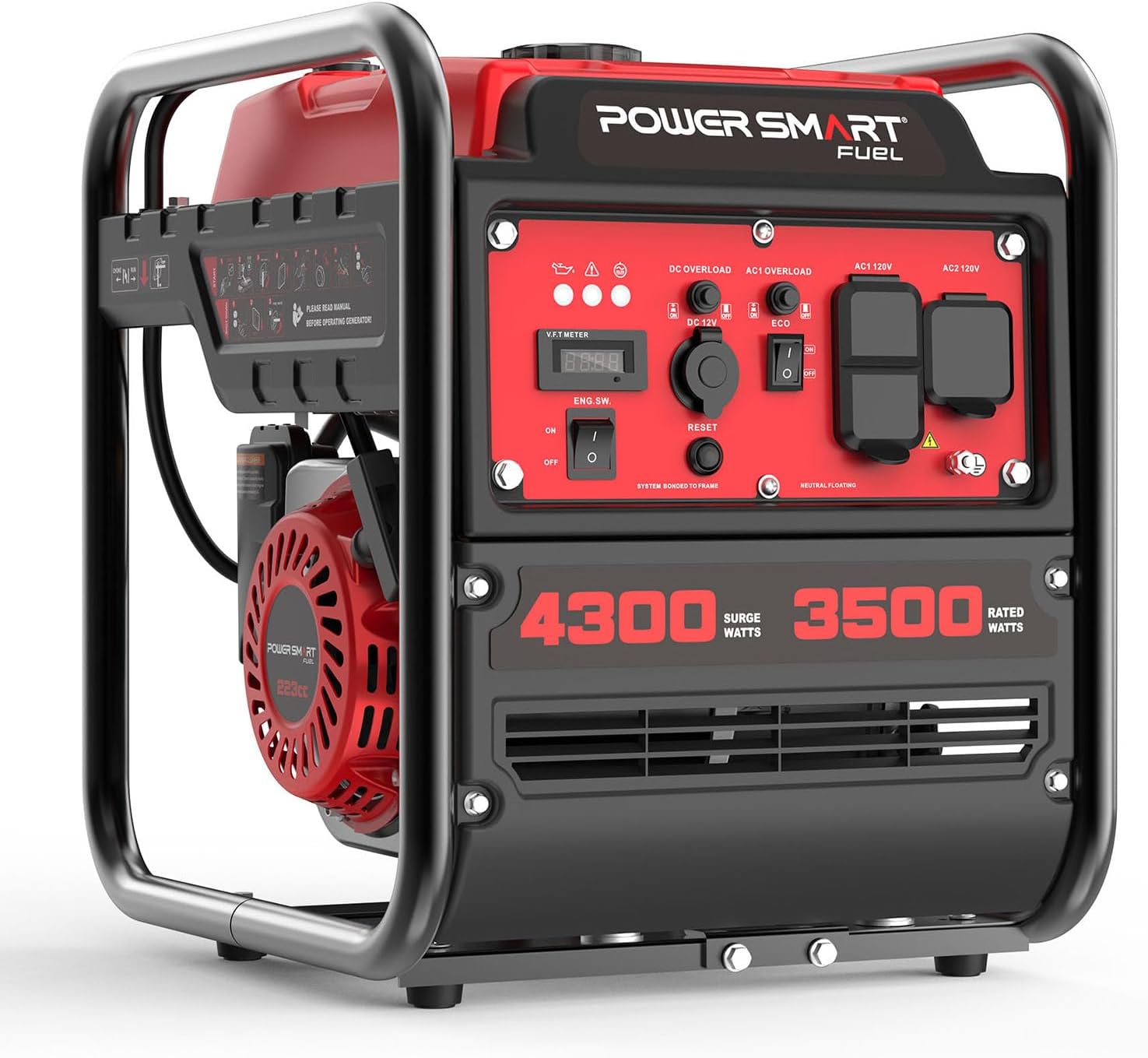
The budget pick: PowerSmart 4300 Watt Inverter Portable Generator for Home Use
 Visit on Amazon →
This is the other end of the sizing curve, and for a lot of families it is the right end. A 4,300-watt inverter will run the outage list I described above, the fridge, the furnace blower, the lights, the router, and the chargers, as long as you respect the surge and do not try to run a space heater and a microwave at the same time. Because it is an inverter, the power is clean enough for electronics and the noise level is in a different universe from a conventional open-frame unit.
The tradeoff is fuel flexibility and tank size. There is no propane option here, so you are committing to gasoline and to the ethanol problem that comes with it. Smaller tanks mean more refueling trips during a long outage, and refueling means shutting the unit down, letting it cool, and doing it outside, away from the house.
Flaws but not dealbreakers: A single-fuel unit is simpler to maintain but less flexible when the gas stations are dry. Keep a couple of sealed cans rotated with stabilizer and you will be fine. Check current Amazon price.
Anyone with a modest load list, a tight budget, and neighbors within earshot should start here before they look at bigger machines.
Setting it up so it starts at 2 a.m.
The machine is the easy part. The setup is what fails in the dark.
Oil before the first start. Most of these ship without oil and a sticker that says see manual. Fill it, check it, and know where the dipstick is before the storm.
Ethanol-free fuel or stabilizer, always. Ethanol left in a carburetor is a time bomb. It turns to varnish, and varnish turns into a service call. If you cannot buy ethanol-free gas, run stabilizer in every can and drain the bowl before you store the unit for the season.
Change the break-in oil. The first oil change on a new generator comes early, and the manual will tell you when. Do it on time. Metal shavings in break-in oil are normal, and leaving them in there is not.
Place it 20 feet from the house, exhaust downwind. This is a CO sensor conversation, and the sensor is a backup, not a plan. Never run a generator in a garage, a breezeway, or under a carport, even with the door open.
Match the cord to the load. A long, thin extension cord on a big load is how you cook a cord and brown out a fridge. Short and thick beats long and cheap.
Be careful with eco mode. Eco mode drops engine RPM to match the load, which saves fuel and noise. On some units it cannot react fast enough when a fridge compressor kicks on, and the fridge stalls the generator. Test it at home, on a normal day, with the fridge plugged in. If the unit stumbles, leave eco mode off.
Exercise it under load once a month. Ten minutes with a real load keeps the carb clean and proves the machine will start when it counts. A generator that has sat untouched for a year is a coin flip.
What the sticker does not tell you
Peak watts are not running watts. Peak is a spike, usually for a few seconds. Running watts are what the unit can hold hour after hour. Big print and fine print, every time.
Run time is measured at 25% load. At half load, cut that number by a third. At full load, cut it in half. Plan fuel around the real number, not the brochure.
Noise is measured at 25 feet or it is marketing. A dB(A) figure taken one foot from the unit with no load is a number, not information. Ask what it sounds like at the distance your neighbor's bedroom window sits.
Altitude and heat cost you watts. A naturally aspirated engine loses power as the air thins. If you live up a mountain, size up.
Propane and natural gas cost you watts too. Tri-fuel flexibility is real, and so is the derate. Check the rating for the fuel you will actually burn.
What this all costs
The generator is the beginning of the bill, not the end. Budget for a heavy cord, sealed fuel cans, stabilizer, oil, a funnel, a cover, and a transfer switch or an inlet box if you want to feed house circuits safely instead of running cords through a window. Check current Amazon price on the units themselves, then add the accessories before you compare anything.
Over five years, the gap between the budget unit and the tri-fuel unit is a few dollars a month, which is the wrong way to think about it. The right question is the one I ask every unit on the load bank: would I bet my fridge and my sump pump on it for nine days? If the answer is yes, the sizing math was right, and the price was whatever it was.
Do the list first. Then buy the generator.