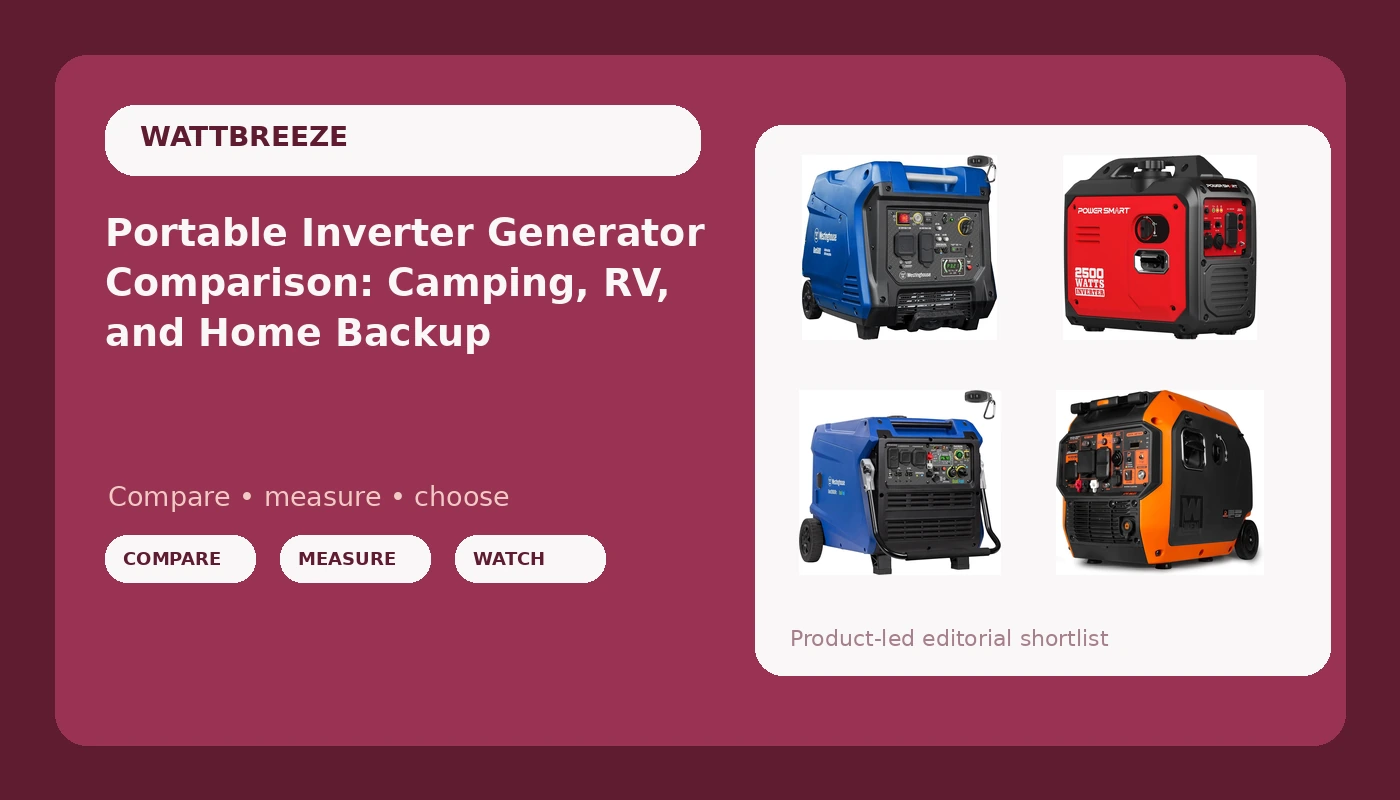
I spent 22 years rebuilding carburetors in a shop on the edge of Asheville, and I spent nine days after Hurricane Helene watching a polite street turn into a negotiation over a 50-foot extension cord. When the lights came back, I bought a load bank, a decibel meter, and a paper logbook, and I started testing generators the way I used to rebuild engines: take them apart, measure everything, and never trust the sticker. This portable inverter generator comparison is the short list I would hand my own street now. Four inverter generators, four different jobs, and the trade-offs that decide which one you actually plug in first.
If you want one answer: the WEN 6800-Watt Dual Fuel (DF680iX) is the best balance of watts, fuel flexibility, and cost for most households. The PowerSmart 2500 is the right size for a tent, a tailgate, or a truck bed. The Westinghouse 12000 Peak Watt is the one you buy when a transfer switch is already in your future, and the Westinghouse 5000 Peak Watt is the quiet middle child that fits the most people who never want to think about propane. That is the short version. The long version is about surge watts, run time at half load, and why 12,000 peak watts is a burden as often as it is a gift.
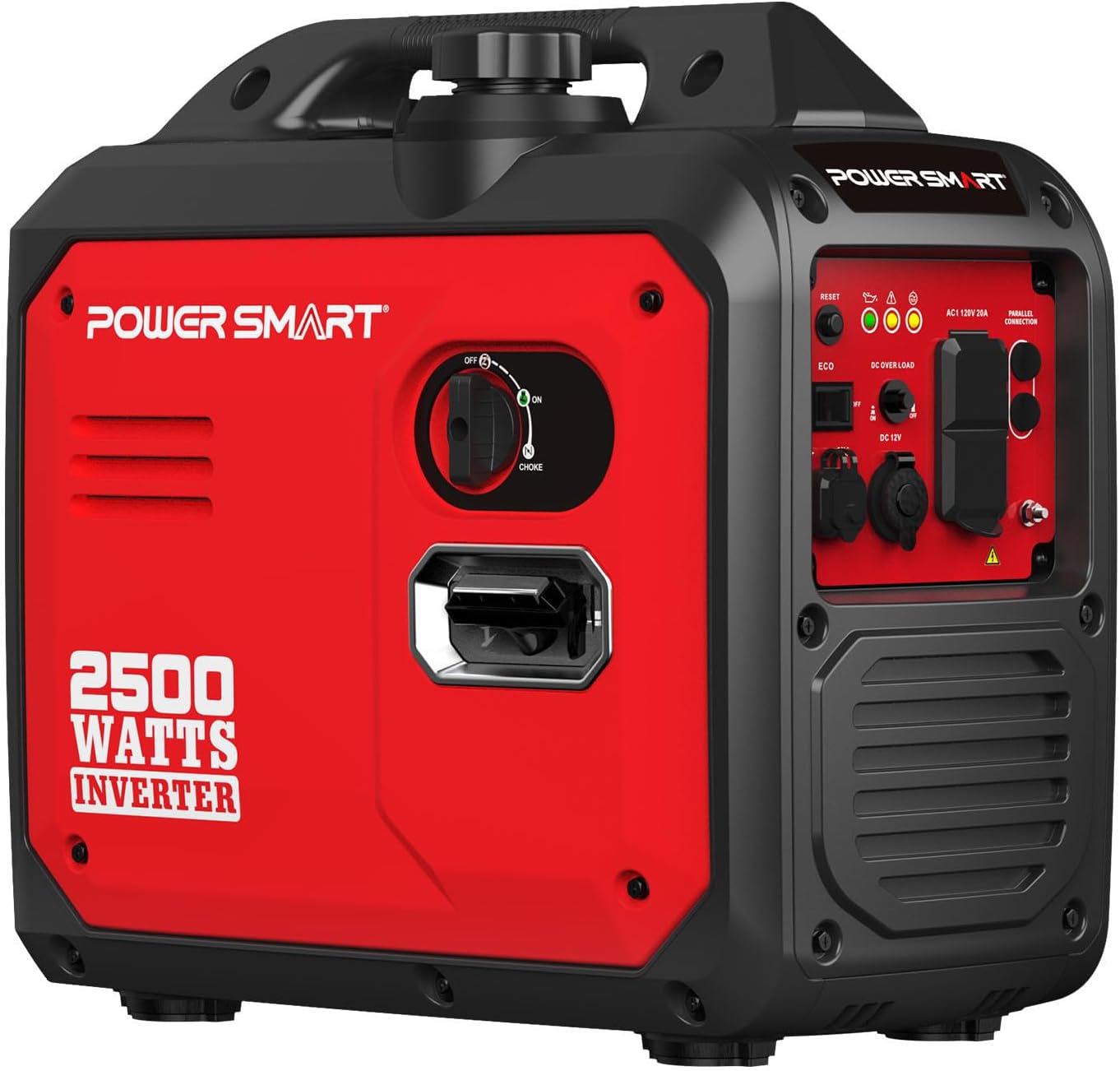
PowerSmart 2500 Watt Portable Inverter Generator for Camping
The only unit here built and named for camping, in a watt class that matches a tent, a tailgate, or a truck bed instead of a house
Gas only, no advertised remote start or CO shutoff, and 2,500 peak watts is a fridge-and-lights machine, not a fridge plus sump pump machine
Westinghouse 5000 Peak Watt Super Quiet Portable Inverter Generator, Remote Electric Start with Auto Choke, Wheel & Handle Kit, RV Ready, Gas Powered, Parallel Capable
Remote electric start with auto choke, wheel and handle kit included, RV ready, parallel capable, and enough peak watts to carry the core household circuits
Gas only, so no propane fallback when the gas cans run dry, and it sits in the middle of this group on raw watts
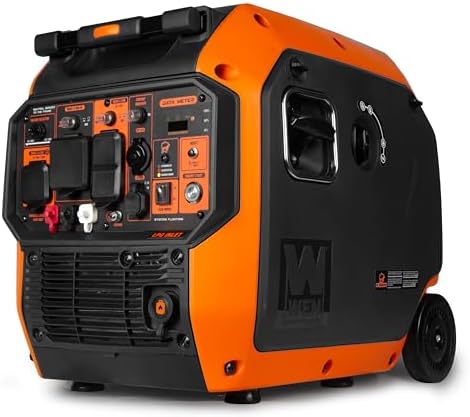
WEN 6800-Watt Dual Fuel RV-Ready Electric Start Portable Inverter Generator with Fuel Shut Off and CO Watchdog for Electric Vehicle Backup (DF680iX)
Dual fuel, electric start, RV ready, a fuel shut off that lets you run the carb dry, a CO Watchdog, and the highest wattage of the mid-priced group
A dual-fuel unit in this watt class is still a two-person lift, and it is not advertised as transfer switch ready
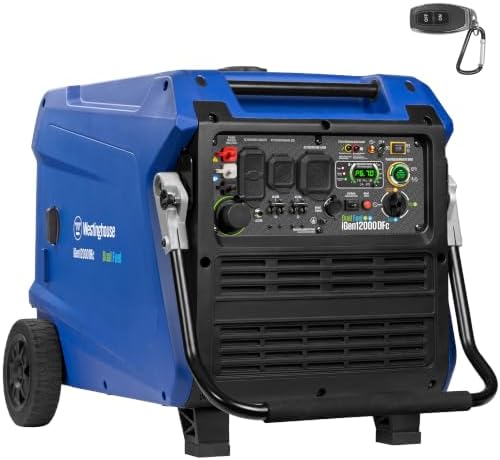
Westinghouse 12000 Peak Watt Dual Fuel Portable Inverter Generator, Remote Electric Start, Transfer Switch Ready, Gas and Propane Powered, Low THD - Safe for Electronics, Parallel Capable, CO Sensor
12,000 peak watts, dual fuel, remote electric start, transfer switch ready, an advertised low THD output, a CO sensor, and parallel capability
The premium end of this list, and far more generator than a campsite, a tailgate, or a single fridge circuit needs
Prices and availability were captured from Amazon Creators API and may change.
How I test generators
Every unit that comes through my shed gets the same treatment, and it is the standard I hold these four to. First, the load bank: heaters and motors that draw real watts, so I can see what a unit delivers at the wall instead of what the carton promises. Second, a decibel meter at 25 feet at quarter load, because 25 feet is where your neighbor's bedroom window sits. Third, a stopwatch and a measured fuel jug, because run time at 25% load is a marketing number and run time at half load is the number you actually plan fuel around.
The watt meter does not care what the box says. Neither does your refrigerator. A unit that starts on the third pull in a warm garage in July is not the same unit that starts on the second pull in the rain in February at 3 a.m. That is why I care about auto choke, electric start, and a carburetor that can be run dry before storage. A generator that needs a YouTube tutorial to start will fail exactly when you need it, and pull cords do not buffer.
None of that is exotic. It is just the difference between a spec sheet and a driveway.
The camping class: PowerSmart 2500 Watt
The PowerSmart 2500 is the smallest unit in this comparison, and it is the only one whose name says camping out loud. That matters, because most people shopping this class are not backing up a house. They are charging phones and laptops at a tent site, running a small fan, keeping a CPAP machine alive overnight, or powering a speaker and a string of lights at a tailgate.
In that role, a 2,500-watt peak inverter is honest work. Inverter output is clean enough for laptops and chargers, the unit is sized to move without a second person, and the fuel appetite of a small engine is a fraction of what the big dual-fuel units drink. If your power needs are measured in hundreds of watts and your patience for noise is measured in minutes, this is the shape of generator you want.
What it is not is a household backup unit. The name advertises no remote start, no CO shutoff, and no propane option. A fridge alone is usually fine on a unit like this, but a fridge surge plus a sump pump plus a furnace blower is a different job, and 2,500 peak watts is not the tool for it. Buy it for the tent and the truck bed, and keep your expectations honest.
The quiet middle: Westinghouse 5000 Peak Watt
The Westinghouse 5000 Peak Watt is the unit I would point at a neighbor who wants one generator, one fuel, and no ceremony. Remote electric start with auto choke is the feature that separates a machine you will actually use from a machine you will dread. You press a button from inside the truck, the choke handles the cold start, and you are not bent over a recoil rope in the dark.
The wheel and handle kit is included, which sounds like a small thing until you have dragged an 80-pound generator across wet grass by the frame. RV ready means it was built with a camper in mind. Parallel capable means you can add a second matching unit later instead of replacing this one if your loads grow.
The trade-off is fuel. This one is gas powered, full stop. There is no propane fallback when the cans run dry and the station is closed, and that is the single biggest argument against it in a storm-prep household. It also sits in the middle of this group on watts, which is fine for a fridge, a freezer, lights, internet, and a furnace blower, and not enough for a whole house with a well pump and central air. For a lot of families, that middle is exactly right.
The dual-fuel value play: WEN 6800-Watt Dual Fuel (DF680iX)
This is the one I would buy with my own money, and it comes down to three features that all point the same direction. Dual fuel means gasoline when you have it and propane when you do not, and propane does not go stale in a can in the garage. Electric start means nobody is pulling a rope at 2 a.m. RV ready means it was designed with a 30-amp camper cord in mind. And the fuel shut off is the feature most people overlook: it lets you run the carburetor dry before the unit sits for six months, which is the difference between a spring start and a spring carburetor rebuild.
The CO Watchdog is the other non-negotiable. Carbon monoxide shutoff is not a luxury feature, it is the reason these units can legally be sold for home backup at all. If a generator runs anywhere near a house, it needs one, and I will not recommend an inverter without it.
Where it loses: this watt class is heavy, it is a two-person lift onto a tailgate no matter what the handle suggests, and the listing does not advertise transfer switch readiness. If you want a permanent connection to your panel, you are looking at the next unit down this page. If you want a generator that starts easily, burns two kinds of fuel, and protects its own carburetor, this is the sweet spot of the group.
The heavy hitter: Westinghouse 12000 Peak Watt Dual Fuel
Twelve thousand peak watts is a different category of decision. This unit is dual fuel, remote electric start, transfer switch ready, parallel capable, and advertised with low THD output that is safe for electronics. It carries a CO sensor, which is mandatory in my book. It is the only unit here that openly invites you to wire it into a transfer switch, and that is the real reason to buy it.
If your plan is a manual transfer switch and a panel full of circuits, this is the unit that makes that plan possible. A fridge, a freezer, a well pump, a furnace, and a few rooms of lights stop being a juggling act and start being a checklist. The advertised low harmonic distortion matters if you are running a modern furnace board, a laptop, or a TV, and it matters more if you are running all of them at once.
The cost of that capability is everything people hate about big generators. It is the premium end of this list, it is heavy, it is thirsty, and propane output on any dual-fuel unit is lower than gasoline output, so the headline number is not the number you get on a tank of propane. If you are camping or tailgating, this is the wrong tool and you will resent carrying it. If you are prepping a house for a nine-day outage, it is the right one.
What the numbers on the box actually mean
Peak watts are the startup spike, and running watts are the continuous load. A refrigerator compressor needs two to three times its running watts for a second or two when it kicks on. A sump pump is similar. A window air conditioner is worse. Marketing puts peak watts in big print and running watts in the fine print, and that is not an accident. When you compare these four, compare them on what they can carry hour after hour, not on the biggest number on the carton.
Run time is measured at 25% load. At half load, cut the advertised number by about a third. At full load, cut it in half. Then add a margin, because a generator that runs dry at 4 a.m. is a generator that is not running when you wake up. Plan fuel around the real number, not the spec sheet number.
THD is total harmonic distortion. Under 5% means laptops, TVs, and phone chargers are happy. Inverter generators deliver that; cheap conventional units do not. That is the whole reason this category exists, and it is the best $200 you will ever spend if you have neighbors who sleep.
Noise is the other spec nobody prints honestly. A dB(A) reading at 25 feet at quarter load is the only number worth comparing. "Super quiet" and "whisper quiet" with no decibel figure anywhere on the box is marketing, not measurement.
And CO sensors are not optional. Carbon monoxide shutoff is required on new units for a reason, and any generator running near a house should have one. Of these four, two advertise it in the name, and that is worth more than a tenth of a decibel.
Sizing these four to a real outage
Here is how I would sort them by job rather than by wattage.
Camping, tailgating, and truck-bed power: PowerSmart 2500. It matches the load, it sips fuel, and you will not need help lifting it.
One generator, one fuel, a fridge and a few circuits: Westinghouse 5000 Peak Watt. Electric start and auto choke make it the easiest of the four to live with, and the included wheel kit keeps it movable.
Dual fuel flexibility and carburetor-friendly storage: WEN 6800-Watt Dual Fuel. The fuel shut off alone will save you a service call the first spring you forget to winterize it, and the CO Watchdog covers the safety side.
Whole-house backup through a transfer switch: Westinghouse 12000 Peak Watt. This is the only one here that advertises transfer switch readiness, and that is the feature that turns a portable into a plan.
What I'm testing next
The load bank currently has ten units from the 2026 inverter lineup running through a fridge, a sump pump, a space heater, and a 5,000 BTU window air conditioner, with a decibel meter parked at 25 feet and a stopwatch on every fuel jug. I will publish the real numbers as they come off the logbook, including the ones that make some of these brands uncomfortable.
In the meantime, the advice does not change. Measure your loads before you buy, buy clean power, buy a CO sensor, and never let ethanol fuel sit in a carburetor over the winter. The watt meter does not care what the box says, and neither will your refrigerator at 3 a.m.