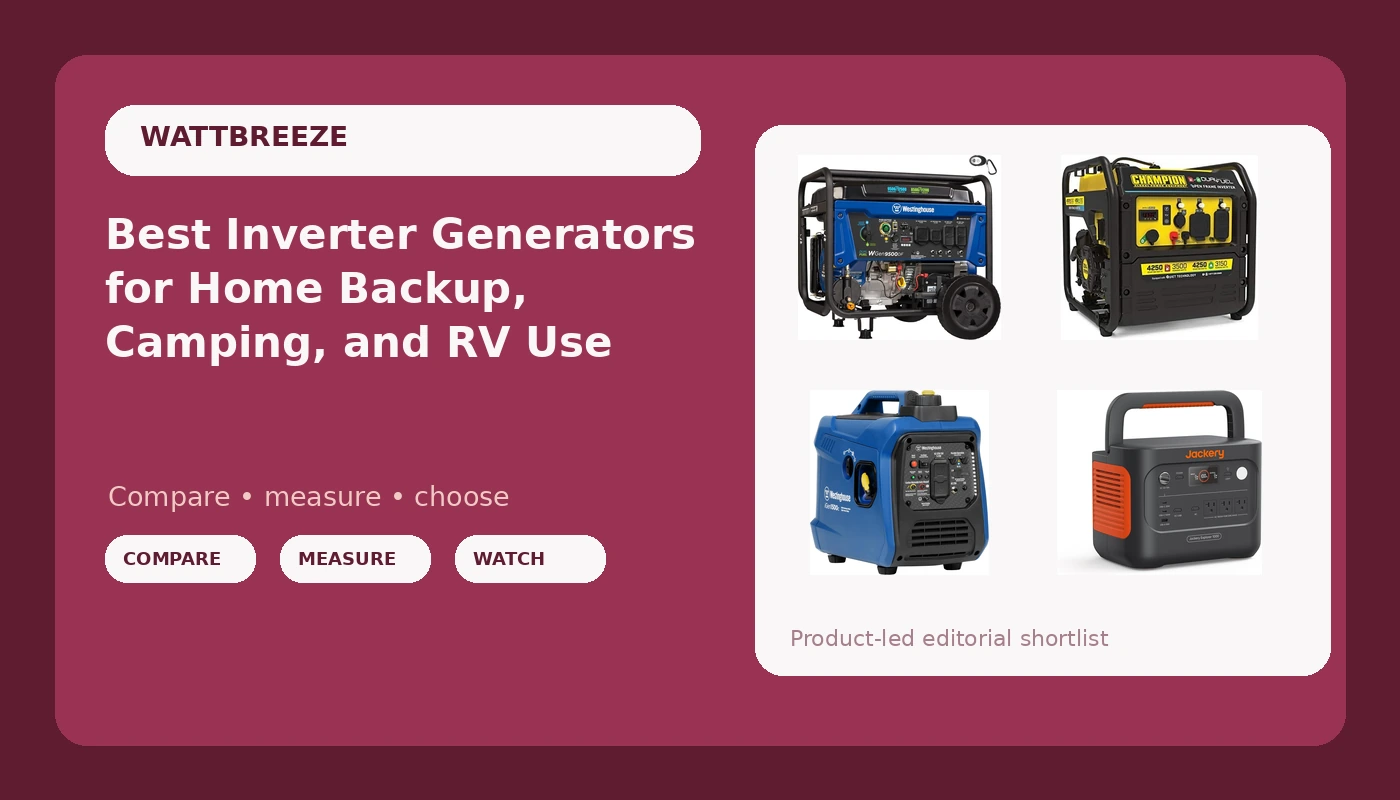
Nine days. That is how long my street went without grid power after Helene, and it is the number I keep in my head whenever someone asks me to point them at the best inverter generators for the money. Nine days is long enough that the wrong machine stops being an inconvenience and turns into the thing two neighbors shout about over a 50-foot extension cord.
So here is the scope. This guide covers six portable power options for three jobs: keeping a fridge, a modem, and a few lights alive during an outage; running a camper or a tailgate without making enemies of the campground; and backing up a house when the outage is measured in days instead of hours. The list runs from a 1,500 peak watt portable you can carry in one hand to a 12,500 watt dual fuel unit built for a transfer switch. I will tell you what separates them, what to measure before you spend money, and which one I would buy for the most common situation.
Related: How to Size a Generator for a Real Outage Load
Quick answer
The Champion Power Equipment 4250-Watt Dual Fuel RV Ready Portable Open Frame Inverter Generator with Quiet Technology is the strongest fit for most households because it lands in the middle of the market: enough capacity for a fridge, a freezer, and a furnace fan, dual fuel so you are not stranded when the gasoline cans run dry, and an inverter design, which is the category you want for anything with a circuit board in it. Choose the Jackery Explorer 1000 v2 Portable Power Station instead when you want silent power indoors with no fuel, no exhaust, and no pull cord.
Portable inverter generators worth comparing
Every unit below is a portable power source, but they are not interchangeable. Two are dual fuel, three run on gasoline, and one stores energy in a battery. What they have in common is that all of them sit on the inverter or quiet-power side of the market, which is where I would spend my own money for home backup, camping, and RV use.
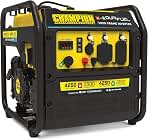
Champion Power Equipment 4250-Watt Dual Fuel RV Ready Portable Open Frame Inverter Generator with Quiet Technology
A 4,250 watt open frame inverter generator that runs on gasoline or propane and ships RV ready. Dual fuel flexibility matters in the second week of an outage, when the gas station line is a mile long and the grill tank is still full.
Visit on Amazon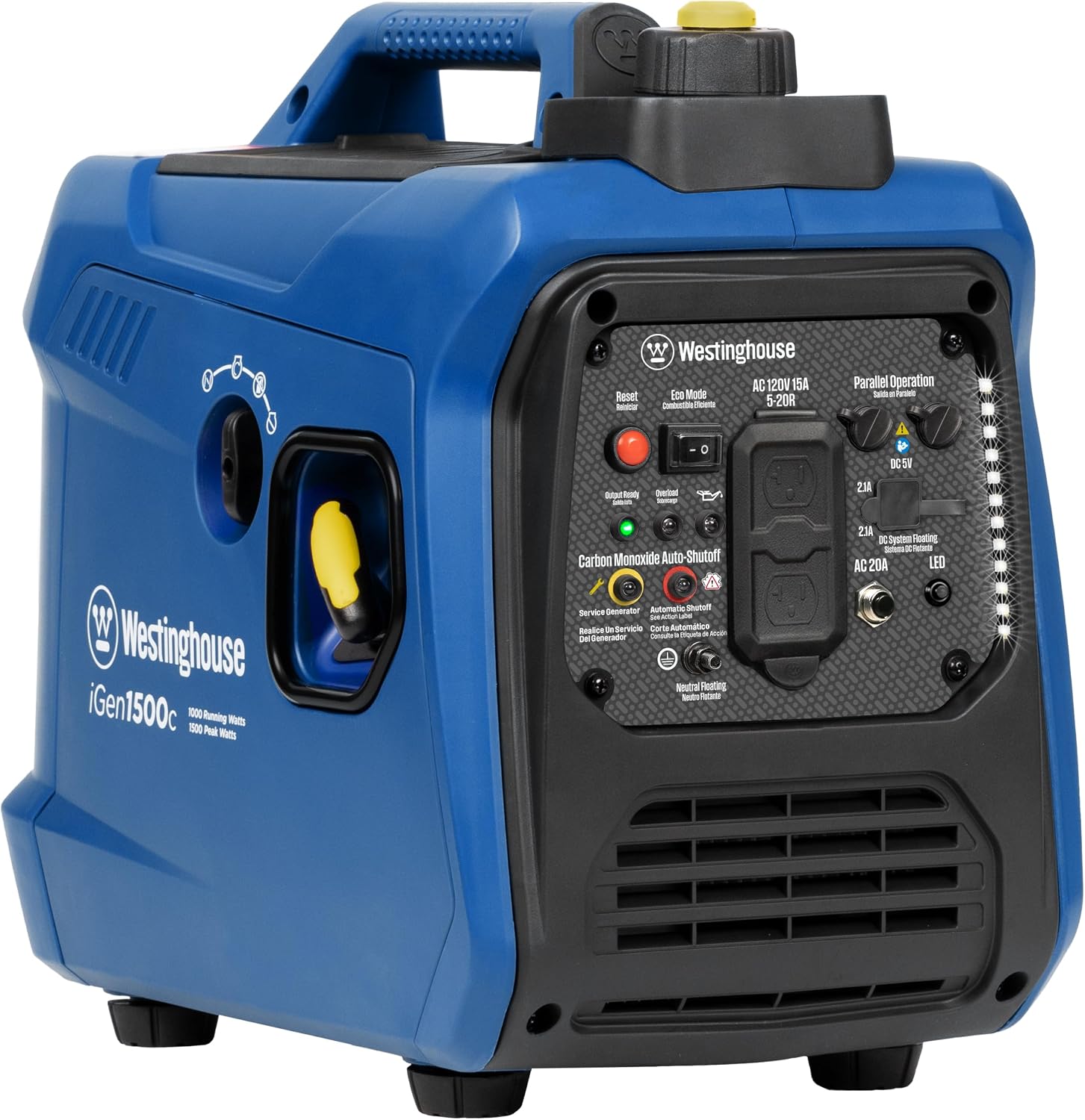
Westinghouse 1500 Peak Watt Super Quiet & Lightweight Portable Inverter Generator, Gas Powered, CO Sensor, Parallel Capable, Long Run Time,Blue
A 1,500 peak watt unit in a package the manufacturer describes as super quiet and lightweight. Gas powered, parallel capable so you can pair it with a matching unit later, fitted with a CO sensor, and built for long run times at light loads.
Visit on Amazon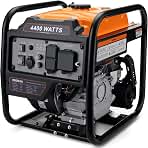
Oxseryn Power Equipment 4400 Watts Inverter Generator Gas Powered, Portable Open Frame Generator, Low Noise with ECO Mode, RV Ready, Emergency Home Backup
A 4,400 watt open frame inverter generator with a low noise design and an ECO mode that drops engine speed to match the load. Gas powered, RV ready, and positioned for emergency home backup.
Visit on Amazon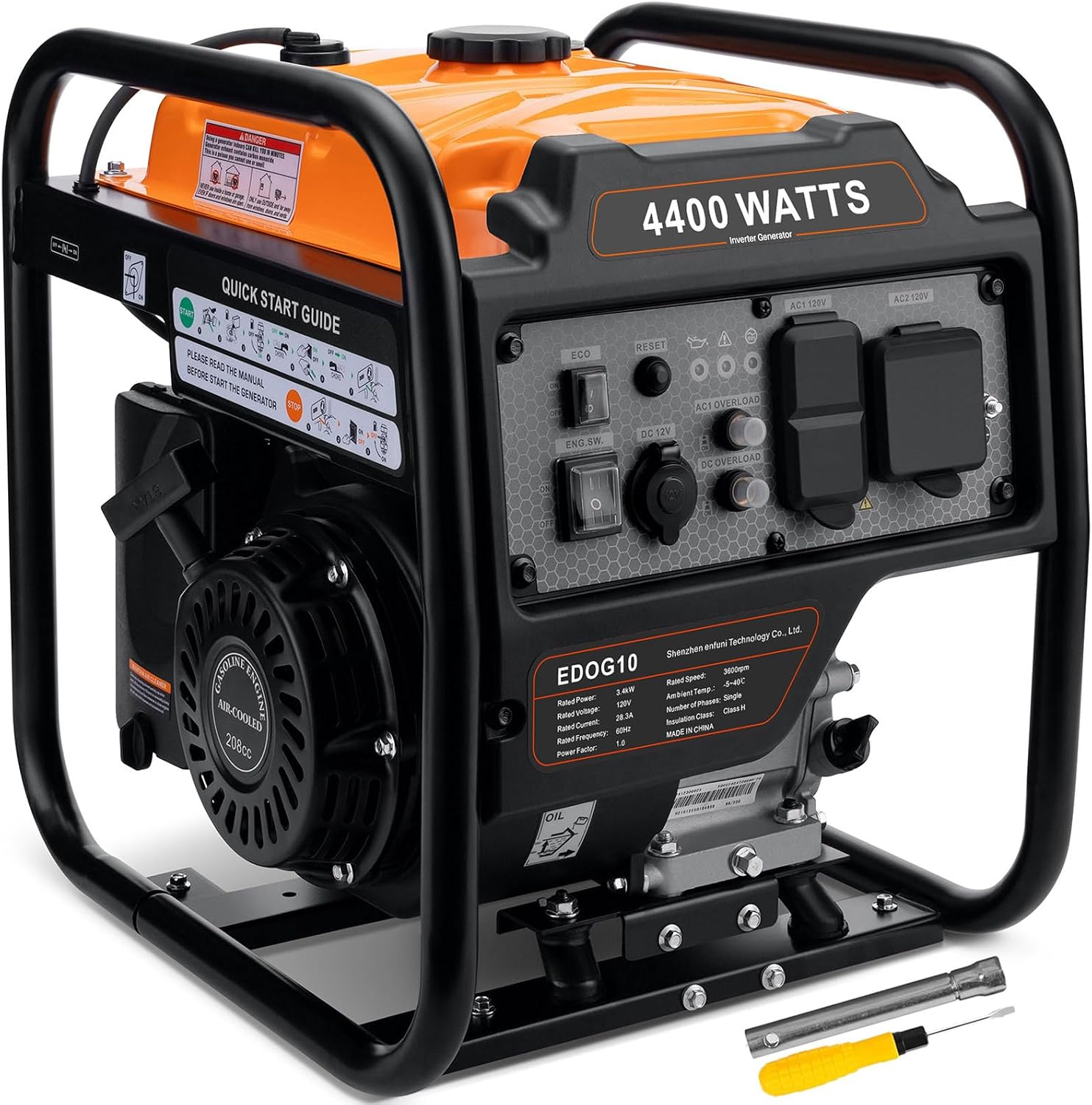
Oxseryn 4400-Watts Inverter Generator, Open Frame Generator Gas Powered, Emergency Home Backup, RV Ready 30A Outlet, EPA Compliment
The second 4,400 watt Oxseryn in this roundup, this one listed with a 30 amp RV outlet and an EPA compliant engine. Gas powered and open frame, aimed at emergency home backup and camper hookups.
Visit on Amazon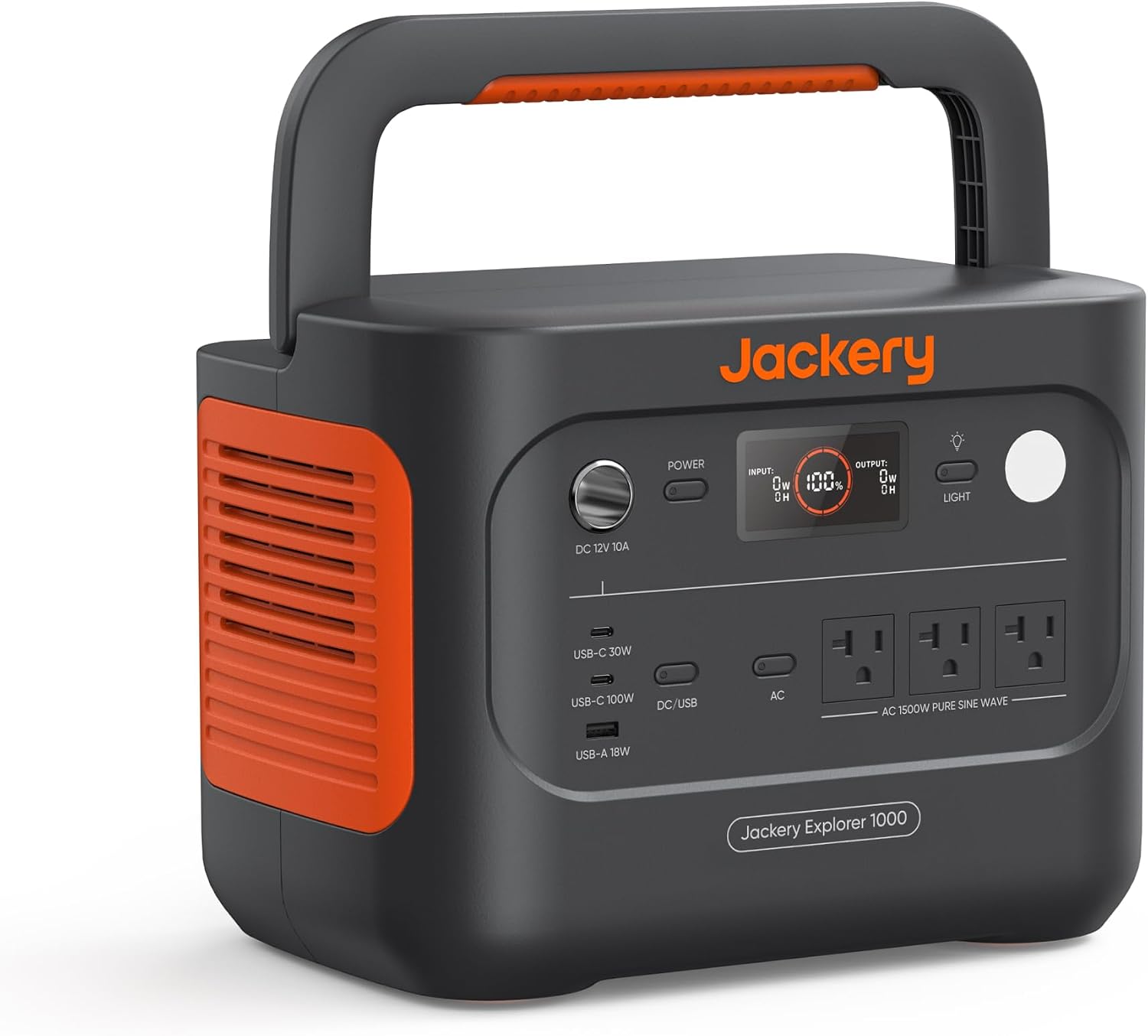
Jackery Explorer 1000 v2 Portable Power Station,1070Wh,1500W
A 1,070 watt hour battery power station with a 1,500 watt output. No fuel, no exhaust, and no noise, which makes it the only unit here you can safely use indoors. Recharges from a wall outlet, a car, or solar panels.
Visit on Amazon
Westinghouse 12500 Watt Dual Fuel Home Backup Portable Generator, Remote Electric Start, Transfer Switch Ready, Gas and Propane Powered
A 12,500 watt dual fuel portable built for whole-house backup, with remote electric start, transfer switch readiness, and the option to run on gasoline or propane. This is the class of machine that carries large household loads the smaller units cannot touch.
Visit on AmazonPrices and availability may change. Check the retailer for current details.
How these products were compared
This roundup compares wattage class and the gap between running and surge capacity, fuel type and the flexibility it buys you, inverter design and noise expectations, starting method and portability, and outlet configuration for RV and home backup duty. Product names, images, and retailer links are matched by product identifier so that every card points to the product shown.
One thing I want to be straight about: I have not load banked these six specific units, and I am not going to pretend otherwise. What I can tell you is how I evaluate a generator after 40-plus units through my own meter and logbook, and which of these listed specs are worth trusting. Confirm current price and availability with the retailer, because that changes and this article does not.
How to choose the right inverter generator
Start with a list, not a wattage. Write down what has to run at the same time during an outage: refrigerator, freezer, furnace fan or a space heater, sump pump, modem, router, a few LED lights, phone chargers. Then do the surge math. Anything with a motor in it, a fridge compressor, a sump pump, a furnace blower, draws two to three times its running watts for a second or two when it kicks on. That startup spike is the spec that decides whether your fridge actually turns on, and it is the number the box buries in the fine print. A unit with a comfortable running rating and a weak surge rating will trip out on the one appliance you bought it for.
Fuel type is the next decision, and it is really a question about the second week of an outage. Gasoline is easy to find on day one and hard to find on day five. Propane stores indefinitely and burns clean, though a 20-pound grill tank does not last as long as people expect. Dual fuel units let you switch, and that flexibility is worth real money during a storm. A battery power station sidesteps fuel entirely and is the only option here that belongs indoors, but it stores a fixed amount of energy, and when it is empty you need a wall outlet, a car, or solar to refill it.
Then there is noise and power quality, which are the same conversation. Inverter generators produce cleaner power, and if you are running a laptop, a television, or a modern RV with a control board in it, that matters. They also tend to be quieter and to throttle down when the load drops. If your generator only ever powers a job site, a conventional unit is cheaper per watt. If it runs where people sleep, get the inverter. If you are powering a camper, look for a 30 amp RV outlet rather than planning to adapt a household outlet with a dogbone.
Champion Power Equipment 4250-Watt Dual Fuel RV Ready Portable Open Frame Inverter Generator with Quiet Technology
Here is why this one gets the top slot. It sits in the middle of the market, where most households actually live. At 4,250 watts it has room for a refrigerator, a freezer, a furnace fan, and the small electronics that keep a family connected, and the open frame inverter design means you are not choosing between capacity and clean power. Dual fuel is the feature I care about most, because it means a propane tank from the grill can keep the fridge cold after the gasoline cans run dry. It ships RV ready, so it does double duty on a camper, and the quiet technology branding puts it in the category that will not have your neighbors counting the hours until the power comes back.
The trade-offs are the ones that come with the class. An open frame unit is heavier and louder than the little suitcase inverter you can carry one-handed, and 4,250 watts is not a whole-house number. It will not carry a central air conditioner or an electric water heater, and it is not transfer switch ready the way the big Westinghouse is. If your plan is to run the whole panel, this is the wrong machine. If your plan is to keep the important stuff alive for a week without spending whole-house money, this is the one I would start with.
Alternatives to consider
The Westinghouse 1500 Peak Watt Super Quiet & Lightweight Portable Inverter Generator is better suited to small, portable loads: charging electronics, running a few lights and a fan, and pairing with a second unit when you need more. It is gas powered, CO sensor equipped, and parallel capable, which makes it the camping and tailgate pick rather than the outage pick.
The two Oxseryn 4400 watt inverter generators cover the value end of the open frame class. The ECO mode model leans toward low noise operation with an engine that throttles down to match the load, while the other is listed with a 30 amp RV outlet and EPA compliance, which makes it the better match for a camper that needs a proper RV receptacle.
The Jackery Explorer 1000 v2 Portable Power Station covers the indoor, silent, fuel-free case with 1,070 watt hours of storage and a 1,500 watt output. And the Westinghouse 12500 Watt Dual Fuel Home Backup Portable Generator covers the whole-house case, with remote electric start, transfer switch readiness, and the capacity to carry large household loads that the smaller units cannot touch.
Day-to-day use and maintenance
Treat every generator as a small engine first and a power source second, because the engine is the part that fails. Change the oil on the schedule in the manual and check it before every run. Use ethanol-free fuel if you can get it, and if you cannot, add stabilizer and never let E10 sit in a carburetor for months. That varnish is a service call you can avoid with a bottle of stabilizer. Run the unit under load for twenty or thirty minutes once a month, not just to start it, because a generator that only idles is a generator that has not been tested. Drain the fuel bowl or run the carb dry before storage.
For the battery station, the maintenance is different: keep it charged, do not store it at zero percent for months, and remember that a fixed battery bank runs out. Plan a recharge path before the outage, not during it.
Safety is not a preference. Never run a gas generator in a garage, a shed, a basement, or anywhere near a window or an intake vent. Carbon monoxide kills people every storm, and a CO sensor on the unit is a backup, not a license. Keep the exhaust pointed away from the house, give the unit several feet of clearance, and use a heavy enough cord for the run. On the electrical side, never backfeed a household outlet to power your panel. If you want to power the panel, use a transfer switch or an interlock kit installed by someone who knows what they are doing. I wrote more about that in running a generator safely near a house.
Buying checklist
- Measure the load, not the square footage. List the appliances that must run at once, add up running watts, then find the biggest surge number in the group.
- Choose a wattage class based on normal use rather than a once-a-decade edge case, which usually means an oversized, thirsty machine.
- Decide on fuel before you decide on a model: gasoline, propane, dual fuel, or battery.
- Confirm that the exact model includes the features you are counting on, such as a CO sensor, a 30 amp RV outlet, remote electric start, parallel capability, or transfer switch readiness.
- Check the weight and the starting method. A generator that needs two people and a video tutorial will fail at 2 a.m. in a storm.
- Read the maintenance and storage instructions before the first tank, not after.
- Verify current retailer price, availability, and return terms.
Final recommendation
Choose the Champion Power Equipment 4250-Watt Dual Fuel RV Ready Portable Open Frame Inverter Generator with Quiet Technology when you want one machine that covers home backup, RV trips, and the occasional tailgate, and you want the option of switching to propane when gasoline gets scarce. Choose the Jackery Explorer 1000 v2 Portable Power Station when your loads are small, your priority is silent indoor power, and you have a way to recharge it. Choose the Westinghouse 12500 Watt Dual Fuel Home Backup Portable Generator when the goal is running a house panel through a transfer switch, and choose the Westinghouse 1500 Peak Watt unit when portability and quiet matter more than capacity.
If none of these match what you actually need to run, the honest answer is to wait and size the machine properly rather than buy the cheapest thing with a big number on the box. That is the mistake I see most, and it is the one that costs the most when the lights go out.