Related: How to Size a Generator for a Fridge and a Sump Pump
Portable inverter generators are the one piece of outdoor gear I have watched a whole neighborhood fight over. I spent 22 years rebuilding small engines in Asheville before the work got quieter and the storms got louder, and the loudest lesson of my life came after Hurricane Helene took the grid down for nine days. Nobody on my street that week was arguing about peak watts. They were arguing about a 50-foot extension cord and whose fridge got to run first.
So when I look at a lineup like this one, three generators and one small inverter that is not a generator at all, I am not reading the marketing copy. I am asking a simpler question: what class of machine is this, and what job can it honestly do at 2 a.m. in the rain?
I keep a load bank, a decibel meter, and a paper logbook, and I still own the $350 budget unit I tell people to think twice about. Every number I trust about a generator came off a meter, not a box. Where I have not had a unit on my own bench, I will say so, because the watt meter does not care what the sticker promises.
What the sticker leaves out
Running watts and surge watts are two different numbers, and the box always prints the flattering one in big letters. Surge watts are the startup spike a motor needs, usually two to three times its running watts. That is the number that decides whether your fridge compressor actually kicks over or just hums and quits. Running watts are what the unit carries hour after hour, and during a nine-day outage that is the only number you will care about.
THD is the next one. Total harmonic distortion under 5 percent keeps laptops, televisions, and phone chargers happy. That is the entire reason an inverter generator costs more than an open-frame conventional unit. If a listing does not state a THD figure, ask before you buy. I do not put a recommendation on an inverter without one.
Run time is where the math gets honest. Box numbers are measured at 25 percent load, and almost nobody runs at 25 percent load when the power is out. At half load, cut the claim by a third. At full load, cut it in half. Plan fuel around the real number, not the brochure.
Then there is noise, which is a neighbor problem until it is your problem. "Whisper quiet" with no decibel figure on the box is not a specification, it is a mood. The honest measurement is dB(A) at 25 feet at quarter load, and it is almost never the number in the ad.
Last, a carbon monoxide shutoff is non-negotiable on anything that runs near a house. And ethanol fuel left sitting in a carburetor is a time bomb. Stabilizer is cheaper than a rebuild, every single time.
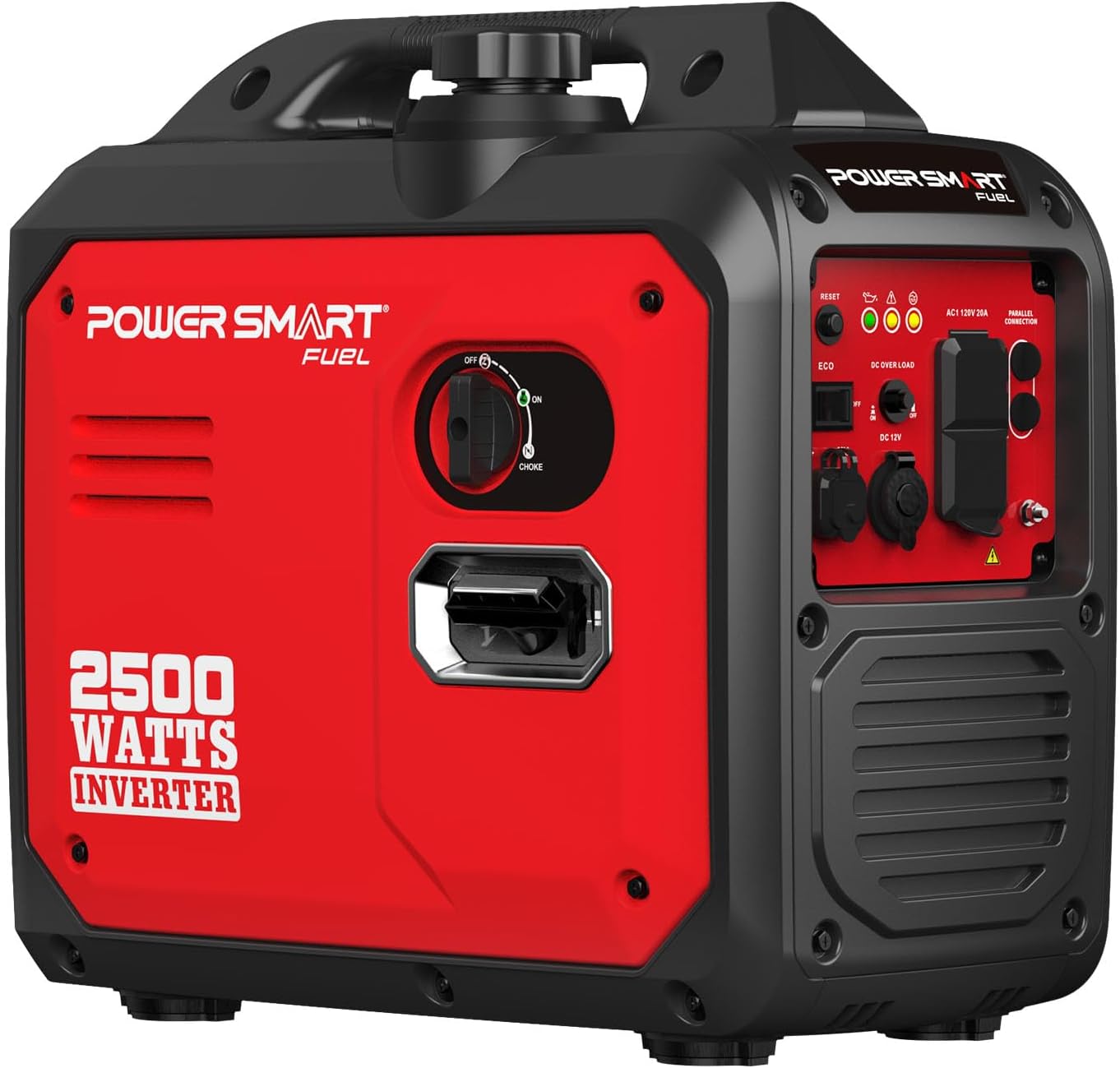
PowerSmart 2500 Watt Portable Inverter Generator for Camping
The PowerSmart is the smallest of the three generators here, and the manufacturer is aiming it squarely at tents, tailgates, and weekend trips. A 2,500-watt class inverter is the size that fits in the back of a hatchback without a second person and a chiropractor, and it is the size that keeps a campsite running: lights, phones, a laptop, a fan, and a small fridge if you watch your loads.
What it is not is a whole-house machine. A unit in this class will not start a fridge surge and a sump pump at the same time, and if you try, something is going to hum and give up. Read the running watts, add up what you actually want to run at once, and leave yourself headroom for the surge.
For camping, though, this is the sensible end of the lineup. Lighter, easier to move, and matched to the job most people actually have, which is charging things and running a light so the campsite does not feel like a cave. If your plan is dry camping and tailgating, start here.
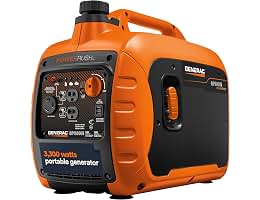
Generac 3,300 Watt Gas Powered Portable Inverter Generator, USB Charging
The 3,300 is the biggest unit in this lineup and the one I would point at first if the job is a real outage rather than a weekend. This is the watt class where a fridge, a sump pump, and a few lights stop competing with each other, and the USB charging called out in the listing matters more than people think when everyone's phone is dying at once.
Generac makes excellent standby generators. Their portables are fine machines, and you are paying a little extra for the name on the side and the parts network behind it. Whether that premium is worth it depends on how much you value being able to find service.
Two honest warnings. Units in this class are heavy, so the handle and the wheels are not decoration, they are the difference between using the thing and leaving it in the garage. And a bigger engine burns more fuel, so do the half-load math on run time before you decide a bigger tank is unnecessary.
Also ask about THD if you plan to plug in electronics. Inverter or not, get the number in writing.
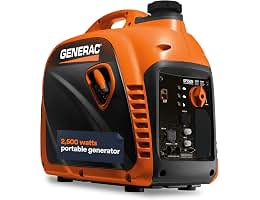
Generac 2,500 Watt Gas Powered Portable Inverter Generator, Outdoor Use
Here is the middle child: the same 2,500-watt class as the PowerSmart, wearing the Generac badge. That means the same practical ceiling on loads, which is to say lights, phones, a laptop, and a small fridge if you are disciplined about what runs at once.
Where it differs is the name on the side and what comes with it. The listing for this one says outdoor use, and unlike the 3,300 it does not call out USB charging in the name, so if charging phones directly off the panel matters to you, that is a question worth asking before you buy. Small thing. It is also the thing you notice on day three of an outage.
My read on the Generac portables has not changed in years. They are fine machines and you pay a premium for the badge. If you already trust the brand from a standby unit bolted to the side of your house, that trust is not misplaced. If you are shopping purely on capability per dollar, the name is doing a lot of the work.
Azocek 220W Power Inverter Compatible with Dewalt 20V Battery
This one is not a generator, and I want to be clear about that up front, because the lineup makes more sense once you separate it out. The Azocek is a 220-watt inverter that runs off a Dewalt 20V battery you may already own, which makes it the odd one out and also the most portable thing on this page.
Two hundred and twenty watts is laptop, phone, camera battery, and small fan territory. It is not fridge territory and it is not sump pump territory, and anybody who tells you otherwise has never put a meter on one. What it is good for is the person already deep in the Dewalt 20V platform who wants an outlet in a tent, in a truck bed, or on a tailgate without dragging a generator along.
Think of it as the second tool, not the first. If you own the batteries, it earns a spot in the camping bin. If you do not own the batteries, price that platform in before you get excited.
How I test, and how these four stack up
Everything I trust starts on the bench. I run a generator through a fridge, a sump pump, a space heater, and a 5,000 BTU window air conditioner on a load bank, because heaters and motors draw real watts and the meter does not flinch for marketing copy. I measure noise with a decibel meter at 25 feet at quarter load, where people actually run these things. I time every tank with my own fuel jug and my own stopwatch, because run-time claims are the most optimistic numbers in this business. And I start everything cold, in the rain, on the second pull if I can, because a generator that needs a tutorial at 2 a.m. is a generator that fails.
Then there is the part nobody photographs: draining the bowl, running ethanol-free fuel, and changing oil on schedule. I have forgotten to winterize a unit myself, so I am not going to pretend otherwise.
Judged against that checklist, this lineup sorts cleanly. The PowerSmart is a camping machine. The Generac 2,500 is a camping machine with a premium badge. The Generac 3,300 is the one that can carry a household's critical loads without juggling. The Azocek is not in the same competition at all; it is the small-load accessory that lives in the same bin.
Where the spec sheets go quiet, I say so. Where a listing does not state THD, treat it as unstated rather than assume it is clean. Where run time is quoted at 25 percent load, do the arithmetic yourself before you trust it.
The comparison table
| Unit | Stated output | Best for | Notes |
|---|---|---|---|
 Visit on Amazon → PowerSmart 2500 Watt Portable Inverter Generator for Camping |
2,500 watts | Camping, tailgating, lights and small electronics | Smallest and easiest to move of the three generators |
 Visit on Amazon → Generac 3,300 Watt Gas Powered Portable Inverter Generator, USB Charging |
3,300 watts | Fridge, sump pump, and lights during a real outage | Biggest and thirstiest here; USB charging called out in the listing |
 Visit on Amazon → Generac 2,500 Watt Gas Powered Portable Inverter Generator, Outdoor Use |
2,500 watts | Camping and light backup with a familiar badge | Listing says outdoor use; no USB charging in the name |
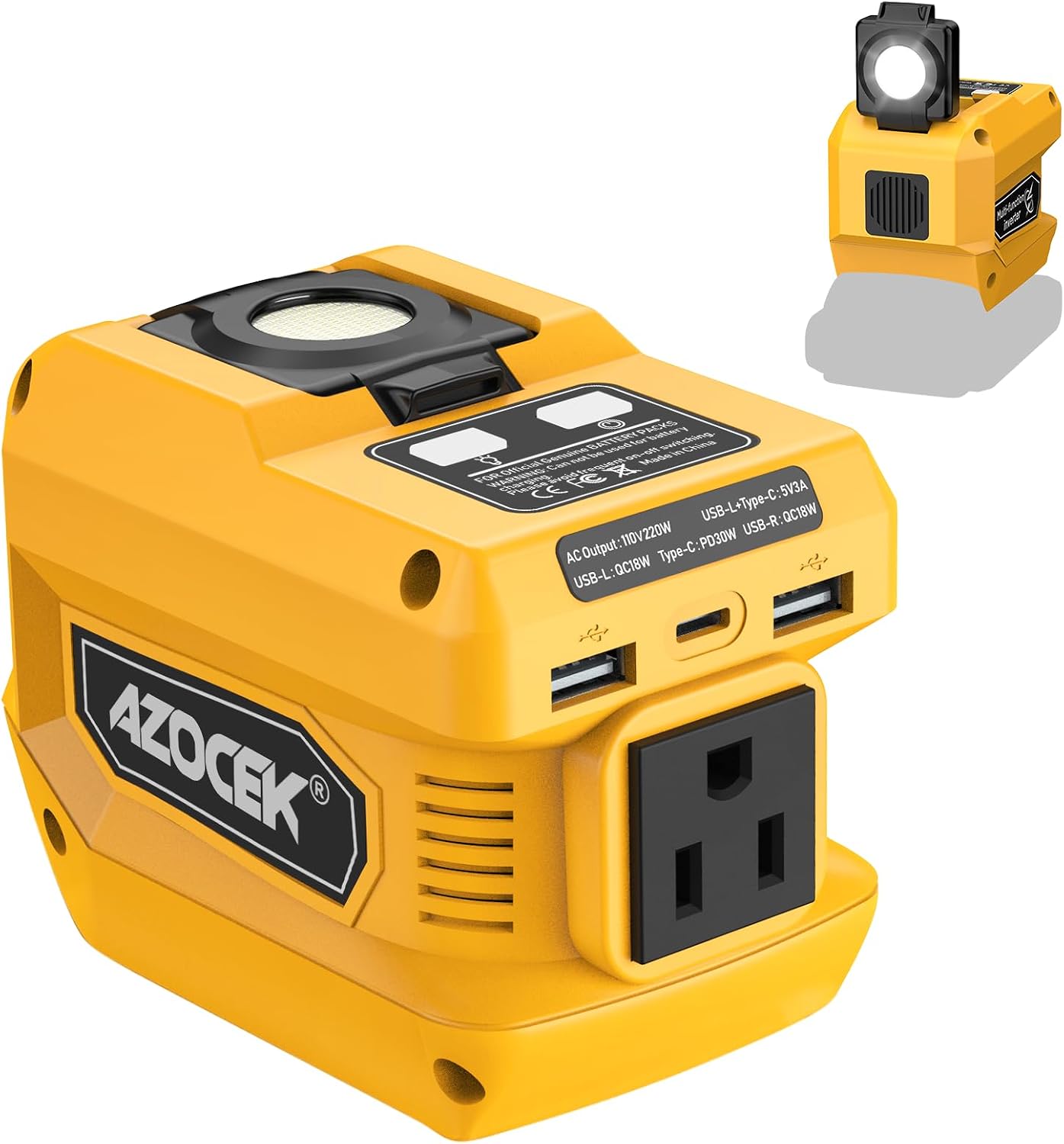 Visit on Amazon → Azocek 220W Power Inverter Compatible with Dewalt 20V Battery |
220 watts | Charging small electronics off a battery you already own | Not a generator; it is a small-load accessory |
The pattern in that table is the whole decision. Two of these units sit in the same watt class and differ mostly in whose name is on the side. One sits a step above them and can carry the loads that actually matter during an outage. And one is not a generator at all, which is not a knock, it is just a different job.
Should you buy the PowerSmart 2500 Watt?
Yes, if your job is camping, tailgating, or keeping small electronics alive. A 2,500-watt class inverter is the right size for a campsite, it is the most portable of the three generators here, and it is the one I would hand to somebody whose idea of an emergency is a dead phone and a warm tent.
No, if you are buying for hurricane season and a sump pump. This class of machine will not carry a household's critical loads at once, and buying too small is the most common mistake I see. People buy on the sticker, then find out what surge watts really mean at 2 a.m.
Should you buy the Generac 3,300 Watt?
Yes, if you want one machine that can carry a fridge, a sump pump, and lights without juggling, and if you value a brand with a service network behind it. This is the unit in this lineup I would trust with a real outage, and the USB charging in the listing is a genuine convenience when the family is sharing one generator.
Go in with your eyes open about the tradeoffs. It is heavy, it is thirsty, and the Generac name carries a premium. If you are strong, patient, and tired of extension cords, that premium buys peace of mind. If you are shopping on pure capability per dollar, look at the smaller units and be honest about your loads.
Should you buy the Generac 2,500 Watt?
Maybe, and the maybe is entirely about the badge. It occupies the same watt class as the PowerSmart and it says outdoor use rather than calling out USB charging, so you are getting comparable capability with a different name on the side and a different parts story.
Buy it if you already trust Generac from a standby unit at your house, or if local service matters more to you than the last dollar. Skip it if you are chasing maximum capability per dollar in the camping class, because the name is doing part of the work here.
Should you buy the Azocek 220W?
Yes, if you already own Dewalt 20V batteries. It is the cheapest way on this page to get an outlet in a tent or a truck bed, it takes up almost no room, and it covers the loads people actually run when they are camping: a laptop, phones, a camera battery, a small fan.
No, if you expect it to run appliances. Two hundred and twenty watts is not a generator and it never will be. If you need a fridge to keep running, you are shopping in the wrong section of this article, and you already know it.
The bottom line
Match the machine to the outage you are actually preparing for, not the one in the brochure. Camping and tailgating: the PowerSmart, or the Generac 2,500 if you want the badge. A real storm and a sump pump: the Generac 3,300. Small electronics off batteries you already own: the Azocek, and it belongs in the bin either way.
And whatever you buy, drain the bowl, run ethanol-free fuel, and check the oil before the storm, not during it.