I ran a small-engine shop in Asheville for 22 years before generator testing turned into a full-time habit. What pushed me over the edge was Hurricane Helene: nine days without grid power, and a street that went from neighbors to litigants over a 50-foot extension cord. Since then I've put more than 40 units through a load bank with a decibel meter at 25 feet and a stopwatch on every fuel jug. So when I talk about a portable generator backup setup, I mean the whole thing: the machine that makes a little power quietly, the machine that makes a lot of power loudly, and the two small parts that keep either one honest.
Short answer for most households: buy the quiet inverter, and buy the bonding plug with it, because an RV surge protector will refuse to pass power from a floating neutral generator. Buy the tri-fuel conventional unit only if you have a well pump, a furnace, or a transfer switch on the wall.
That's the decision in two sentences. Here's what's behind it.
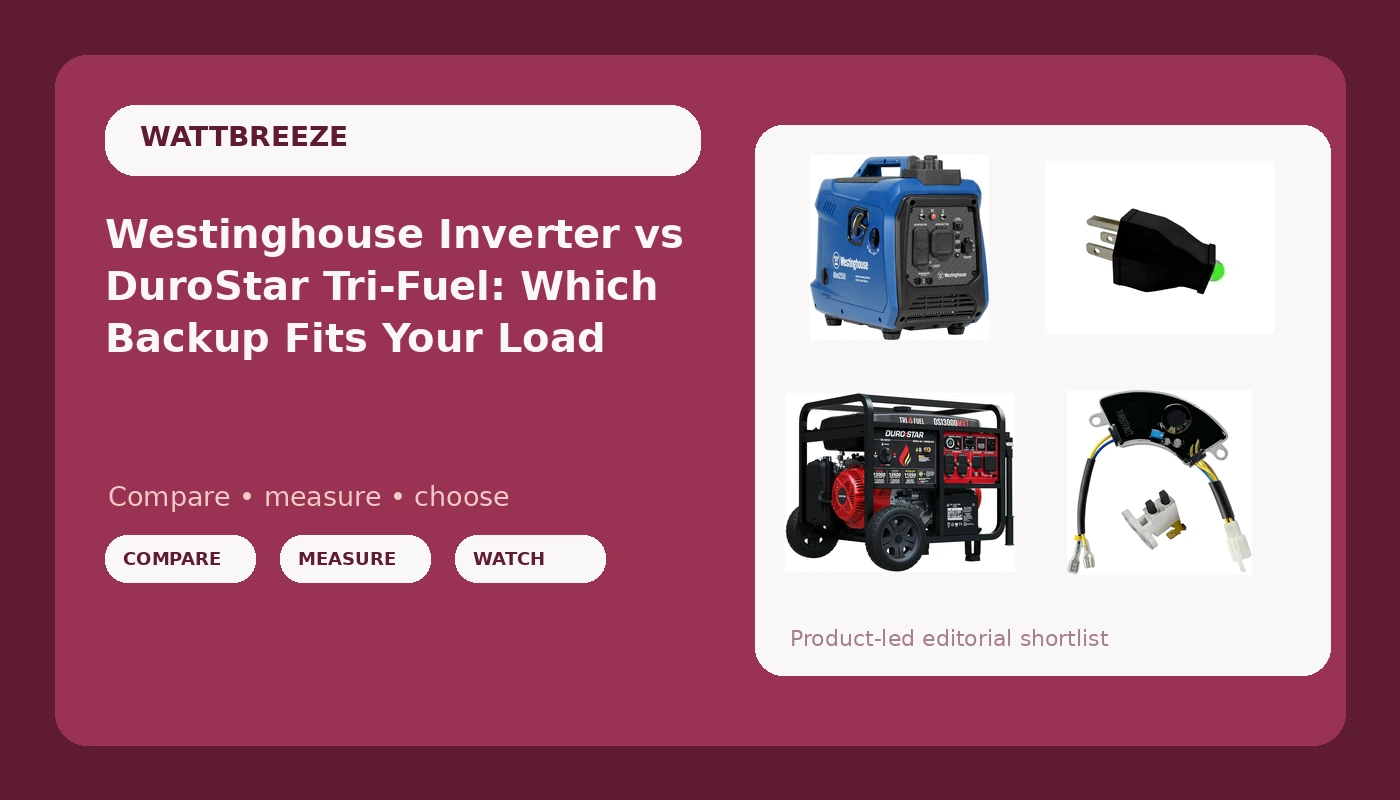
Westinghouse 2550 Peak Watt Super Quiet and Lightweight Portable Inverter Generator
Clean inverter power, genuinely light, RV ready 30A outlet, parallel capable if you outgrow it
Peak watts are not running watts, so it runs a fridge and a few lights, not a house
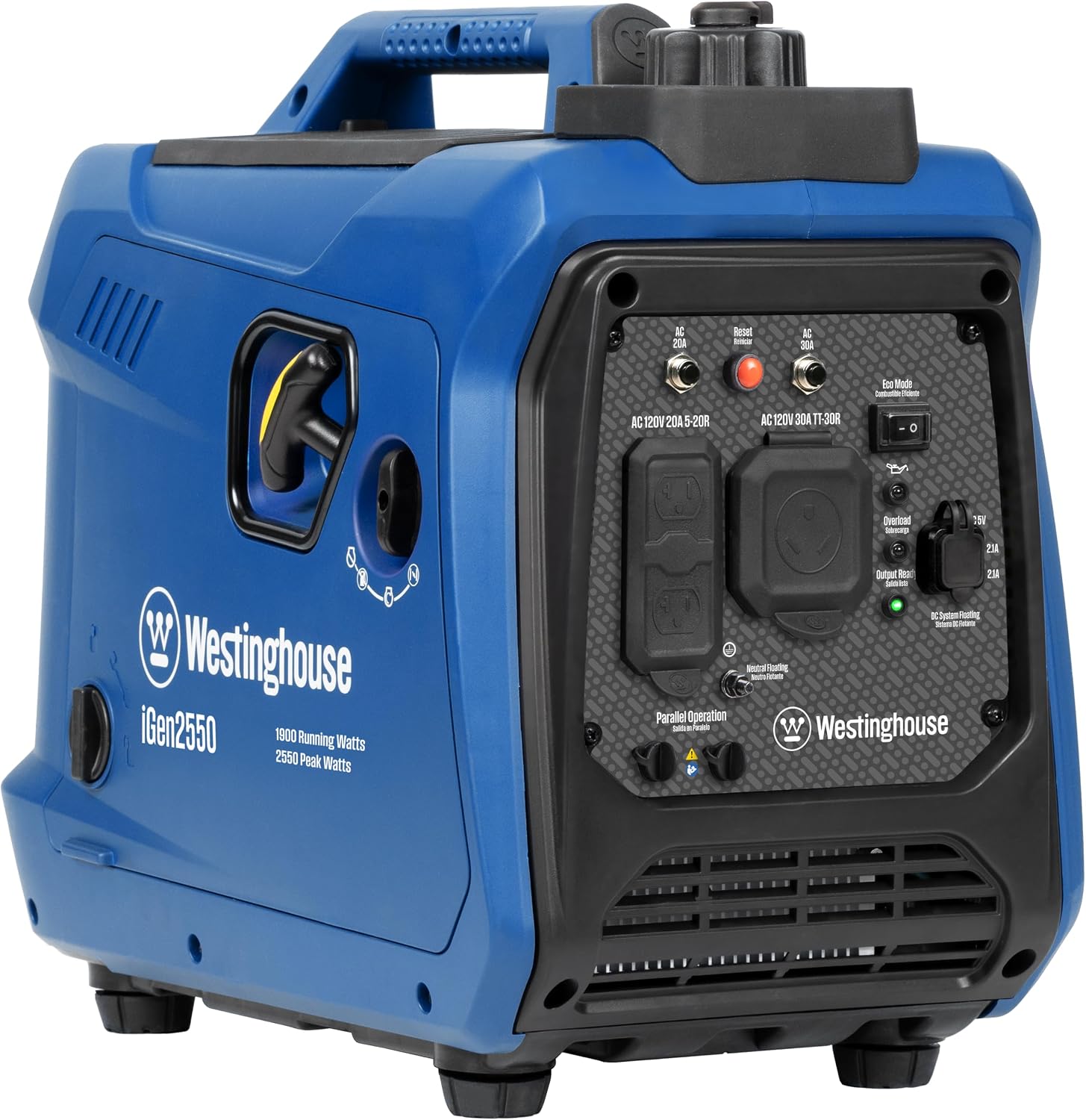
Made in USA Generator Neutral Ground Bonding Plug for Floating Neutral Generators
Fixes the open ground fault that trips RV EMS and surge protectors, LED confirms the bond
Solves a grounding problem only, and it's the wrong part for an already bonded unit
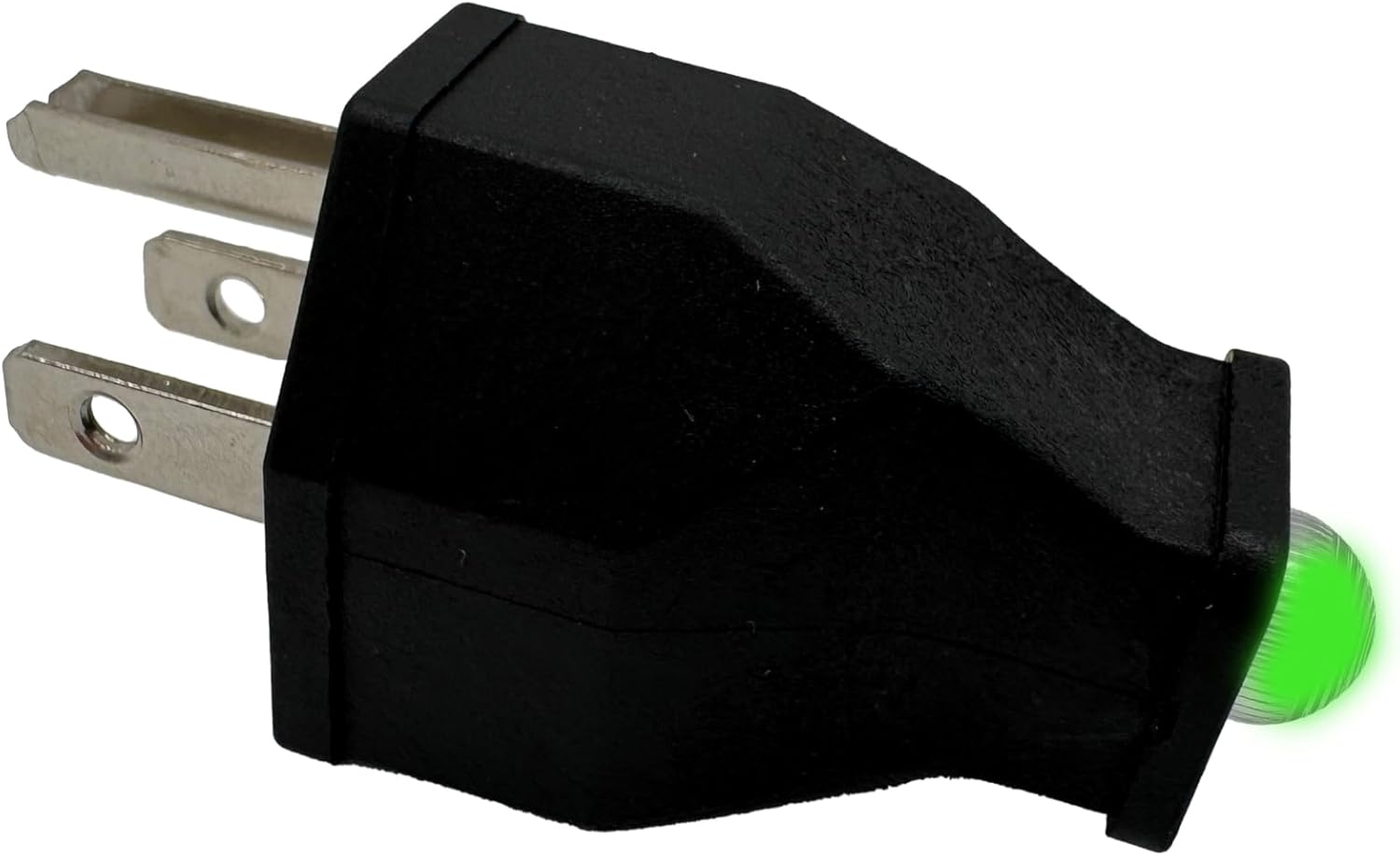
DuroStar DS13000MXT 13,000-Watt 500cc Tri Fuel Portable Generator
Gas, propane, and natural gas, remote electric start, transfer switch ready, real whole-home capacity
It's a conventional generator: loud, thirsty, heavy, and not the power you want near a bedroom window
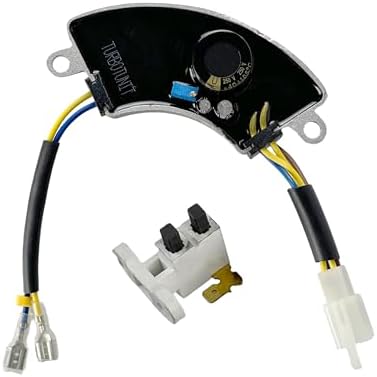
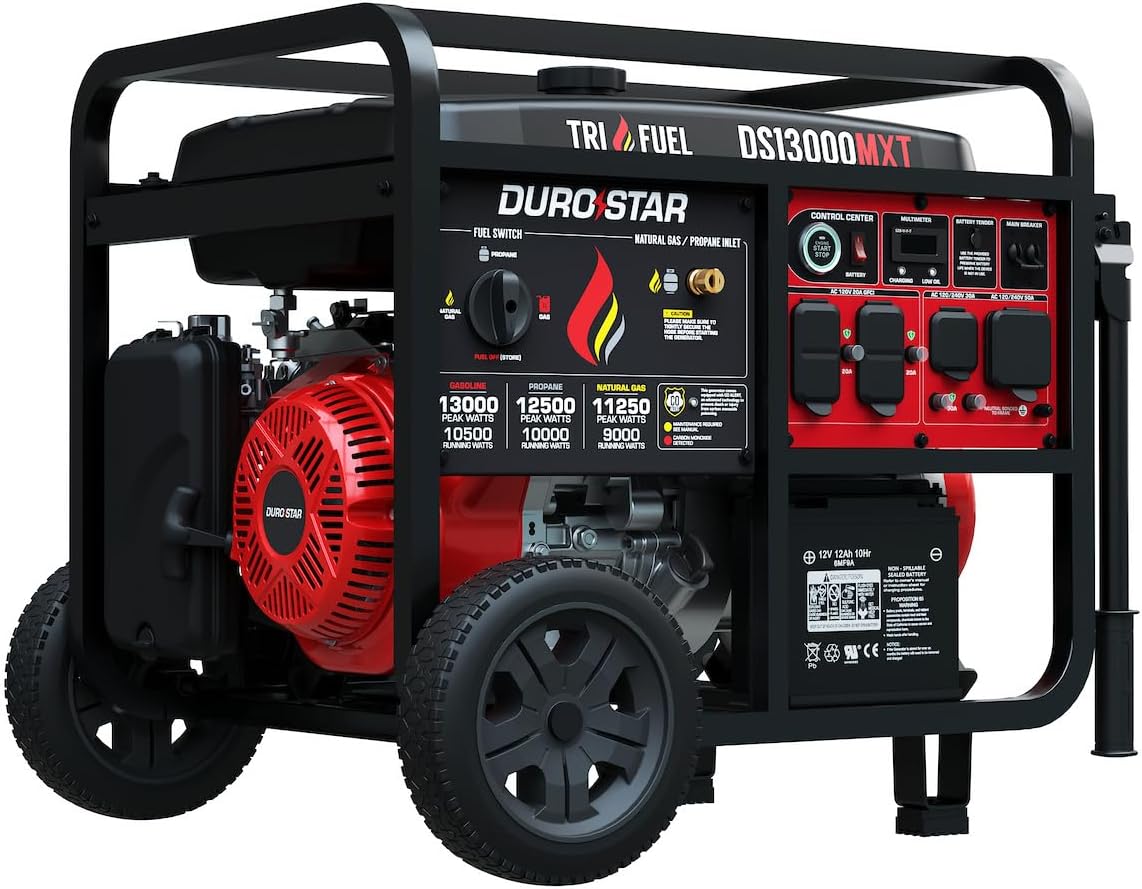
AVR for Champion Predator Honda Generac and similar generators
A cheap spare that brings a flickering conventional unit back to steady voltage
It's one specific part, not a cure for a bad carb, a dead inverter module, or old fuel
Prices and availability were captured from Amazon Creators API and may change.
How I test, and why the box numbers don't survive it
Every unit that comes through my shop goes on the load bank: a fridge, a sump pump, a space heater, and a 5,000 BTU window AC, added one at a time until the breaker says no. I log dB(A) at 25 feet at quarter load, because that's roughly where your neighbor's bedroom wall is, not one foot from the case with nothing plugged in. I time every tank at half load with my own fuel jug. I don't repeat a run-time claim from a box, ever, because run time printed on a box is measured at a quarter load on a cool day with a tailwind.
Two rules come out of that bench. First, peak watts are a starting spike, and running watts are what a machine carries hour after hour. Second, "super quiet" without a decibel number is a mood, not a measurement. Everything below is judged on those two rules.
The quiet half: Westinghouse 2550 Peak Watt inverter
This is the one I'd hand to a neighbor who wants their fridge, their router, their phone chargers, and their CPAP to survive an outage without a fight. It's an inverter, which means the power coming out of it is clean enough for laptops and TVs, and it's light enough that one person can lift it into a truck bed without planning a chiropractor visit. The RV ready 30A outlet means you can plug a camper cord straight in instead of hunting for an adapter, and parallel capability means that if you outgrow it, you can add a matching unit rather than start over.
Where it loses is capacity, and I won't pretend otherwise. The headline number is a peak figure. A fridge compressor's startup surge is exactly the kind of load that eats a peak rating, and a space heater plus a microwave at the same time will have you walking outside to reset a breaker. This is a rationing machine, not a whole-home machine. You'll run it on extension cords, you'll decide what gets plugged in, and you'll be fine as long as you respect the running watts instead of the sticker.
It's also gas only. No propane fallback when the gas station is dark, which is a real consideration if your outage is a regional one.
The loud half: DuroStar DS13000MXT tri-fuel
This is the other kind of answer entirely. Thirteen thousand watts and a 500cc engine is whole-home territory: transfer switch ready, remote electric start so you aren't yanking a rope in the rain, and three fuel options. Gasoline is the most power, propane is the most storable, and natural gas is the one that never runs out as long as the utility's gas line stays pressurized. For a house with a well pump, an electric furnace, or a sump pump that runs every twenty minutes, that fuel flexibility is worth more than any decibel rating.
The trade-off is everything a conventional generator is. It's loud enough that you'll think about where you put it, it burns through a tank in a way that has you scheduling refueling runs, and it weighs enough that you want two people and a set of wheels. It's also not the unit you'd want feeding a rack of electronics directly, because inverter-grade power quality isn't what a big conventional unit is built for. And when you switch to a gaseous fuel, expect less output than you get on gasoline, so size it with margin rather than to the exact number on the label.
Buy this if the plan is a transfer switch and a whole panel. Don't buy it if the plan is a cord through a window to a fridge.
The bonding plug: the small part that stops false alarms
Here's a problem almost nobody knows about until the night it matters. Many inverter generators ship with a floating neutral, which means neutral and ground aren't bonded inside the unit. Plug that generator into an RV with an EMS or a surge protector, and the protector sees an open ground and simply refuses to pass power. You stand there with a running generator and a dark camper, convinced something is broken.
This plug fixes exactly that. It's a NEMA 5-15P 120V 15A plug with a solid-state board inside that bonds neutral to ground at the outlet, and a green LED that tells you it's seated and working. It's made in the USA, which for a part this small and this specific is a reasonable thing to care about.
Two cautions, because I'd rather you buy the right thing. First, this is for floating neutral generators. Most conventional portables are already bonded internally, and adding this to one of those is at best pointless. Second, it only solves grounding. It does not add watts, it does not clean up power quality, and it does not make a small inverter into a big one.
The AVR: a spare part, not an upgrade
An automatic voltage regulator is the part that keeps output voltage steady as load and engine speed change. When it fails on a conventional generator, you get symptoms you'll recognize: lights that pulse, a generator that sounds fine but won't hold voltage, or no output at all. This AVR is a replacement regulator intended for Champion, Predator, Honda, Generac, and similar units, and it's the kind of thing worth having on a shelf if you depend on an older conventional machine through storm season.
What it isn't is a cure-all. If your generator won't start, that's fuel or spark, not the regulator. If it starts and dies under load, that's usually a carburetor or a fuel delivery issue. If your inverter generator stops making power, the inverter module is a different and much more expensive animal. Diagnose before you order, and confirm the part matches your model, because voltage regulators are not universal.
The trade-offs, stated plainly
Quiet versus capable is the real fork in this road. The inverter gives you clean power, low noise at 25 feet, and portability, and it asks you to choose your loads. The tri-fuel conventional unit gives you capacity and fuel flexibility, and it asks you to accept noise, weight, and fuel consumption. There is no unit that does both well at a price a normal household wants to pay.
Then there's the accessory layer, which is where most people get surprised. A floating neutral generator plus an RV surge protector equals a dead outlet until you add a bonding plug. An older conventional generator with a failing regulator equals pulsing lights until you replace the AVR. Neither part is exciting, and both are the difference between a setup that works on the first night and one that has you troubleshooting by flashlight.
And the fuel question deserves its own line. Ethanol fuel left sitting in a carburetor is a time bomb, whether it's in a 500cc tri-fuel engine or a small inverter. Stabilizer is cheaper than a carburetor rebuild, and ethanol-free fuel is the only thing I'll let sit in a bowl for more than a month.
Who should buy which
Buy the Westinghouse inverter if your outage plan is a fridge, a few lights, a router, and phones, and you want to run it on a porch without your neighbors filing complaints. Add the bonding plug if an RV, an EMS, or a surge protector is anywhere in the chain.
Buy the DuroStar tri-fuel if you have a transfer switch, a well pump, a furnace, or a household where someone depends on powered medical equipment, and you're prepared for the noise and the fuel runs. Keep the AVR on the shelf if you're maintaining an older conventional unit rather than buying new.
Buy all four, honestly, if you're the kind of person who keeps spare parts for the spare parts. That's not a joke. The people who came through Helene the calmest were the ones who had already thought about the small failure points.
What I'd tell you at the counter
After 22 years of rebuilding carburetors and a few years of logging decibels, the pattern hasn't changed. The sticker sells the generator, and the details decide whether you sleep through the outage. Match the machine to your real load, plan fuel around a real run time at half load rather than the box number, and spend the small money on the parts that stop the preventable failures. Then run it once a month under load, because a generator that only starts during a storm is a generator you don't actually own yet.