Related: Inverter Generator Noise: What dB at 25 Feet Actually Sounds Like
Portable inverter generators are the one purchase where the box lies loudest. The peak watt number is printed the size of a bumper sticker. The running watts hide in the fine print, and the run time was measured at a quarter load with a tailwind.
I ran a small-engine shop in Asheville for 22 years. After Helene took the grid down for nine days, I watched a polite street turn on itself over a 50-foot extension cord. That is the real spec sheet. Not watts, but whether the thing starts on the second pull at 2 a.m. and whether your neighbor can sleep through it.
I have run more than 40 generators since, with a load bank, a decibel meter, and a paper logbook. This guide covers four portable inverter generators at four very different sizes and price points, from a budget open-frame unit to a dual-fuel machine built to feed a transfer switch. I am not going to tell you one is best. I am going to tell you which job each one is built for, and where each one will let you down.
Two things before we start. Peak watts are the spike a motor needs to start. Running watts are what the panel carries hour after hour. And if you need power where people sleep, an inverter is worth the money, because THD under 5 percent keeps laptops and phone chargers happy and keeps the noise down.
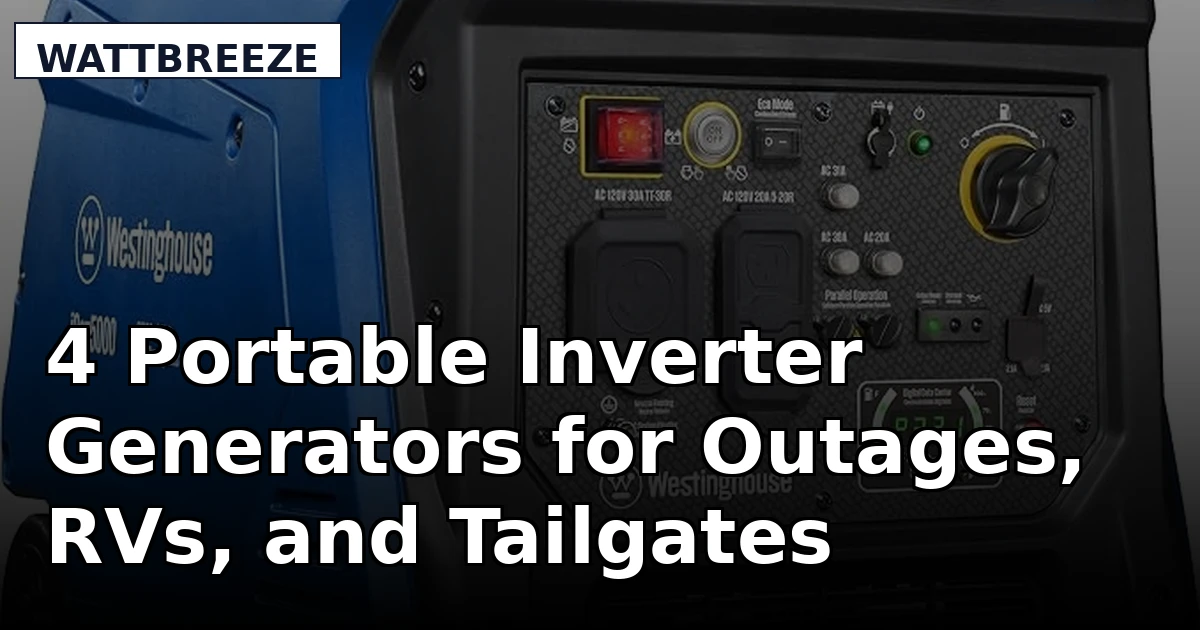
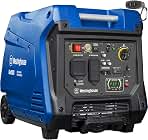
Best All-Around: Westinghouse 5000 Peak Watt
Most people shopping for a portable inverter generator are really shopping for one machine that does three jobs: run the RV pedestal at a campground, keep the fridge and the internet alive during an outage, and sit quietly enough at a tailgate that nobody moves their cooler.
This is the unit I point at that job. It is gas powered, it has remote electric start with auto choke, and it ships with a wheel and handle kit, which matters more than the marketing suggests. Remote start with auto choke is the feature that decides whether your spouse can start it while you are at work. Pull cords do not buffer. A choke that sets itself means no flooding the engine and no YouTube tutorial in the rain.
It is also RV ready and parallel capable, so if you later decide you want more running watts, you can pair it with a second unit instead of buying a bigger machine and starting over. That is a cheaper upgrade path than most people realize.
The honest tradeoff: gasoline only. No propane fallback, which means fuel storage, stabilizer, and a plan for day six of an outage. If you want the option to run on a propane tank you already own, keep reading.
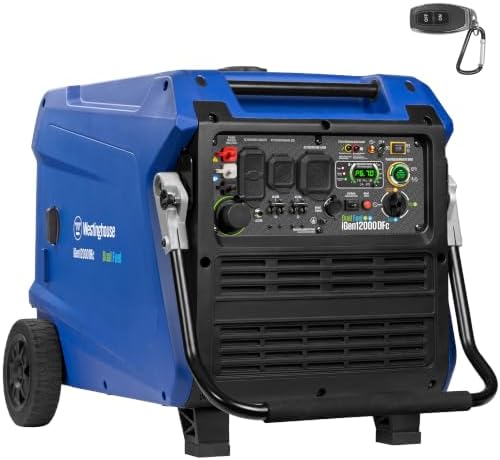
Best for Whole-Home Backup: Westinghouse 12000 Peak Watt Dual Fuel
This is the big one, built for a specific buyer: someone with a transfer switch, a well pump or a central air unit, and a house full of people who expect the lights to come back on without a negotiation.
It runs on gas or propane, it has remote electric start, it is transfer switch ready, and it carries a CO sensor. Two of those matter more than the peak watt headline.
First, dual fuel. Propane does not go stale. After a week without power, the gasoline you stored is a question mark and the propane tank on the patio is not. Second, the CO sensor. Carbon monoxide shutoff is non-negotiable on anything running near a house, and it is the reason I will not recommend a generator without one to a family with kids or a garage they sleep above.
It is also low THD, the spec that keeps a modern fridge control board and a furnace board from acting strange, and parallel capable if you ever want to stack capacity.
The tradeoff is weight and fuel appetite. This is not a machine you carry to a campsite. It is a machine you wheel to the side of the house, tie into a transfer switch, and leave there. Plan the fuel around half load, not the number on the box.
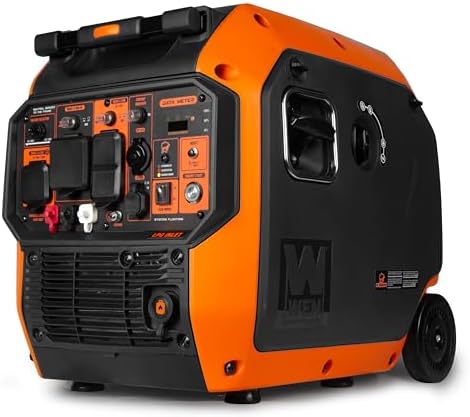
Best Value Dual Fuel: WEN DF680iX
If the big dual-fuel Westinghouse is more generator than you need and the 5000 is more than you want to spend, this is the middle of the road, and it is a good place to stand.
The DF680iX is dual fuel, RV ready, and electric start, and it carries WEN's CO Watchdog. The feature I care about most is the one nobody puts on a banner: fuel shut off. Close that valve and let the engine run the carburetor dry before you store it, and you avoid the single most common repair I did for 22 years. Ethanol fuel left sitting in a carb turns to varnish. Stabilizer helps. Running it dry helps more.
The dual fuel side gives you the propane option without the price of the big Westinghouse, and RV ready means a proper RV receptacle instead of a daisy chain of household cords.
The tradeoffs are the usual ones in this price band. It is not a featherweight, so plan on wheels or a second person. And a brand's reputation in the small 2,000-watt class does not automatically transfer to a bigger machine, so buy from a seller with a return path and read the manual cover to cover before the first storm, not during it.
Best Budget Entry: Oxseryn 4400 Watts
Somebody always asks what the cheapest thing is that will still run a fridge, a few lights, and a phone charger. This is the answer in this group.
The Oxseryn 4400 is gas powered, open frame, RV ready with a 30A outlet, and EPA compliant. It is the least expensive way into inverter power here, and for a tailgate, a job site, or a short outage, that can be plenty.
Two things to understand first. Open frame means the engine is not wrapped in a sound shell, so the noise carries. If your nearest neighbor is 40 feet away, that is a real conversation. If you are boondocking a quarter mile from anyone, it is not.
Second, budget class means budget support. Before you order, find out whether you can get a carburetor, an ignition coil, and an air filter without waiting three weeks. A generator that cannot be repaired is a generator you rent, not one you own.
The 4400-watt class also means measuring your loads honestly. A fridge, a modem, a couple of lamps, and a phone charger: yes. A window AC plus a microwave plus a sump pump at the same time: no. Add up the surge watts, not the running watts, and start the big motor first.
The four units side by side
Here is how the group breaks down by fuel, starting method, and the job each one is built for. Spec sheets are starting points, not promises, so confirm running watts and outlet layout on the listing before you commit.
| Generator | Fuel | Start | Best for | Price |
|---|---|---|---|---|
 Visit on Amazon → Visit on Amazon →Westinghouse 5000 Peak Watt |
Gasoline | Remote electric, auto choke | RV pedestal, fridge, tailgate | Check current Amazon price |
 Visit on Amazon → Visit on Amazon →Westinghouse 12000 Peak Watt Dual Fuel |
Gas or propane | Remote electric | Transfer switch, whole-house loads | Check current Amazon price |
 Visit on Amazon → Visit on Amazon →WEN DF680iX 6800-Watt Dual Fuel |
Gas or propane | Electric | RV travel and mid-size backup | Check current Amazon price |
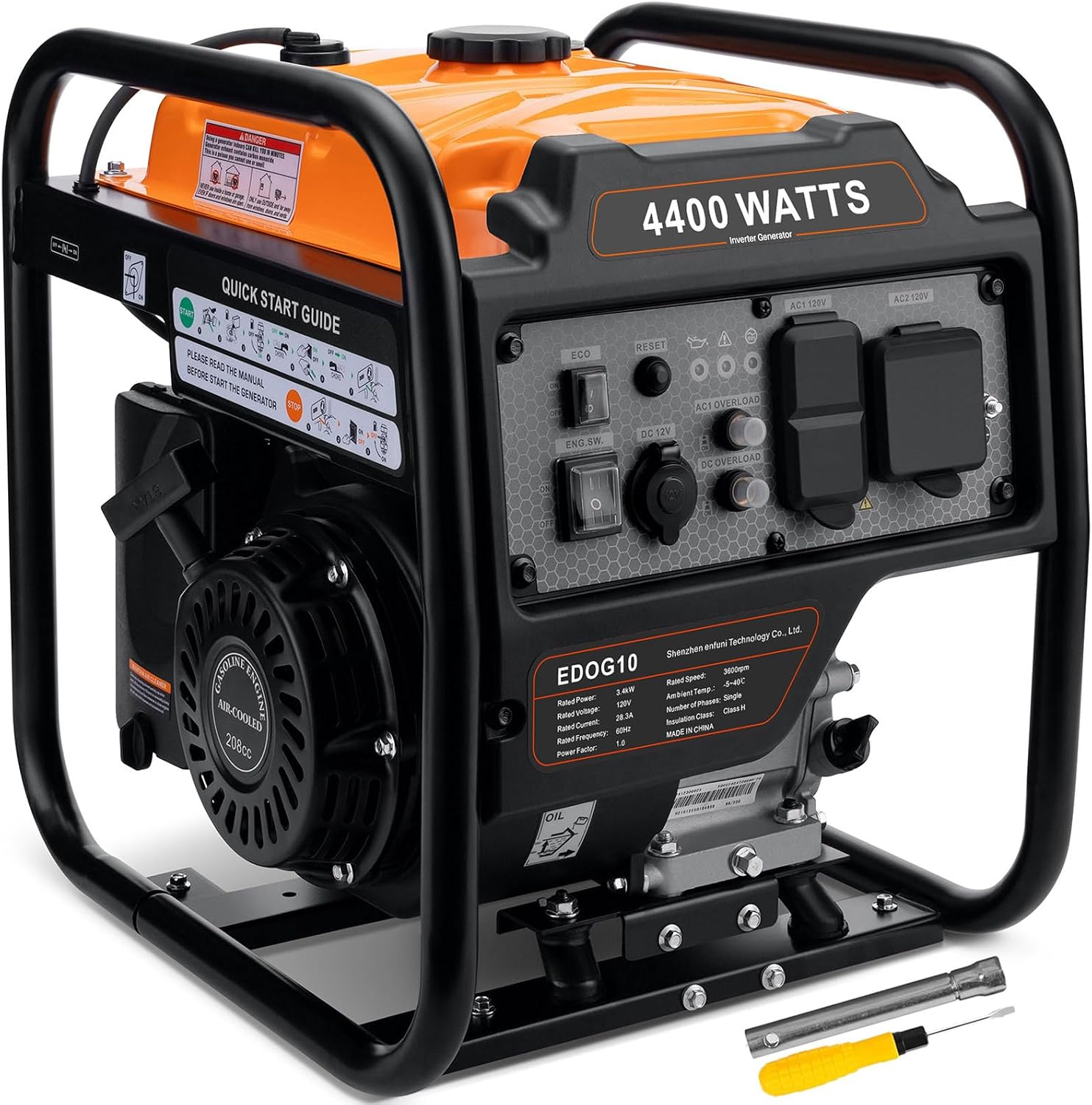 Visit on Amazon → Visit on Amazon →Oxseryn 4400 Watts |
Gasoline | Recoil | Short outages, job sites, tailgates | Check current Amazon price |
How I test before a generator gets a badge
Every unit that earns a spot in this guide goes through the same bench. A load bank with a fridge, a sump pump, a space heater, and a 5,000 BTU window AC, started one at a time and then together. A decibel meter at 25 feet at quarter load, because that is where a neighbor actually hears it. A stopwatch on a full tank at half load, then the math: the 25 percent load figure on the box gets cut by a third at half load and by half at full load. A THD reading under 5 percent, or the inverter badge comes off. A cold start in the rain, second pull or it is a problem. Then the carburetor drained and checked for varnish a month later.
If you want the longer version of how load, fuel, and noise numbers work, start with how to size a generator for a fridge.
What the box numbers actually mean
Peak watts are the startup spike a motor needs, usually two to three times its running watts. That is the number that decides whether your fridge actually turns on. Running watts are the continuous load, and they are the number that matters during a nine-day outage.
THD is total harmonic distortion. Under 5 percent means laptops, TVs, and phone chargers are happy, and it is what separates a real inverter from a cheap conventional unit with a sticker.
Run time is quoted at 25 percent load. At half load, cut it by a third. At full load, cut it in half. Plan fuel around the real number, not the brochure.
Noise is quoted at one foot with no load. Ignore it. The honest measurement is dB at 25 feet at quarter load, because that is the distance your neighbor lives at.
Should you buy the Westinghouse 5000 Peak Watt?
Yes, if you want one machine that covers an RV pedestal, a fridge, and a tailgate without a second person to help start it. Remote electric start with auto choke and the wheel kit are the reasons. It is gasoline only, so budget for fuel storage and stabilizer, and remember that a parallel kit is your upgrade path if you outgrow it.
Should you buy the Westinghouse 12000 Peak Watt Dual Fuel?
Yes, if you have a transfer switch and a household that expects normal. The dual fuel option means propane that will not go stale on day eight, the CO sensor is the feature I refuse to compromise on near a house, and low THD protects the electronics in a modern furnace and fridge. It is heavy and thirsty. Treat it as a permanent installation, not a portable.
Should you buy the WEN DF680iX?
It is the sensible middle of this group. Dual fuel, RV ready, electric start, CO Watchdog, and a fuel shut off valve that lets you run the carburetor dry before storage, which is the cheapest maintenance habit you will ever build. Buy it from a seller with a real return path and read the manual before storm season.
Should you buy the Oxseryn 4400 Watts?
It is the least expensive way into inverter power here, and for a tailgate, a job site, or a short outage it will do the work. Understand two things: open frame means the noise carries, and budget class means confirming that parts are available before you order. Match it to modest loads and start the biggest motor first.