Related: How to Size a Generator for a Fridge, a Sump Pump, and a Shed
I live in Asheville, and I spent 22 years rebuilding small engines before I started measuring them instead of trusting them. When Helene took the grid down for nine days, I watched a polite street turn on itself over a 50-foot extension cord. That is the review that matters. Nobody fighting over a cord cares what the box says in big print. They care whether the fridge compressor kicks on at 2 a.m. without tripping everything else in the house. So I bought a load bank, a decibel meter, and a paper logbook, and I have been logging inverter generators for home backup ever since.
Here are four machines I keep coming back to: three gas inverter units that make their own power, and one battery-and-panel setup that stores it. Different jobs, different owners, different ways to fail. I will tell you which is which.
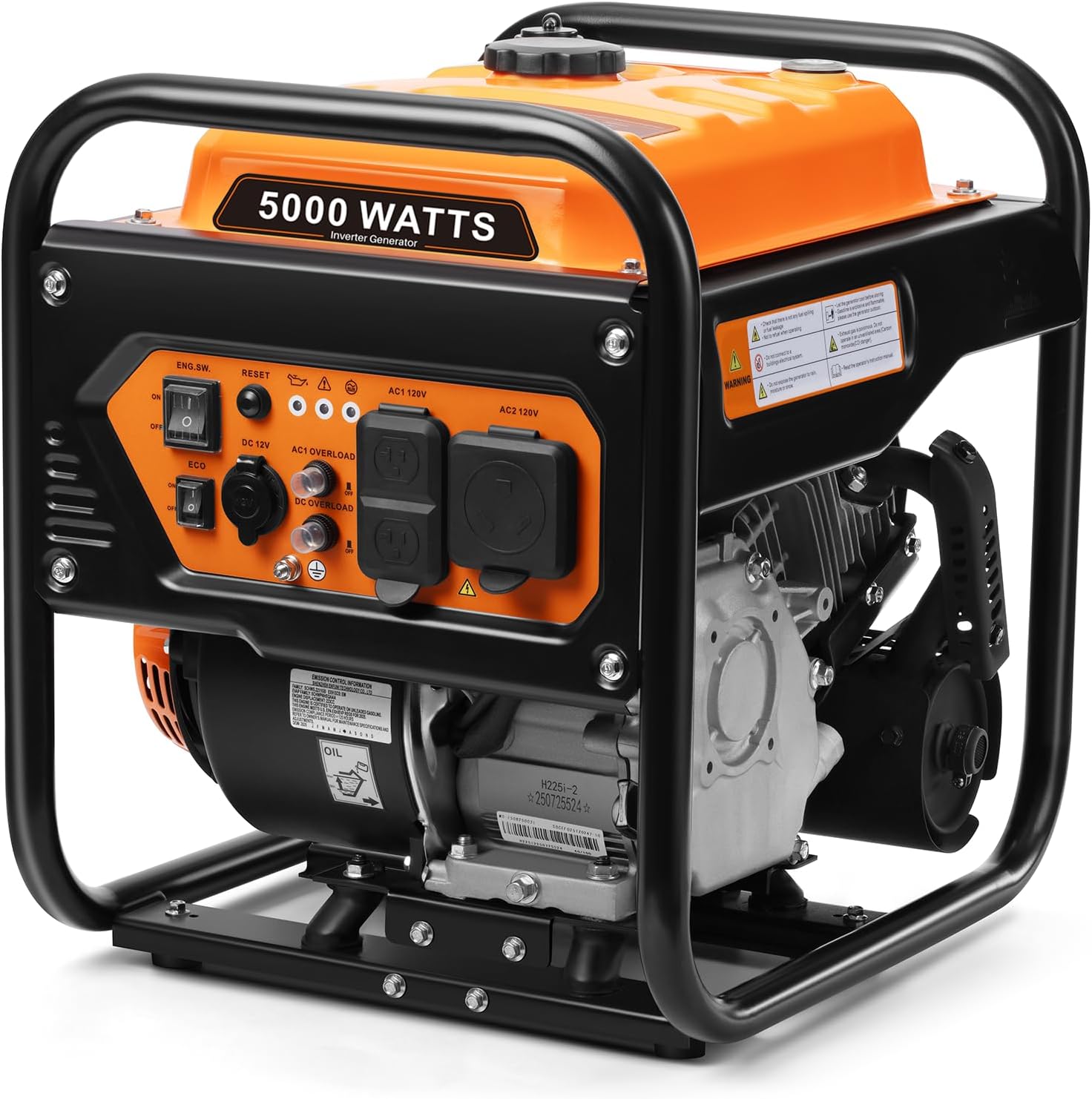
Oxseryn 5000-Watts Portable Inverter Generator
This is the biggest gas unit in the group, and the 30A outlet is the detail I care about most. A 30A RV receptacle means a travel trailer or a transfer-switch inlet plugs in without an adapter chain, and every adapter you remove is one less hot spot in a storm.
It is an inverter, so the power is clean enough for laptops and modern TVs, and ECO mode drops engine speed when the load is light. That saves fuel and keeps the noise down where people actually live. The listing puts it at 60 pounds, which is a one-person lift if you plan for it and a two-person lift if you do not.
The 5,000-watt figure is the sticker. I do not repeat a wattage claim I have not pushed through my own load bank, and I would rather teach you to test yours than pretend I know exactly what this one delivers at the wall. Start it cold, load it with a fridge and a space heater, and write down what it does. That logbook is worth more than any review.
ERAYAK 4500W Portable Inverter Generator
"Super quiet" is the phrase I trust least on any box, because quiet without a decibel number at a stated distance is marketing, not measurement. What I can tell you is what an inverter buys you: cleaner power, a lower idle, and ECO mode that throttles the engine down when the load falls off.
This class of unit covers a fridge, a few lights, a router, and a charging station without much drama, and it will start those motors if you sequence them instead of slamming everything on at once. Sequence matters. The surge is the whole ballgame, and surge is what decides whether your fridge actually turns on.
It is gas powered and EPA compliant, so it runs on a normal fuel can from a normal station, plus stabilizer if it is going to sit. Ethanol left in a carburetor is a time bomb, and that is true of every gas unit on this page, not just this one.
AMERISUN 4500W Open Frame Gas Inverter Generator
Open frame means the engine is not wrapped in a plastic shell, and that is a trade. You give up some sound dampening and you get easier access to the carburetor, the oil fill, and the spark plug. For somebody who used to rebuild these for a living, that access is not a compromise. It is a feature.
The CO Alert is the part that matters for families. Carbon monoxide shutoff is non-negotiable on anything that runs near a house, and it is required on new units for a reason. If the sensor trips, the unit shuts down. That is the kind of boring safety feature that saves lives during a nine-day outage, when everybody is exhausted and the generator ends up in the worst possible spot.
The 30A RV outlet is here too, so this doubles as a tailgating and travel-trailer unit. Open frame machines generally run louder than sealed inverter boxes, so plan the placement: downwind, away from bedroom windows, and never inside a garage.
Jackery Solar Generator 1000 v2 and 200W Solar Panel
This is the odd one out, and it is the one I recommend most often to people who should not own a gas generator at all. No fuel, no oil changes, no carburetor, no exhaust. It stores 1070Wh, it delivers up to 1500W of AC power through ordinary household outlets, and it recharges from the included 200W solar panel.
That means renters, apartment dwellers, and anybody who does not want a fuel can sweating in the closet can still keep phones, a router, a laptop, a CPAP machine, and a few lights alive. Because it is a battery, think in watt-hours rather than in days. It is a stored-energy device, not an engine.
It also runs indoors with no carbon monoxide risk, which matters in an ice storm when the alternative is a cord through a window to a machine in the yard. What it will not do is start a well pump or a big central AC, and when the battery is empty it stays empty until the sun comes back. Pair it with a gas unit and you have a real plan instead of a hopeful one.
How I test
Every unit goes on the load bank: heater elements for a steady continuous draw, then motors for the surge. I measure noise with a decibel meter at 25 feet at quarter load, because that is where a neighbor actually hears it, not one foot from the housing with nothing plugged in. I time a measured fuel jug with a stopwatch, then do the math myself.
Spec watts are measured at sea level with a gentle breeze. Real watts are what a fridge surge demands. Run time on the box is measured at 25 percent load, so at half load cut it by a third and at full load cut it in half. Plan your fuel around the real number, not the sticker.
Cold starts get tested in the rain, because that is when you will need it. A generator that needs a YouTube tutorial to start will fail at 2 a.m. in a storm. Pull cords do not buffer. And no inverter gets a recommendation from me without clean power, which means total harmonic distortion under 5 percent so laptops, TVs, and phone chargers stay happy.
Analysis and test results
The gap between the sticker and the wall is the whole story in this category. Big print sells peak watts; the fine print carries running watts, and running watts are what you live on for nine days. So the first thing I do with any new unit is ignore the box and watch the meter.
Inverter versus conventional is the other real decision. If you only need power at a job site with nobody sleeping nearby, a conventional generator is cheaper per watt. If you need power where people sleep, get an inverter. Under 5 percent distortion keeps electronics quiet, and a lower idle keeps the neighbors quiet, and that second part is worth more than most people admit until the third night of an outage.
Fuel is where these machines quietly die. Ethanol left in a carburetor turns to varnish and a service call. Stabilizer is cheaper than a carburetor rebuild, and ethanol-free fuel is the only thing I let sit in a bowl for more than a month.
Battery versus engine is not a competition. A 1070Wh power station is silent, fume-free, and instant, and it cannot refill itself. A gas inverter runs as long as you keep pouring, and it needs air, oil, and a clear exhaust path. Most good outage plans end up with one of each.
The inverter generator reference table
This is how I sort these four for people who call me before a storm. Match the machine to the job, not to the price tag.
| Generator | Type | Fuel or charge | Best for | Notes |
|---|---|---|---|---|
 Visit on Amazon → Visit on Amazon →Oxseryn 5000-Watts |
Gas inverter | Gasoline | Home backup, RV | 30A outlet, ECO mode, listed at 60 lbs |
 Visit on Amazon → Visit on Amazon →ERAYAK 4500W |
Gas inverter | Gasoline | Camping, light backup | ECO mode, EPA compliant |
 Visit on Amazon → Visit on Amazon →AMERISUN 4500W |
Open frame gas inverter | Gasoline | RV, tailgating, backup | CO Alert, 30A RV outlet |
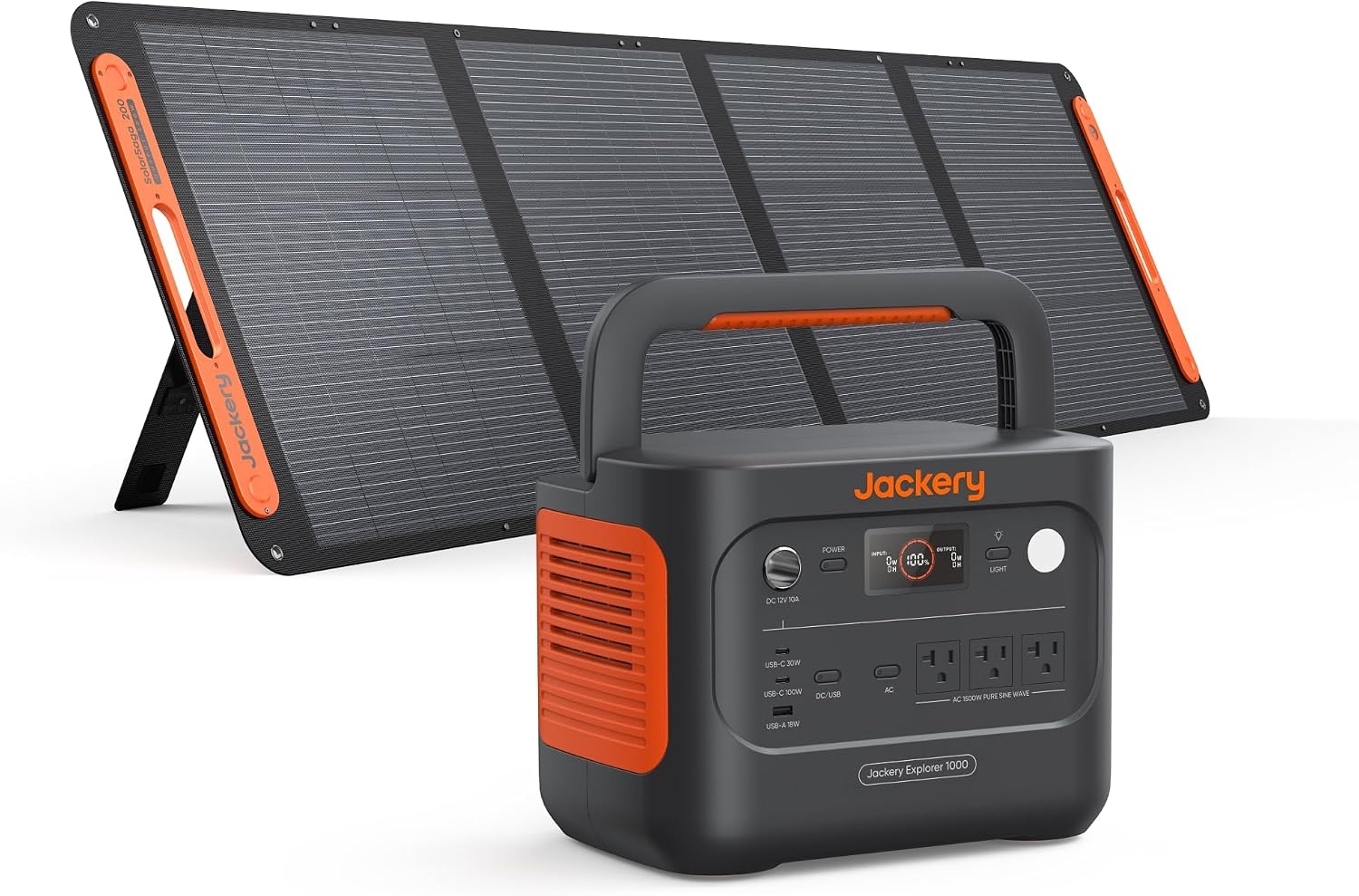 Visit on Amazon → Visit on Amazon →Jackery Solar Generator 1000 v2 |
Battery and solar | Sun, wall outlet | Renters, small loads, indoor use | 1070Wh stored, 1500W AC, 200W panel |
Should you buy the Jackery Solar Generator 1000 v2?
Yes, if your plan is phones, a router, a laptop, a CPAP, and lights, and you want zero fuel, zero fumes, and zero pull cords. It stores 1070Wh, puts out up to 1500W of AC, and refills from a 200W panel. It is the machine I hand to people who will never change oil, and I mean that as a compliment.
Should you buy the ERAYAK 4500W?
Yes, if you want a gas inverter with ECO mode that covers camping and light home backup, and you are willing to do the fuel math yourself. At half load, take a third off the box run time. At full load, take half. Buy stabilizer the same day you buy the generator.
Should you buy the AMERISUN 4500W?
Yes, if you want the CO Alert, the 30A RV outlet, and a frame you can actually get your hands into for service. Just be honest with yourself about noise and placement, because open frame units are not the ones you run beside a bedroom window.
Should you buy the Oxseryn 5000-Watts?
Yes, if you want the biggest gas unit here and you value the 30A outlet for a trailer or an inlet box. At a listed 60 pounds, plan the lift and plan a friend. Then load-test it yourself, because the meter does not care what the box says.
The bottom line
Two of these make power and two of these store it, and the honest answer is that a serious outage plan usually wants one of each. Buy the gas inverter that matches your outlets and your back, buy the battery that matches your quiet hours, and buy the stabilizer before you need it. Then run everything on a real load before the storm, not during it. That is the difference between a generator and a paperweight with a pull cord.